FileWave Unified Endpoint Management and MDM in the UAE and Middle East
Published · PRO TECHnology Enterprise IT
Most IT teams do not lose control of their devices in one dramatic moment. It happens quietly, over a few years, as the fleet grows past the point where anyone can picture it. This guide explains what device management actually involves, what the difference between MDM and UEM really is, and where FileWave fits for organisations in the UAE, Saudi Arabia and the wider Gulf.
Key takeaways
- MDM manages mobile devices. UEM manages everything an employee or student touches — laptops, desktops, tablets, phones and Chromebooks — from one console. FileWave is a UEM platform that includes MDM.
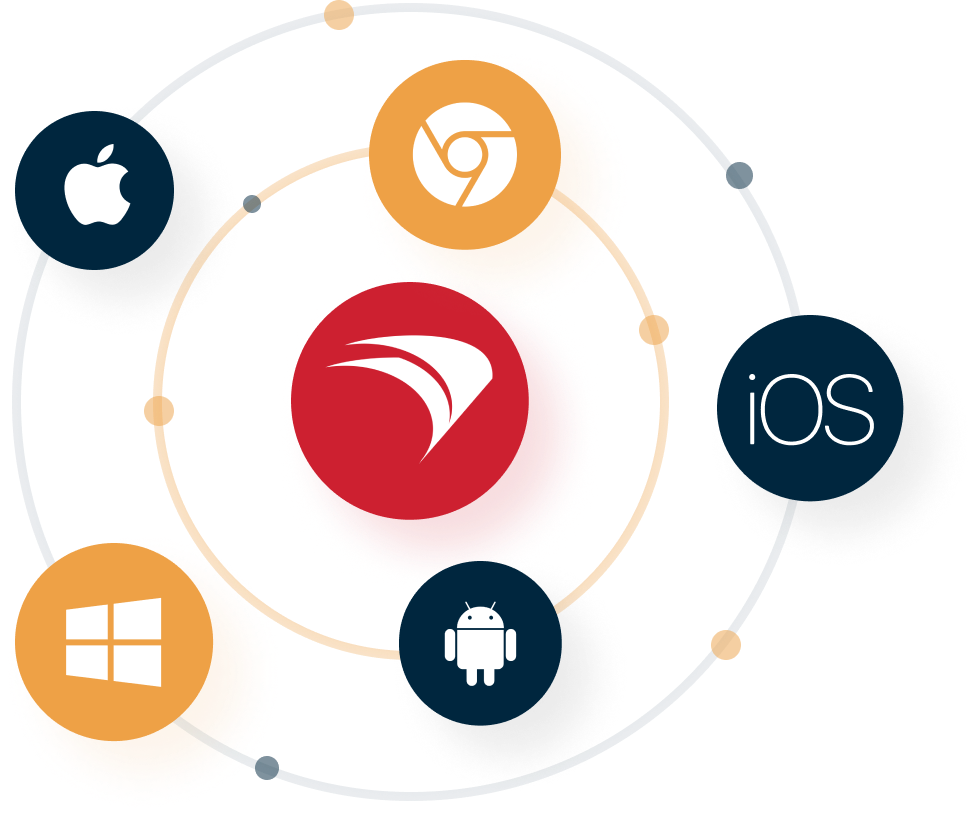
- FileWave supports macOS, iOS, tvOS, Windows, Android and ChromeOS, which matters in a region where the same organisation often runs Macs in design, PCs in finance and iPads in the classroom.
- Self-Healing is the capability that separates FileWave from most alternatives: if a deployed file is altered or deleted, the server puts it back automatically, without a support ticket.
- Apple devices can be enrolled with zero touch through Apple School Manager or Apple Business Manager, so a sealed iPad or Mac configures itself on first power-on.
- FileWave runs either in FileWave's cloud or on your own servers, with the same feature set — useful where data residency is a procurement condition.
- PRO TECHnology has been an authorised FileWave reseller in the GCC since 2009, with local implementation and support in Dubai.
The device count grew. The IT team did not.
Ask an IT manager in Dubai or Riyadh how many devices their organisation owns and you will usually get a range rather than a number. The range is the problem. Somewhere between the spreadsheet last updated at the previous audit, the laptops issued to people who have since left, and the tablets a department bought on its own budget, the true figure has drifted out of view.
This is not carelessness. It is arithmetic. Ten years ago a company of 200 people had perhaps 200 computers. Today the same company has 200 laptops, 200 phones, a stock of spare tablets, a few dozen shared machines, meeting-room displays and a handful of Macs in the marketing team. The device count multiplied. The IT headcount did not.
The situations where this becomes expensive are predictable:
- New starters. A laptop has to be unboxed, imaged, joined, loaded with the right software and handed over. Done by hand, it is most of a day per person.
- Software rollouts. A new application, or a licence renewal, has to reach every machine that needs it — and only the machines that need it.
- Security patches. A vulnerability is announced on Tuesday. Someone has to know which devices are exposed, and get the fix onto all of them before it is exploited.
- Remote and hybrid staff. The device is at home, in another emirate, or on another continent. Walking to the desk is not an option.
- Lost and stolen hardware. A phone goes missing with mail, files and saved credentials on it. The clock starts immediately.
- Audits and renewals. Someone asks what is deployed, where, running which version, under which licence. The honest answer is often that nobody is certain.
- Schools at scale. A thousand student iPads that must be locked to the right apps during exams, reset over the summer, and traced when one does not come back.
Each of these is manageable once. The difficulty is doing all of them, continuously, across several operating systems, with the team you already have. That is the problem endpoint management software exists to solve, and it is the lens this article uses. If you are assessing the wider IT stack, our enterprise and corporate IT division covers device management alongside storage, archiving and security.
What is FileWave?
FileWave is a unified endpoint management platform. In plain terms, it is one console from which an IT team can enrol a device, configure it, install and update software on it, apply security policy to it, see what is on it, and if necessary lock or wipe it — without physically touching the device.
The company is FileWave AG, founded in Switzerland in 1992, and it describes itself as a global provider of cross-platform device management. That long history matters less as a marketing point than as an explanation of the product's shape: FileWave came from the world of managing Macs at scale, well before mobile device management existed as a category, and it added mobile and Windows management to that foundation rather than the other way round.
FileWave's own description of the product is "Unified Endpoint Management & IT Asset Software", and both halves of that phrase are meaningful. It manages devices, and it also keeps a record of what those devices are and what is installed on them. The full technical documentation is published openly on the FileWave website and its knowledge base.
MDM, UEM, and the difference that actually matters
These two acronyms are used loosely, often interchangeably, and the distinction is worth getting right because it changes what you should buy.
What is MDM?
MDM stands for Mobile Device Management. It is a set of controls that Apple, Google and Microsoft build into their operating systems, which allow an approved management server to configure a device remotely. Through MDM a server can push Wi-Fi and email settings, install and remove apps, enforce a passcode, restrict features such as the camera or app installation, and remotely lock or erase the device.
The important thing about MDM is that it is a capability of the operating system, not something a vendor invents. Any MDM product is using the same underlying framework. What differs is how much the product can do around it.
What is UEM?
UEM stands for Unified Endpoint Management. It covers the same mobile devices, and adds the machines MDM was never designed for: desktops and laptops running Windows and macOS, where the real work of software deployment, patching and imaging happens. "Unified" means one console, one set of policies and one inventory across all of it.
The practical difference
If your fleet is phones and tablets, MDM is enough. If it also includes the laptops your staff actually work on, MDM alone will leave the harder half of the job unmanaged — because installing a large design application, repairing a broken installation, or patching third-party software is beyond what the mobile MDM framework can express.
Most organisations in the region are firmly in the second category. A school has iPads and it has staff laptops and a computer lab. A company has phones and it has finance PCs and design Macs. FileWave sits in the UEM category and includes MDM within it, which is why it tends to appear on shortlists where the estate is mixed.
FileWave compared with traditional device management
"Traditional" here means the way most organisations still work: a mixture of manual setup, login scripts, a separate tool for each platform, and a spreadsheet standing in for an inventory. It is not that this fails outright. It is that the effort scales linearly with the device count, so it quietly consumes the IT team.
| Task | Traditional approach | With FileWave |
|---|---|---|
| Setting up a new device | Unbox, image or configure by hand, install software, hand over | Device enrols on first power-on and configures itself against its assigned policy |
| Installing software | Per machine, or a script that runs at login and may not complete | Assign to a group; delivery and completion are reported back |
| A broken installation | User raises a ticket; someone reinstalls it | Self-Healing replaces the altered or missing files automatically |
| Patching | Left to each device, or chased manually | Scheduled patching for operating systems and third-party applications |
| Knowing what you own | A spreadsheet, accurate on the day it was written | Live inventory and compliance reporting drawn from the devices themselves |
| Mixed operating systems | A separate tool and a separate skill set per platform | One console covering Apple, Windows, Android and ChromeOS |
| A lost device | Change passwords and hope | Remote lock or full wipe from the console |
Which devices and operating systems FileWave manages
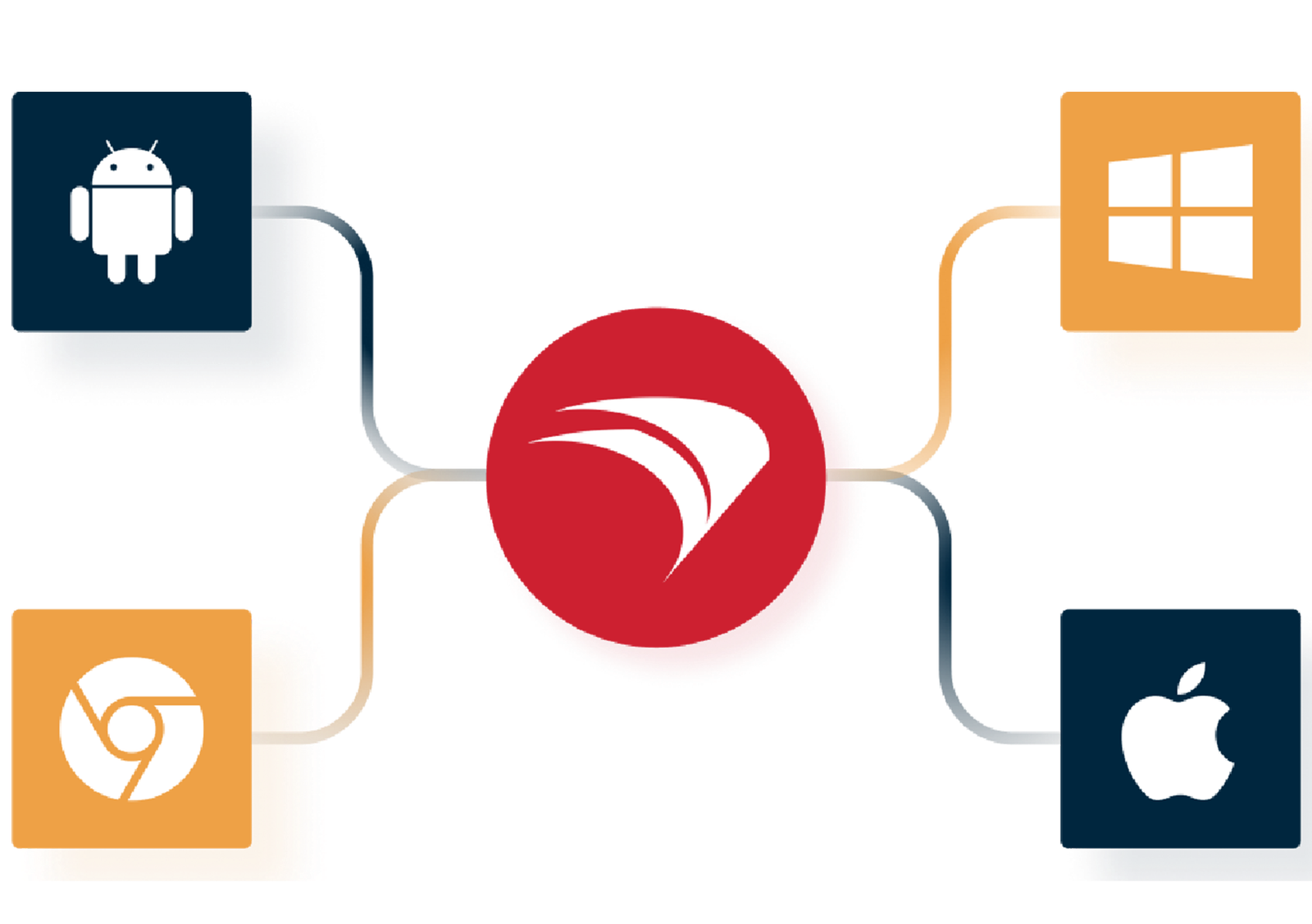
FileWave manages macOS, iOS, tvOS, Windows, Android and ChromeOS devices from a single console. For most organisations in the Gulf this is the deciding factor, because very few estates are single-platform any more.
Managing Apple devices
Apple management is where FileWave started, and it remains the deepest part of the platform. Macs, iPhones, iPads and Apple TV devices are all supported.
The most useful capability for anyone deploying at volume is Automated Device Enrollment, previously called the Device Enrolment Program. Devices bought through an authorised channel are assigned to your organisation in Apple School Manager or Apple Business Manager, and from there to your FileWave server. When a user powers on a sealed device, it enrols itself and applies its configuration without anyone in IT opening the box. FileWave also supports enrolment through Apple Configurator 2, and Shared iPad for devices used by more than one person.
Managing Windows environments
Windows machines are managed for provisioning and configuration, software and application distribution, scheduled patching, and inventory. This is the half of the estate that pure MDM products handle weakly, and it is usually where the time savings are largest, because Windows software deployment is where manual effort concentrates.
Managing Android and ChromeOS
Android devices are supported for enrolment, configuration and application deployment. ChromeOS is included as well, which matters for schools that have standardised on Chromebooks for general classroom use while keeping iPads for creative subjects and Windows or Mac machines in specialist labs. Rather than running three management systems, the same console covers all of them.
Remote software deployment
Getting software onto devices that are not in front of you is the task that consumes the most IT time, and it is the task FileWave was originally built for.
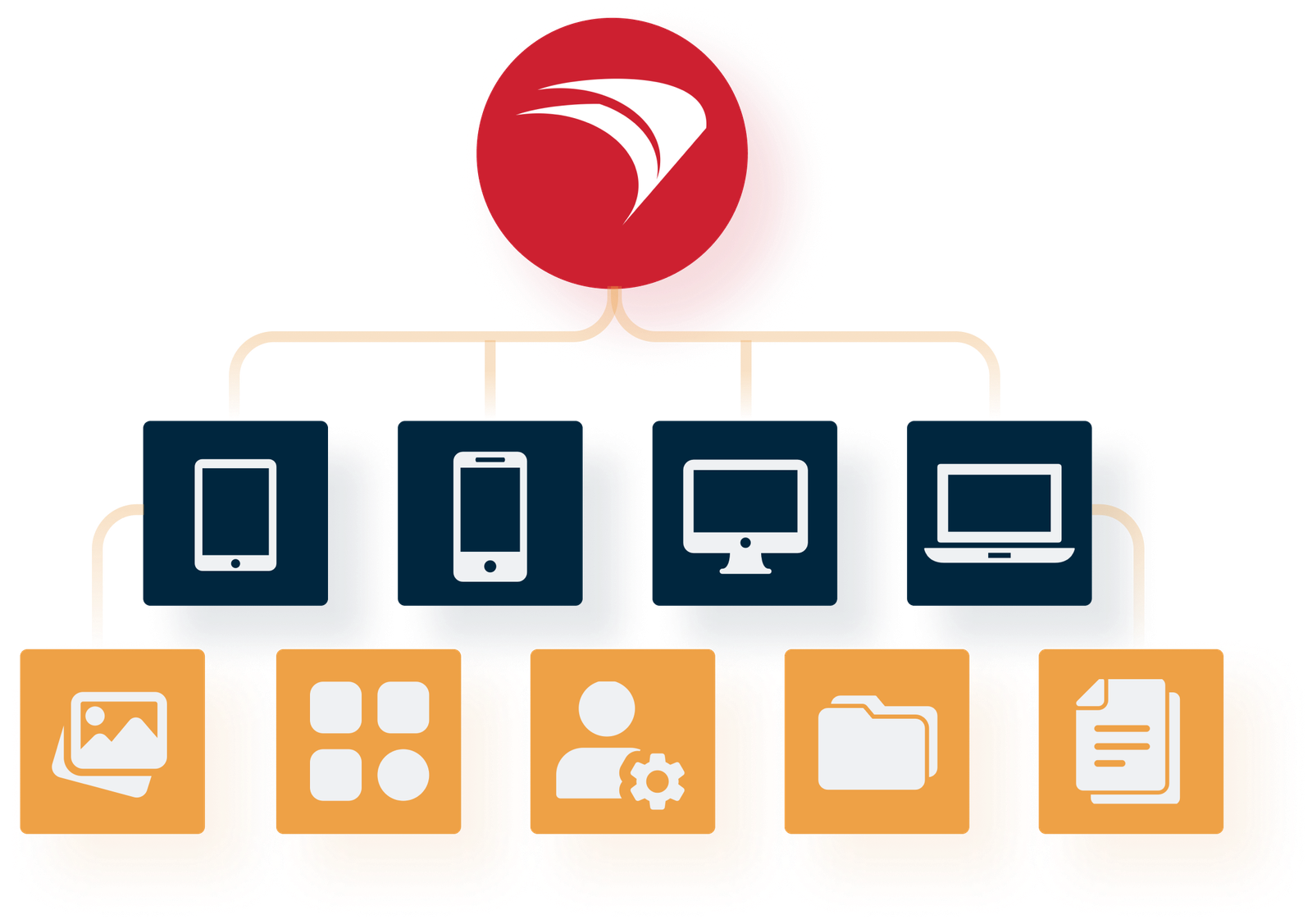
FileWave packages what you want to deploy into a unit called a Fileset. A Fileset can contain an application, individual files, configuration settings or a script. You assign it to a group of devices or users, and FileWave delivers it, applies it and reports back on whether it succeeded. Applications, updates and custom scripts can all be deployed this way.
The practical consequence is that rolling software out to four hundred laptops is the same amount of work as rolling it out to four. You define it once and assign it. The devices do not need to be in the office, and nobody needs to walk to a desk.
Self-Healing: the part most alternatives do not have
FileWave describes the ability to deploy files directly to a device's filesystem with Self-Healing enabled as one of the main things separating it from other solutions, and in daily operation it is hard to disagree.
When a file is deployed with Self-Healing turned on, FileWave re-downloads the original automatically whenever that file is modified or deleted on the device. A user who deletes something they should not have, or an installation damaged by a bad update, is repaired without a support ticket being raised. FileWave offers three verification settings, so the behaviour can be chosen per file:
- Self-Healing. The file is repaired or replaced by the server if it is altered in any way. Used where contents must remain intact at all times.
- Download If Missing. The file is re-downloaded only if it is deleted. If a user has altered it deliberately, the change is left alone.
- Ignore At Verify. The file is placed on the device and then left entirely alone — appropriate for templates or documents users are meant to edit.
Verification runs when the device reboots, every twenty-four hours by default, or on demand. For a school where the same machines are used by different students every hour, this single feature removes a large share of the routine support load.
Patch management
Unpatched software is the most common way an organisation is compromised, and it is rarely the result of a decision. It is the result of nobody having a reliable way to see which devices are behind.
FileWave provides scheduled patching for operating systems and third-party applications. Two things in that sentence do the work. Scheduled means patching is a policy rather than a project, so it happens whether or not anyone remembers. Third-party matters because most exploited vulnerabilities are not in Windows or macOS themselves but in the browsers, runtimes, PDF readers and media tools installed alongside them — exactly the software that platform update tools ignore.
Combined with reporting, this changes the question from "are we patched?" to "which twelve devices are not, and why" — a question that can actually be answered and acted on.
Device inventory and IT asset management
FileWave describes itself as unified endpoint management and IT asset software, and the second half is easy to overlook until an audit, a licence renewal or an insurance claim arrives.
Because every managed device reports back, the console holds a current record of what exists, what is installed on it, which version it is running and whether it complies with policy. Real-time compliance and inventory reports can be generated from that data.
This replaces the spreadsheet, and it answers questions the spreadsheet never could:
- How many devices do we actually own, and where are they?
- How many installations of this application exist, and does that match what we bought?
- Which devices are still on an operating system version that is no longer receiving security updates?
- Which machines have not checked in for a month — and are they in a drawer, or gone?
That last question connects to the end of the device lifecycle. When hardware is retired, sold or returned, the data on it becomes someone's responsibility — a subject we cover separately in our guide to secure data erasure and drive decommissioning.
FileWave for schools and universities
Education is one of the environments FileWave explicitly serves, across both K-12 schools and higher education, and school IT has a shape that general business tools handle badly.
A school does not have one device per person. It has carts of shared iPads, a computer lab, staff laptops and often Chromebooks, all used by different people every hour, all needing to be reset and reissued on a timetable set by the academic year rather than by IT. A thousand devices might be handled by one or two technicians.
The features that matter most in that setting are the ones that remove repetition:
- Zero-touch enrolment through Apple School Manager. New iPads are assigned to the school in ASM and to the FileWave server from there. A device configures itself on first power-on, which turns a delivery of three hundred iPads from a summer project into a straightforward one.
- Shared iPad. Devices used by more than one student are supported as shared, rather than being tied to a single person.
- Self-Healing. Students remove things. Files come back on their own instead of generating tickets.
- Application deployment by group. A subject's software goes to that year group's devices, and to no others.
- Restrictions and policy. Camera, app installation and other features can be controlled where the setting requires it.
- Inventory. At the end of term, a live record of which device is assigned where is the difference between a stocktake and a search.
Managing the devices is only part of it — they also have to be stored, charged and moved between classrooms, which is why our education customers usually pair device management with LapCabby charging and storage trolleys. Institutions running creative curricula may also be eligible for discounted licensing through the Adobe education program.
FileWave for enterprises
The corporate case is less about volume and more about consistency and risk. FileWave lists corporate, finance, media and publishing, and public administration among the sectors it serves.
In a commercial environment the recurring requirements are these. Every device should be configured the same way, so that support is predictable. Software should reach the right people and no one else, because licences cost money and unmanaged installations create exposure. Security policy should be enforced rather than requested. Devices should be patched on a schedule. And when hardware is lost or an employee leaves, the organisation should be able to act on the device immediately — remote lock, or a full wipe.
FileWave also supports full-disk and file-level encryption using AES-256, which is often the control an auditor asks about first.
| Environment | The pressure | What FileWave helps manage |
|---|---|---|
| Schools and universities | Shared devices, seasonal resets, very few technicians | Zero-touch iPad enrolment, Shared iPad, app deployment by class, Self-Healing, inventory |
| Corporate offices | Mixed Mac and Windows, licence control, staff turnover | Standard configuration, software distribution, patching, encryption, remote lock and wipe |
| Remote and hybrid teams | Devices rarely or never on the corporate network | Remote enrolment, deployment and patching without the device coming in |
| Creative and media | Large applications, Mac-heavy, long installs | Fileset deployment of large suites, self-healing installations, macOS depth |
| Government and public sector | Compliance evidence and data residency conditions | Compliance reporting, policy enforcement, on-premise deployment option |
| Retail and multi-site | Many locations, no local IT presence | Central configuration and updates pushed to every branch |
Cloud or on-premise
FileWave can be installed on your own servers or run from FileWave's cloud, and the company states that you get the same features either way. That is a more meaningful choice in this region than it might be elsewhere.
Cloud suits organisations that would rather not run and maintain a server, and it is generally the faster route to a working deployment. On-premise suits organisations where a tender, a regulator or an internal policy requires that management data stays on infrastructure the organisation controls — a condition that appears regularly in government, education and financial-sector procurement across the UAE and Saudi Arabia. The point worth taking is that the requirement does not force a compromise on capability.
Why organisations in the UAE and Saudi Arabia need centralised endpoint management
The general case for endpoint management applies everywhere. A few conditions make it sharper here.
Estates are genuinely mixed. A single Dubai organisation will commonly run Windows in finance and operations, Macs in design and marketing, iPads in the field or the classroom, and Android phones across the rest. Multi-platform is the normal case, not the exception, which puts a real premium on one console rather than four.
Growth is fast and uneven. Headcount can change quickly, and new offices open across the GCC. Onboarding that depends on a technician being physically present does not survive that.
Distributed teams are standard. Regional businesses routinely operate across several countries from one IT function. Devices are in Riyadh, Doha and Cairo while the team managing them is in Dubai.
Regulatory expectations have risen. Data protection and cybersecurity requirements across the UAE and Saudi Arabia increasingly ask organisations to demonstrate control of their endpoints — not to assert it, but to show evidence. Live inventory and compliance reporting is what that evidence looks like in practice.
Device loss is a live risk. High mobility and heavy travel mean laptops and phones go missing more often than in a static office culture. Remote lock and wipe stop being theoretical features.
Why local implementation and support matters
Endpoint management is not a product you install and walk away from. The deployment decisions made in the first fortnight — how devices are grouped, how policies are structured, how software is packaged — determine how much work the platform saves for years afterwards. Getting those wrong is recoverable but expensive.
There are three practical reasons a regional partner matters more here than the licence price suggests. Time zones: an enrolment problem on a Sunday morning in Dubai is not a convenient moment to be waiting on a European or American support desk, and the Gulf working week does not align with either. Procurement: public sector and education buying runs through local processes, quotations and terms that an overseas vendor is not set up to serve. And integration: the platform has to meet the network, directory and security stack you already have, which is a conversation best held in person.
PRO TECHnology handles supply, deployment and support for FileWave locally, from Dubai, across the Middle East.
PRO TECHnology and FileWave in the Middle East
To be precise about the relationship, because it is a fair question to ask of any reseller: FileWave AG is the manufacturer and develops the platform. PRO TECHnology was appointed an authorised FileWave reseller in the GCC in 2009 and has represented the platform in the region since. That appointment sits alongside the other partnerships listed in our company history.
What that means for a customer is straightforward. Licensing, evaluation, deployment, training and ongoing support are handled locally rather than remotely, by a team that has worked with the platform for over fifteen years and knows how it behaves in schools, in creative studios and in corporate environments here. FileWave sits within our enterprise and corporate IT division alongside secure storage, archiving and endpoint security, and it appears in our business continuity planning as the device layer — the mechanism that re-images and restores an endpoint so that a lost laptop is an inconvenience rather than an incident.
If you want to see the platform against your own estate rather than a demonstration environment, that is the useful next step. Our existing FileWave product page covers the platform overview, and you can reach the team through the contact page.
Frequently asked questions
What is FileWave?
FileWave is a unified endpoint management platform made by FileWave AG, a company founded in Switzerland in 1992. It lets an IT team enrol, configure, secure and support devices from one console, across macOS, iOS, tvOS, Windows, Android and ChromeOS. It combines mobile device management with desktop and laptop management, plus IT asset tracking.
What is FileWave used for?
It is used to manage large numbers of devices without handling each one individually. Typical tasks are enrolling new devices, installing and updating software remotely, applying security policies, patching operating systems and third-party applications, keeping a live inventory of hardware and software, and locking or wiping a device that has been lost or stolen.
What is MDM?
MDM stands for Mobile Device Management. It is a framework built into modern operating systems that allows an approved management server to configure a device remotely — pushing Wi-Fi and email settings, installing or removing apps, enforcing a passcode, restricting features, and remotely locking or erasing the device if it goes missing.
What is UEM?
UEM stands for Unified Endpoint Management. It covers the mobile devices MDM handles and adds desktops and laptops running Windows and macOS, where software deployment, patching and imaging happen. The word unified means one console, one set of policies and one inventory across every device type rather than a separate tool for each.
What is the difference between MDM and UEM?
MDM is a subset of UEM. MDM manages phones and tablets through the controls built into the operating system. UEM does that and also manages computers, where the heavier work of installing large applications, repairing broken installations and patching third-party software takes place. If your fleet includes staff laptops, MDM alone will leave half the job unmanaged.
Can FileWave manage Mac and Windows devices together?
Yes. Managing mixed estates from one console is the platform's main purpose. macOS and Windows devices are both handled for enrolment, configuration, software distribution, patching and inventory, so an organisation running Macs in design and PCs in finance does not need two separate management systems or two skill sets.
Can FileWave manage iPads in schools?
Yes, and education is one of the environments FileWave explicitly serves across K-12 and higher education. Schools can enrol iPads with zero touch, deploy apps to specific class or year groups, apply restrictions, and use Shared iPad for devices used by more than one student. Self-Healing restores files that students remove.
Does FileWave work with Apple School Manager?
Yes. FileWave integrates with both Apple School Manager and Apple Business Manager. Devices bought through an authorised channel are assigned to your organisation in ASM or ABM, then to your FileWave server, so they enrol automatically on first power-on. FileWave also supports enrolment through Apple Configurator 2.
What is zero-touch deployment?
Zero-touch means a new device configures itself the first time it is switched on, with no hands-on work by IT. With Apple devices this uses Automated Device Enrollment, formerly called the Device Enrolment Program. The sealed device is unboxed by the end user, connects to the network, enrols with the management server and applies its assigned settings and apps automatically.
Can FileWave remotely deploy applications?
Yes. Software is packaged into a unit called a Fileset, which can hold an application, files, settings or a script, and assigned to a group of devices or users. FileWave delivers it and reports whether it succeeded. Deploying to four hundred devices takes the same effort as deploying to four.
Can FileWave handle patch management?
Yes. FileWave provides scheduled patching for operating systems and for third-party applications. Third-party coverage matters because most exploited vulnerabilities are found not in Windows or macOS themselves but in the browsers, runtimes and readers installed alongside them — software that built-in platform update tools do not maintain.
Who supplies FileWave in the UAE, Saudi Arabia and the Middle East?
PRO TECHnology was appointed an authorised FileWave reseller in the GCC in 2009 and has represented the platform in the region since. Licensing, evaluation, deployment, training and support are handled locally from Dubai across the Middle East, rather than remotely from Europe or North America.
إدارة الأجهزة والنقاط الطرفية من FileWave في الإمارات والشرق الأوسط
مع تزايد أعداد الأجهزة داخل المؤسسات، يصبح من الصعب إدارتها يدويًا جهازًا تلو الآخر. توفّر منصة FileWave إدارة موحّدة للنقاط الطرفية من خلال وحدة تحكم واحدة تشمل أنظمة macOS وiOS وtvOS وWindows وAndroid وChromeOS، وتتيح تسجيل الأجهزة عن بُعد، وتوزيع البرامج والتطبيقات، وإدارة التحديثات والتصحيحات الأمنية، وحصر الأصول التقنية، وتطبيق سياسات الأمان، وقفل الجهاز أو مسح بياناته عند فقدانه. وتتميّز المنصة بخاصية الإصلاح الذاتي التي تعيد الملفات المحذوفة أو المعدَّلة تلقائيًا دون تدخل فريق الدعم. كما تدعم التسجيل التلقائي للأجهزة عبر Apple School Manager وApple Business Manager، وهو ما يخدم المدارس والجامعات التي تدير أعدادًا كبيرة من أجهزة iPad. ويمكن تشغيل المنصة سحابيًا أو على خوادم المؤسسة نفسها. وقد تم اعتماد شركة PRO TECHnology موزّعًا معتمدًا لمنتجات FileWave في دول مجلس التعاون الخليجي منذ عام 2009، مع توفير التركيب والدعم الفني محليًا من دبي. كلمات البحث الشائعة: إدارة الأجهزة المحمولة، إدارة النقاط الطرفية، إدارة أجهزة الشركات، إدارة أجهزة المدارس، إدارة أجهزة Apple، برامج إدارة الأجهزة في الإمارات والسعودية.
See it against your own devices
The useful test of an endpoint management platform is not a demonstration environment. It is your estate: your mix of operating systems, your directory, your software, and the tasks that currently take your team the longest. If you would like to see FileWave applied to that, we can arrange an evaluation.