MedicAir Air Purifiers in Saudi Arabia: Supply, Filters and Project Support
Published · PRO TECHnology Air Quality Solutions
PRO TECHnology is the exclusive MedicAir distributor and partner for the GCC, and that includes the Kingdom of Saudi Arabia. This page is about buying: which models are supplied, how an order and its paperwork actually work, what the Saudi conformity route requires, how replacement filters are handled, and where the honest limits of our coverage are.
If you are specifying air purification for a hospital, clinic, hotel, office or villa in Riyadh, Jeddah, Dammam or anywhere else in the Kingdom, the equipment question is the easy half. The half that decides whether a project runs smoothly is the route: who the appointed distributor is, how the units clear SASO conformity and customs, who sizes the rooms, and where the replacement cartridges come from in year two. That is what this page sets out. The models themselves are documented in full on the MedicAir brand page, and the sizing method on our medical-grade air purifier guide.
- GCCexclusive MedicAir distribution, Saudi included
- SABERevery commercial import is registered
- Not a medical deviceSFDA names air purifiers as non-medical
- Dubaiwhere units, cartridges and support are held
Key takeaways
- PRO TECHnology is the exclusive MedicAir distributor and partner for the GCC, which includes Saudi Arabia. You are buying from the appointed distributor rather than through a grey import.
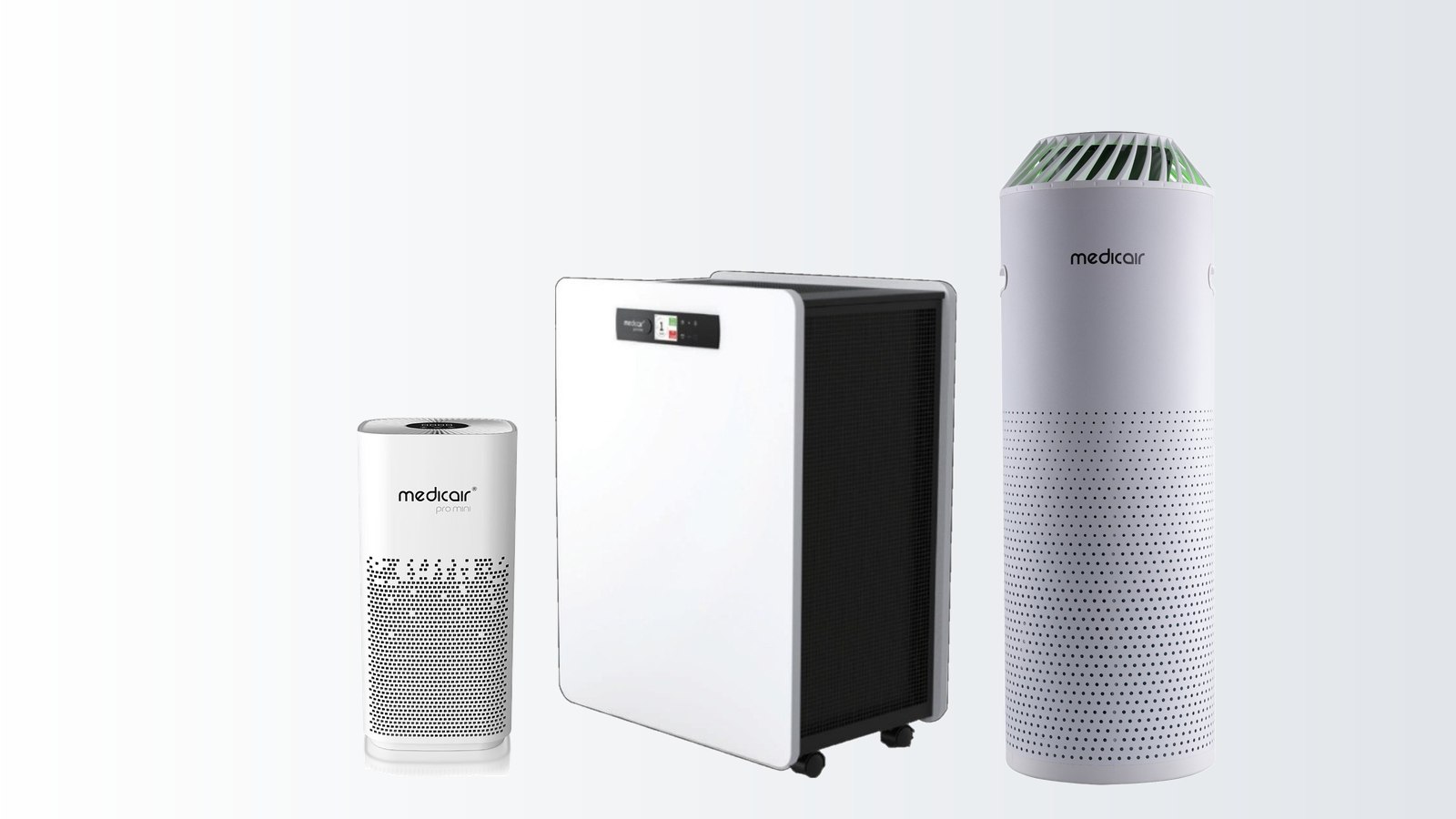
- Three models are supplied: the Pro Mini for bedrooms, guest rooms and single consulting rooms, the Pro for larger rooms, and the Pro Max for lobbies, open-plan floors and function spaces.
- Every commercial import into the Kingdom is registered on SASO's SABER platform. Mains-powered equipment falls under the Gulf technical regulation for low voltage appliances, which requires the Gulf Conformity Marking and safety information and instructions in Arabic.
- The Saudi FDA's own classification guidance names air purifiers as products that are not medical devices, provided no therapeutic or preventative claim is made. That is a regulatory reason, not only an ethical one, for the careful wording used throughout this site.
- The Saudi Building Code requires hospital and ambulatory care ventilation to be designed to ASHRAE 170. Those are requirements on the building's ventilation, not on plug-in equipment.
- Equipment, replacement cartridges and support are held and handled in Dubai. We do not operate a service centre inside the Kingdom and do not claim to.
- Tell us the city, the rooms and the operating hours and we will come back with a model-by-room specification and a quotation. We do not publish prices, stock levels or delivery times, because they depend on the model, the quantity and the shipment.
What we supply into the Kingdom
Three models, all combining a pre-filter, an ATP-HEPA medium, an activated carbon layer and an enclosed UV-C stage in one replaceable cartridge. They differ in capacity, size and sensing, not in approach.
| Model | Manufacturer capacity | HEPA grade | Published sound | Typical Saudi application |
|---|---|---|---|---|
| MedicAir Pro Mini | up to 400 m³/h | H14 | 21 dB lowest setting, ≤55 dB(A) maximum | Bedrooms, hotel guest rooms, single offices, consulting and treatment rooms |
| MedicAir Pro | up to 605 m³/h | H13 | 28 to 60 dB | Majlis and living spaces, meeting rooms, classrooms, larger waiting areas |
| MedicAir Pro Max | 1,500 m³/h | H14 | 28 to 54 dB | Hotel lobbies, open-plan floors, function rooms, gyms, large waiting areas |
The Pro Max is the only model with a carbon dioxide sensor. Note that a purifier measures carbon dioxide but cannot remove it, rising CO₂ is a ventilation signal, and it is useful precisely because it tells you when filtration is not the answer.
How a Saudi order actually works
- Send the rooms, not the question. For each space we need length, width and ceiling height, what the room is used for, typical and peak occupancy, daily operating hours and whether it has mechanical ventilation. A room schedule produces a specification; a request for the best model produces a guess.
- We size it and come back with a model per room. Sizing is arithmetic on room volume and a target air change rate, and it frequently returns more than one unit for a large space. We will say so rather than stretch a single machine across a lobby.
- Quotation. Equipment, the cartridges the installation will need, and the shipment. We quote against the room schedule, so the number can be checked line by line.
- Conformity and shipping paperwork. The consignment is registered and certified through SASO's SABER platform before it can clear customs. The requirement depends on the model's HS code, so it is confirmed per shipment rather than assumed.
- Delivery and setting up. The units are plug-in appliances that need no installer: the cartridge is fitted from the base, and placement is the part that matters more than assembly. We will tell you where to put them and where not to.
- Filters, from the first conversation. One combined cartridge per machine, with a published life of 5,000 hours and a manufacturer recommendation to change it at least every twelve months. Budget it as a running cost from the start.
Importing into Saudi Arabia: SABER, conformity and Arabic documentation
This is the part of a Gulf project that surprises buyers who have only bought locally before, and it is worth understanding even though the paperwork sits with us.
SABER
SABER is the electronic platform operated under the supervision of the Saudi Standards, Metrology and Quality Organization, SASO. Products are registered on it and the certificates required for customs clearance are issued through it. SASO's own guidance is explicit that this applies even to products not covered by a technical regulation: those still have to be registered, a self-declaration issued and a shipment certificate obtained before the goods can clear. Where a product is covered by a technical regulation, the route is a Product Certificate of Conformity issued per model, followed by a Shipment Certificate of Conformity for each consignment.
Which of the two routes applies is decided by the model's HS customs code on the SABER platform. We check that per shipment rather than assume it, and we would treat any supplier who quotes you a blanket answer without checking the code with some caution.
The low voltage technical regulation
A mains-powered air purifier is an electrical appliance, and the Gulf Technical Regulation for Low Voltage Electrical Equipment and Appliances (BD-142004-01) covers equipment rated between 50 and 1,000 volts AC. Under it the manufacturer must hold a Declaration of Conformity, affix the Gulf Conformity Marking, and supply safety information and instructions for use in Arabic. The regulation also places explicit duties on the distributor: before equipment is made available on the market we have to verify that the marking is present and that the documentation and Arabic instructions are supplied. That is a check worth asking any supplier to demonstrate.
Air purifiers are not medical devices in Saudi Arabia, and the wording is what decides that
The Saudi Food and Drug Authority's Products Classification Guidance lists air purifiers, air decontamination units and mobile air decontamination units as examples of products that are not medical devices, even when they are used inside a healthcare facility, and places electrical devices with no medical claim outside the Authority's jurisdiction altogether.
The same guidance sets out how that changes: if therapeutic or preventative claims are present or implied, the product is treated as a medical device. In other words the classification turns on the marketing language, not on the hardware.
What Saudi rules ask of the building
Air purification supplements a building's ventilation and never replaces it, and the requirements that exist in the Kingdom sit on the ventilation system rather than on plug-in equipment.
- Healthcare. The Saudi Building Code's mechanical code, SBC 501, requires mechanical ventilation for hospitals and ambulatory care facilities to be designed to ASHRAE 170, the healthcare ventilation standard, the same standard adopted in Dubai and Abu Dhabi, which is why a specification written for one usually reads correctly in the other. Confirm the applicable code edition with your consulting engineer.
- General buildings. SBC 501 sets its own minimum outdoor air rates in its ventilation chapter rather than adopting ASHRAE 62.1 by reference. That distinction matters if you are transferring a specification from another market, and we mention it because the opposite is frequently asserted.
- Smoking areas. Saudi Arabia's Anti-Smoking Law and its Implementing Regulations require a designated smoking area to be licensed and separately ventilated, to provide no food, drinks or entertainment, and to carry bilingual signage barring under-18s. As in the UAE, those are ventilation and licensing requirements that a recirculating air purifier cannot satisfy. Our cigar lounge guide explains what filtration can and cannot contribute in a smoking room.
Filters, support and the limits of our coverage
The purchase is the smaller half. A purifier is a consumable-driven machine and a unit with an exhausted cartridge is a fan, so the question that decides the cost of ownership is where the next cartridge comes from.
Replacement cartridges
Each model takes a single combined cartridge holding the pre-filter, the HEPA medium and the carbon layer, which is why changing one takes minutes and needs no technician. MedicAir publishes a filter life of 5,000 hours and recommends replacement at least once every twelve months even where the unit has not signalled a change. A heavily used machine in a dusty city, or one in a space with a high gas and odour load, will reach that point sooner, the carbon stage saturates silently, with no visible sign. Order cartridges with the machines and again before they are needed rather than after.
What is held in Dubai
PRO TECHnology has traded from Dubai since 1998. The range is held, demonstrated and supported there, the Air Quality Solutions team sizes projects from there, and the machines can be seen and heard running at our Business Bay showroom before anything is committed, which for a hotel or healthcare buyer is usually worth the trip, because noise is the specification input that a data sheet cannot settle.
What we will not claim
- We do not operate a service centre, hold stock or employ technicians inside Saudi Arabia, and we will not imply otherwise. Equipment and cartridges are supplied and supported from Dubai.
- We do not publish prices, landed costs, duties or delivery times on this page. They depend on the model, the quantity and the shipment, and a published figure would mislead more often than it helped.
- We do not claim any Saudi approval, certification or registration for the product beyond the conformity route described above, which is completed per shipment.
- PRONEXT, the group's Saudi operation in Riyadh, is the group's presence in the Kingdom. Ask us how a specific project would be handled and we will tell you plainly who does what.
Buying MedicAir in Saudi Arabia: frequently asked questions
Who is the MedicAir distributor for Saudi Arabia?
PRO TECHnology Co. L.L.C., based in Dubai, is the exclusive MedicAir distributor and partner for the GCC, which includes the Kingdom of Saudi Arabia alongside the United Arab Emirates, Qatar, Kuwait, Bahrain and Oman. Equipment, replacement cartridges and support are handled from Dubai. PRONEXT is the group's Saudi operation in Riyadh.
What paperwork is needed to import an air purifier into Saudi Arabia?
Every commercial import is registered on SABER, the electronic platform operated under the supervision of the Saudi Standards, Metrology and Quality Organization. Products not covered by a technical regulation still require registration, a self-declaration and a shipment certificate before customs clearance. Products that are covered require a Product Certificate of Conformity per model and a Shipment Certificate of Conformity per consignment. Which route applies is determined by the model's HS customs code on SABER, so it is checked per shipment. A mains-powered appliance also falls under the Gulf technical regulation for low voltage equipment, which requires the Gulf Conformity Marking and Arabic safety information and instructions.
Are air purifiers regulated as medical devices by the Saudi FDA?
No. The Saudi Food and Drug Authority's Products Classification Guidance lists air purifiers, air decontamination units and mobile air decontamination units as examples of products that are not medical devices, even when used in a healthcare facility, and places electrical devices with no medical claim outside its jurisdiction. The same guidance states that a product becomes a medical device if therapeutic or preventative claims are present or implied, so the classification turns on the claims made rather than on the hardware. MedicAir's own manual states that the unit is not a medical device.
Do you hold stock of MedicAir in Saudi Arabia?
We do not claim to hold stock, operate a service centre or employ technicians inside the Kingdom. Equipment and replacement cartridges are supplied and supported from Dubai, where PRO TECHnology has traded since 1998. We would rather say that plainly at the quotation stage than have it discovered at the first warranty claim. Ask about a specific project and we will tell you exactly how it would be handled.
Does Saudi regulation require an air purifier in a hospital or an office?
No rule we found requires a portable air purifier in any Saudi building. The requirements that exist sit on the building's ventilation: the Saudi Building Code's mechanical code requires hospital and ambulatory care ventilation to be designed to ASHRAE 170, and sets its own minimum outdoor air rates for buildings generally. We have read those instruments rather than every rule in the Kingdom, and we do not transfer UAE requirements to Saudi Arabia. If a supplier justifies a purchase on a compliance obligation, ask for the instrument and the article number.
How do I choose between the Pro Mini, Pro and Pro Max for a project in Riyadh or Jeddah?
Size each room separately from its volume rather than its floor area: length by width by ceiling height, multiplied by your target air changes per hour, gives the clean air the room needs in cubic metres per hour. Compare that against the model's rated capacity, and expect the delivered figure to be lower than the rating, particularly at a quieter fan setting. As a rough shape, the Pro Mini suits bedrooms, guest rooms and single consulting rooms, the Pro suits larger rooms and meeting spaces, and the Pro Max suits lobbies, open-plan floors and function rooms. Send us the room schedule and we will do the arithmetic.
Where do replacement filters come from and how often are they changed?
Each model takes one combined cartridge containing the pre-filter, HEPA medium and carbon layer, supplied through the same route as the machine. MedicAir publishes a filter life of 5,000 hours and recommends replacement at least once every twelve months even if the unit has not signalled a change. Heavy use, a dusty environment or a high odour and gas load will shorten that, and the carbon stage saturates with no visible sign, so plan cartridges as a recurring cost rather than an incident.
Can you quote a delivery time for Saudi Arabia?
Not on a web page. Lead time depends on the model, the quantity, the shipment and the conformity route for that consignment, and a figure published today would be wrong soon enough to mislead someone. Ask with your requirement and we will tell you what is true for that order.
Do the units come with Arabic documentation?
The Gulf technical regulation for low voltage electrical equipment requires safety information and instructions for use to be supplied in Arabic, and places a duty on the distributor to verify that before the equipment is placed on the market. Ask us to confirm what is supplied with the specific model and quantity you are ordering.
أجهزة تنقية الهواء MedicAir في المملكة العربية السعودية
شركة بروتكنولوجي هي الموزع الحصري لأجهزة MedicAir في دول مجلس التعاون الخليجي، ومن ضمنها المملكة العربية السعودية. وتضم المجموعة ثلاثة طرازات: Pro Mini بسعة تصل إلى 400 متر مكعب في الساعة وفلتر H14، وPro بسعة 605 وفلتر H13، وPro Max بسعة 1500 وفلتر H14، وجميعها تجمع بين الفلتر الأولي ووسائط HEPA وطبقة الكربون النشط ومرحلة أشعة فوق بنفسجية مغلقة في خرطوشة واحدة قابلة للاستبدال.
تُسجّل جميع الواردات التجارية على منصة سابر التابعة للهيئة السعودية للمواصفات والمقاييس والجودة. والمنتجات غير الخاضعة للوائح الفنية تحتاج كذلك إلى تسجيل وإقرار ذاتي وشهادة إرسالية قبل التخليص الجمركي، أما المنتجات الخاضعة فتتطلب شهادة مطابقة للمنتج وشهادة لكل إرسالية. كما تخضع الأجهزة الكهربائية للائحة الفنية الخليجية للأجهزة منخفضة الجهد، التي تشترط علامة المطابقة الخليجية وتوفير معلومات السلامة وتعليمات الاستخدام باللغة العربية.
تصنّف الهيئة العامة للغذاء والدواء أجهزة تنقية الهواء ضمن المنتجات التي لا تُعد أجهزة طبية، ما لم تُرفق بها ادعاءات علاجية أو وقائية؛ ولهذا لا ننشر أي ادعاء صحي عن هذه الأجهزة. ويشترط كود البناء السعودي تصميم تهوية المنشآت الصحية وفق معيار ASHRAE 170، وهي متطلبات تخص نظام التهوية في المبنى وليس الأجهزة المحمولة.
تُورّد الأجهزة والخراطيش البديلة ويُقدم الدعم من دبي، ولا ندّعي وجود مركز خدمة أو مخزون أو فنيين داخل المملكة. أرسلوا لنا جدول الغرف والمدينة وساعات التشغيل لنعود إليكم بتحديد الطراز المناسب لكل غرفة وعرض سعر.
Sources and how we checked them
Regulatory statements are attributed to the instrument that sets them, and we distinguish Saudi requirements from UAE ones rather than transferring either. Product figures come from the MedicAir documents supplied with the units and from the manufacturer's website, read on 27 September 2026.
- SASO SABER platform: product registration, and the requirement that products not subject to a technical regulation are still registered with a self-declaration and a shipment certificate
- GCC Standardization Organization, Gulf Technical Regulation for Low Voltage Electrical Equipment and Appliances (BD-142004-01): scope, the Gulf Conformity Marking, Arabic documentation and the distributor's verification duties
- Saudi Food and Drug Authority, Products Classification Guidance, Version 8.0: air purifiers named as non-medical devices, and claims as the trigger for medical device status
- Saudi Building Code SBC 501, Mechanical: ASHRAE 170 for hospital and ambulatory care ventilation, and the code's own outdoor air rates
- Ministry of Health, Kingdom of Saudi Arabia, Anti-Smoking Law (Royal Decree M/56) Implementing Regulations, Version 3, 2019
- MedicAir Pro Mini user manual, IFU_EM_REV1.1, April 2022
- MedicAir Pro Max specification sheet
Send us the rooms and the city
For a Saudi project the useful first message is a room schedule and a location rather than a request for a recommendation. For each space we need length, width and ceiling height, what the room is used for, typical and peak occupancy, daily operating hours and whether it has mechanical ventilation, plus the main air quality concern, dust, odour, smoke, allergies or general air quality. We will come back with a model per room, how many units each space needs, the cartridges the first year will consume, and how the supply and conformity route would work for that shipment.