UV Printing on Anodised Aluminium: How to Achieve Strong Ink Adhesion
Published · PRO TECHnology Digital Printing
Anodised aluminium is everywhere in this region: architectural signage, wayfinding, identification plates, control panels, equipment labels and branded metal products. Direct UV printing onto it can look superb and last for years, but adhesion is decided by the surface, not the artwork. This guide explains why some anodised sheet prints perfectly while another lifts under tape, and how to qualify your material before a production run.
Key takeaways
- UV ink cures as a thin film on top of aluminium, so oils, fingerprints, film residue or mill lacquers become the weak layer.
- Type II describes sulfuric-acid anodising, not printability; a Type II sheet can be sealed or unsealed, matte or mirror, dyed or natural.
- Sealing closes the oxide pores and leaves cured ink little to anchor into, while unsealed anodising retains porosity that keys the ink mechanically.
- Qualify each batch by printing a test panel, running a cross-hatch tape test, and keeping the reference panel with the job record.
Why does UV ink sometimes have poor adhesion on aluminium?
UV-cured ink does not soak into metal. It cures as a thin cross-linked film sitting on top of the surface, so anything between the ink and the aluminium becomes the weak layer that eventually lets go. In practice, most failures trace back to a handful of causes: machining or rolling oils left on the sheet, fingerprints from handling, adhesive residue from the protective film, invisible lacquers or conversion coatings applied at the mill, a fully sealed anodised layer that leaves the ink nothing to key into, dust and airborne contamination, an ink system that simply does not suit the substrate, under-curing, or a primer that is wrong for the job.
The important point is that almost none of these are printer faults. The printer lays down the same ink film either way; the surface decides whether that film stays attached. If prints that held perfectly last month start failing on a new pallet of sheet, suspect the material before the machine. Our guide to UV printing problems by material covers the same principle across acrylic, glass, wood and plastics.
What is anodised aluminium?
Anodising is an electrochemical process. The aluminium sheet is immersed in an electrolyte bath and a current is passed through it, which grows the metal’s natural oxide skin into a much thicker, harder aluminium oxide layer. That layer is part of the metal rather than a coating on top of it, which is why anodised finishes resist wear and corrosion so well, and why they take dyes that give the familiar silver, gold, black and coloured architectural finishes.
Fresh from the anodising tank, that oxide layer is microscopically porous, like a bed of tightly packed open cells. What happens to those pores next, more than anything else, determines how the sheet behaves under UV ink.
What is Type II anodised aluminium?
Type II is the common designation for conventional sulfuric-acid anodising, the process used for most decorative and architectural aluminium. It is the everyday anodising of the signage world; thicker hard-coat layers produced for engineering wear resistance are a different class.
A frequent misunderstanding is treating “Type II” as a printability specification. It is not. Type II describes the process, not the final surface: a Type II sheet can be matte or mirror-polished, dyed or natural, sealed or unsealed. It does not automatically mean matte, does not automatically mean unsealed, and does not automatically mean high adhesion. Two Type II sheets from different mills can behave completely differently under the same ink, so the label on the datasheet never replaces a test print on the actual material.
Sealed vs unsealed anodised aluminium for UV printing
After anodising, most aluminium is sealed: a hot-water or chemical step that closes the pores in the oxide layer to lock in dye and improve corrosion and stain resistance. Sealing is exactly what you want on an architectural facade, and it is also what makes some sheet frustrating to print, because a sealed, glass-smooth oxide surface gives the cured ink film very little to anchor into.
Unsealed or suitably prepared anodised aluminium, by contrast, can retain more surface porosity, and that porosity often provides an excellent mechanical key for UV ink; it is why some “digital-print-grade” anodised sheets hold ink so well. But this is a tendency, not a rule. Adhesion on any given sheet depends on the anodising process, the sealing chemistry and how completely it was carried out, any coating or lacquer on top, the finish, contamination, the ink system, curing and pre-treatment, all interacting. That is why the honest answer to “will this aluminium print well?” is always the same: test the exact material first.
Does the aluminium finish matter?
In production in this region we see satin silver, mirror silver and brushed gold anodised aluminium all printing successfully on UV flatbeds. The finish changes how the print looks and handles more than whether it is possible: brushed sheet has a directional grain that shows through thin ink layers and can help mechanical keying; satin diffuses reflections and is forgiving to handle; mirror sheet delivers a premium jewellery-like result but can have different surface characteristics from satin or brushed material and shows every fingerprint, so it demands the most careful preparation.
The practical rule: appearance does not by itself determine printability. A satin sheet may be sealed and difficult while a mirror sheet prints beautifully, or the reverse. Judge each finish, from each supplier, by its own adhesion test rather than by how it looks.
How to prepare anodised aluminium for UV printing
A disciplined preparation routine removes most adhesion surprises before they happen. The sequence that works in production:
- Remove the protective film, and do it shortly before printing rather than days in advance.
- Inspect the surface under good light for residue, scratches, staining or coating irregularities.
- From this point on, avoid touching the print area; handle sheet by the edges or wear gloves.
- Clean with a fresh lint-free cloth.
- Use an appropriate cleaner such as isopropyl alcohol only where it is confirmed compatible with the specific finish; some coated or dyed surfaces react badly to solvents, so check on an offcut first.
- Allow the surface to dry completely.
- Apply an adhesion primer if testing has shown this material needs one.
- Print a test panel with the production artwork and ink settings.
- Carry out adhesion testing on the cured print.
- Approve that material, from that batch, for production only after it passes.
Steps eight to ten are the ones most often skipped, and they are the cheapest insurance in the whole workflow. Our UV printing adhesion guide covers the same preparation logic across other substrates.
When is primer needed?
Primer is a bridge layer: it bonds to the substrate on one side and to the UV ink on the other. Whether anodised aluminium needs one depends on the substrate itself, the anodising and sealing, the ink chemistry, the application and the durability the finished part must survive. A wall-mounted interior sign and a machine nameplate that lives with oils and cleaning chemicals have very different requirements from the same sheet.
Suitably prepared anodised surfaces often print well with no primer at all, which is worth knowing because an unnecessary primer adds cost, handling time and its own failure mode if misapplied. When testing does call for one, the primer must match both the metal and the ink system. PRO TECHnology supplies Marabu inks, primers and cleaners alongside its printer range, and MODICO surface pre-treatment for jobs where wipe-on adhesion promoters or more aggressive preparation are the right answer. Print a bare panel and a primed panel side by side, test both, and specify the minimum that passes.
How to test UV ink adhesion on aluminium
Adhesion testing does not need a laboratory. The tests below, run on the cured test print, catch nearly every failure before production does:
- Cross-hatch test: cut a small grid of shallow scores through the ink film, press firm tape over the grid, and pull it off cleanly. Cured ink should stay on the metal with clean cut lines and no flaking squares. This is the classic cross-hatch method that adhesion standards are built around.
- Tape test: firm tape pressed over an uncut printed area and pulled sharply. Faster, less severe, useful as a first screen.
- Scratch and handling resistance: a fingernail and a coin dragged across the print, plus realistic handling: stacking, sliding into cartons, fixing to a wall.
- Chemical resistance where the application requires it: a rub with the cleaning agents the finished part will actually meet, such as glass cleaner on signage or isopropyl wipes on equipment panels.
Pass or fail is judged against the job, not against perfection: a decorative interior panel and an outdoor safety sign have different thresholds. Keep the tested panel with the job record; if a later batch behaves differently, the reference panel proves the material changed.
UV printing applications on anodised aluminium
Direct UV printing on anodised aluminium carries a wide range of work in the Gulf: industrial nameplates and serial-number plates, control and equipment panels, asset and safety labels, architectural signage and wayfinding, branded aluminium panels and plaques, awards, decorative interior sheet and custom metal products such as tags, badges and giftware. Because the print is digital, every plate can carry different data, and short runs cost no more per piece than long ones.
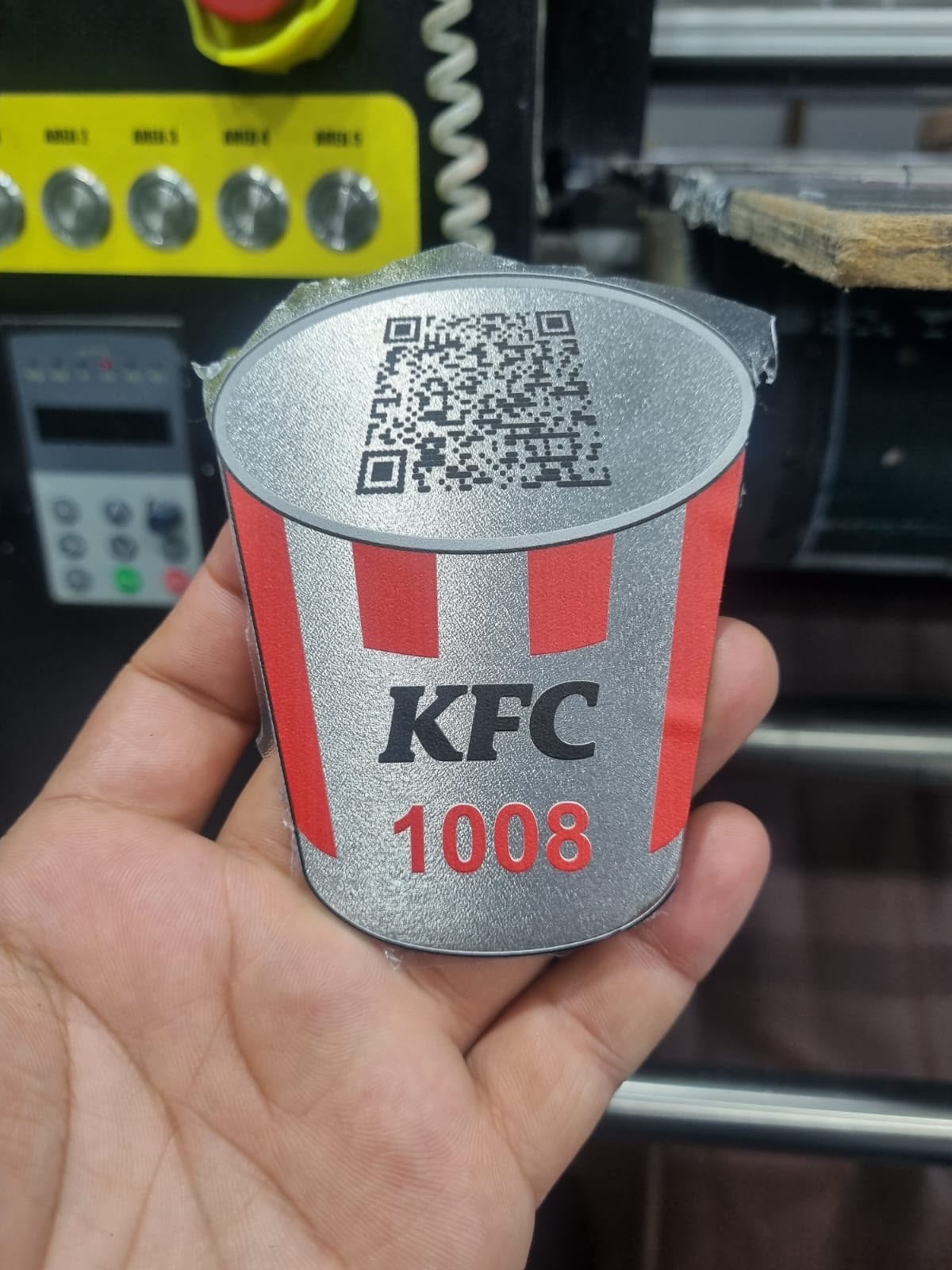
The QR-coded tag pictured at the top of this article is a typical example: durable variable data on brushed sheet, printed direct with no plates, screens or drying racks.
Direct Color Systems UV flatbed printing on aluminium
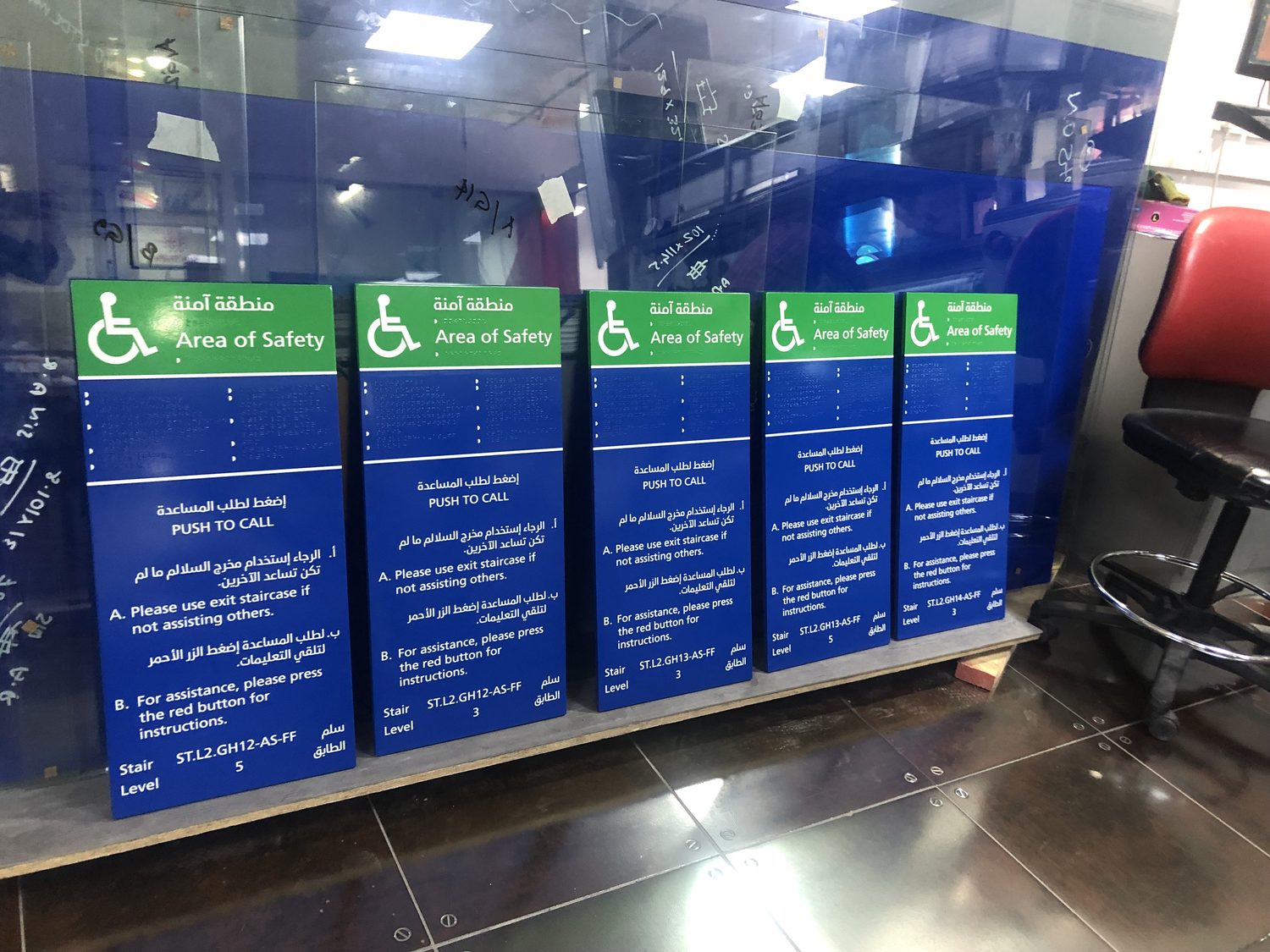
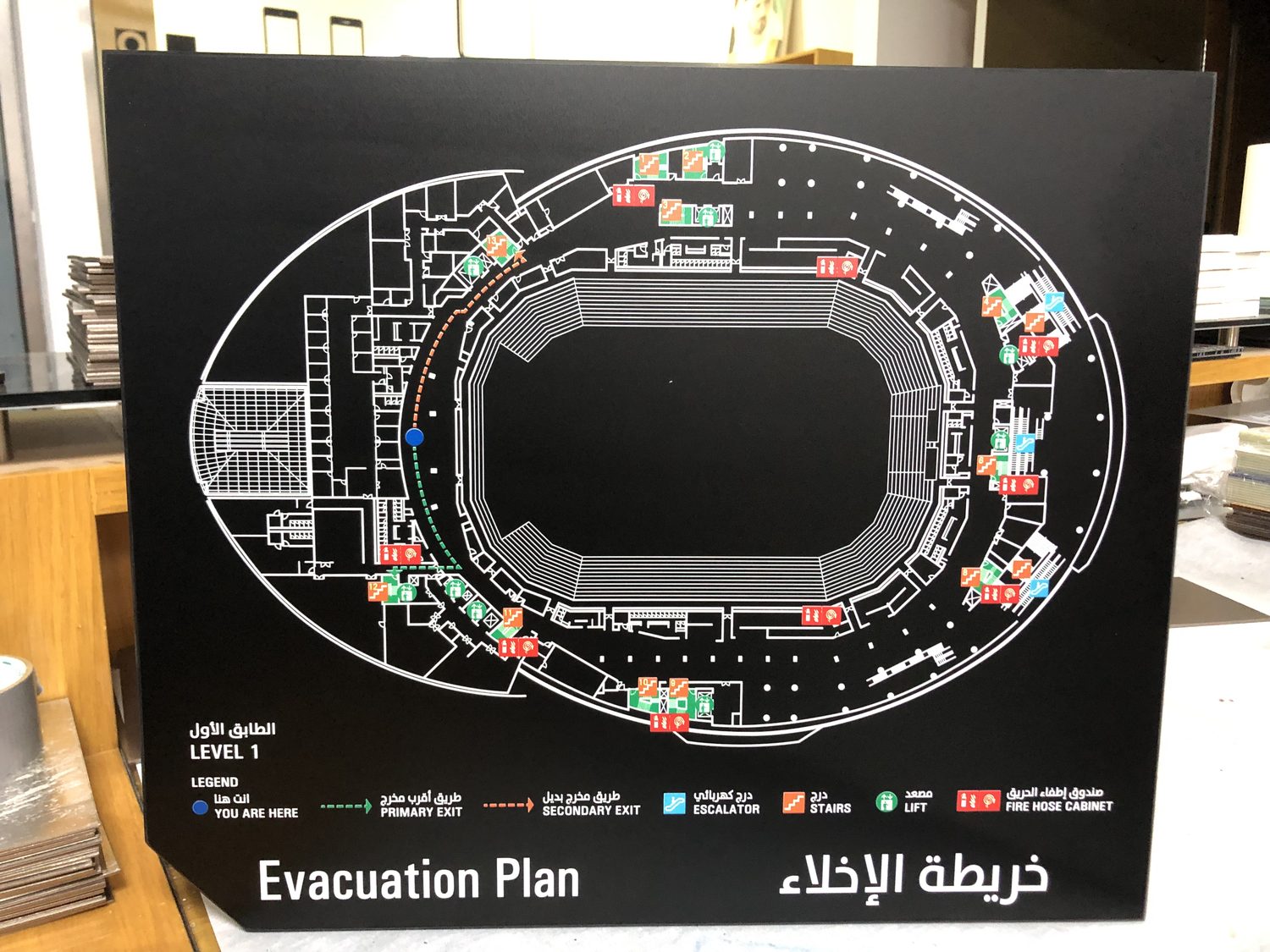
For this class of work PRO TECHnology supplies and supports Direct Color Systems UV flatbed printers, built for direct-to-substrate printing on rigid materials including metal and aluminium alongside glass, acrylic, wood and plastics. Colour, white and clear are laid down together in a single pass, which is what makes raised, textured and tactile effects practical, and DCS is a recognised leader in detailed textured and Braille UV printing, a genuine advantage for compliant signage on aluminium. The same print quality is available at four different bed sizes, so the machine can be matched to plate work, signage panels or mixed production.
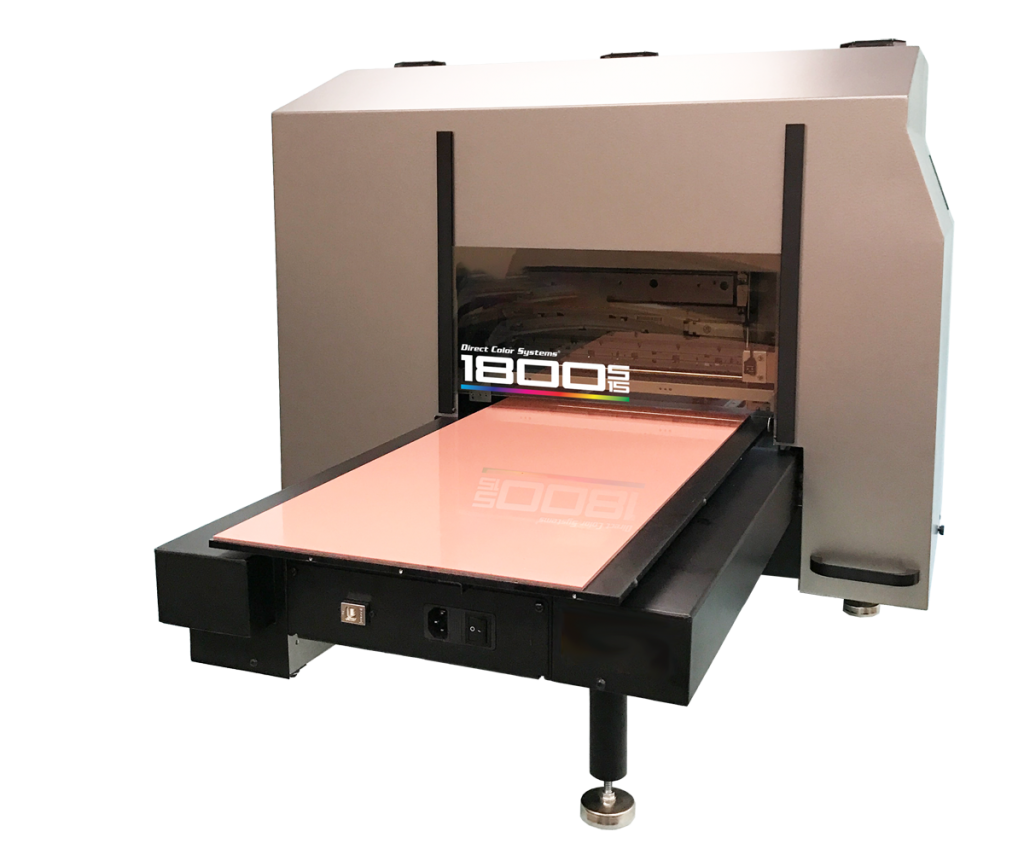
Machines are demonstrated, installed, serviced and supported locally from Dubai, and material trials on your own aluminium are part of the pre-sale process, not an afterthought. The broader machine landscape is covered in our guide to choosing a UV printing machine in the UAE.
A working example: Sun Studio’s aluminium workflow on the DCS UV84 Gen 2
A useful reference point is Sun Studio, our group UV printing studio in Al Quoz, Dubai, which runs a large-format Direct Color Systems UV84 Gen 2 flatbed in daily production alongside its LSINC cylindrical printers. Aluminium signage, nameplates and branded panels, including the satin silver, mirror silver and brushed gold anodised finishes described above, go through the same disciplined sequence this article recommends: surfaces are cleaned with isopropyl alcohol (IPA) where the finish allows it, a Marabu adhesion primer is applied when the substrate and durability requirement call for one, and harder-to-bond surfaces get MODICO surface pre-treatment, including Pyrosil flame-silicate and plasma treatment, before the ink goes down. Every new material or batch is adhesion-tested before a production run is approved.
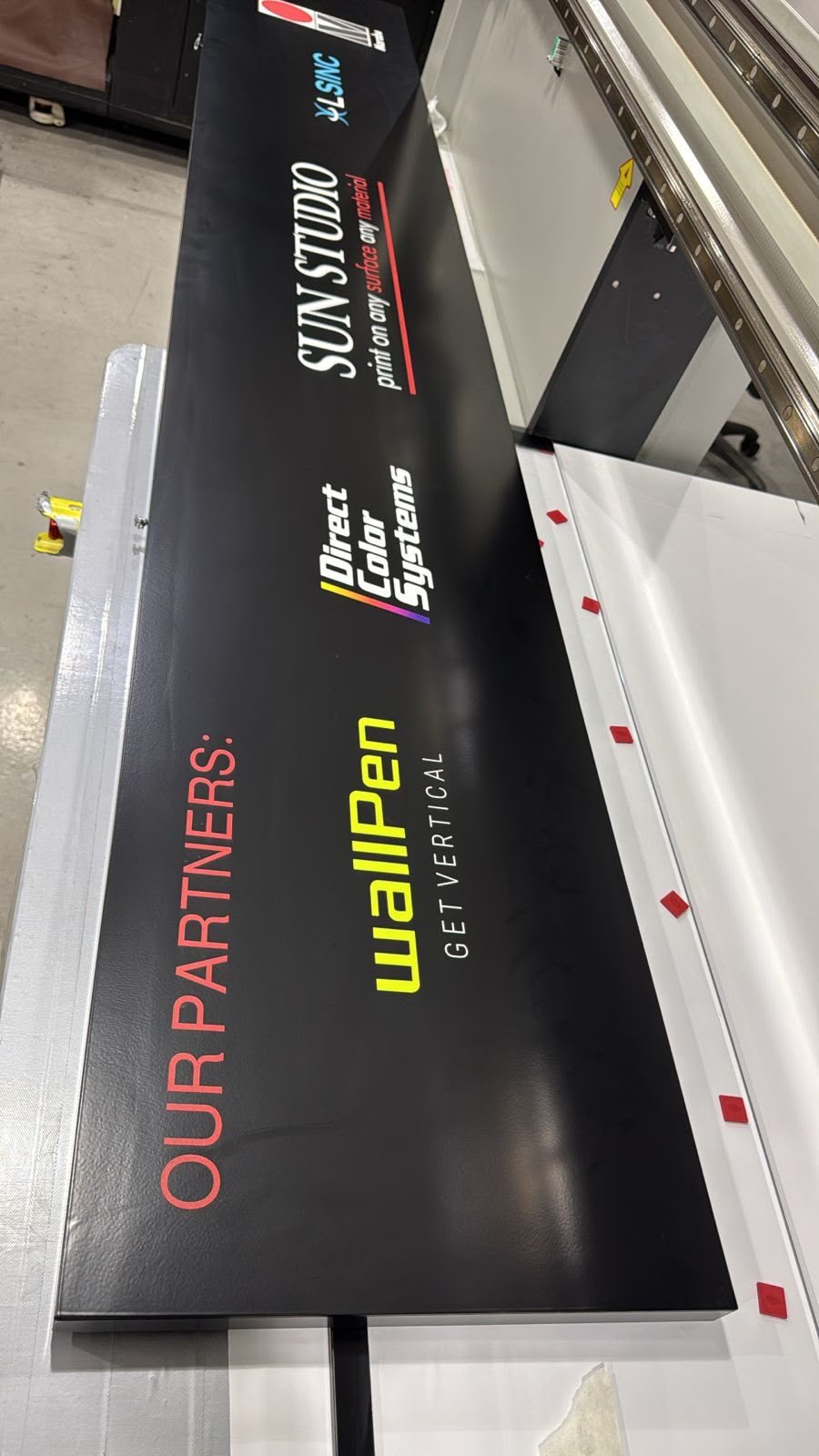
That combination, one large-format UV flatbed, a cleaning and priming discipline, and pre-treatment reserved for the materials that need it, is what turns anodised aluminium from an unpredictable substrate into a routine one. It is also the workflow we demonstrate to buyers: the same machine, inks and pre-treatments Sun Studio uses in production are the ones PRO TECHnology supplies and supports.
Why testing the exact aluminium batch matters
Two sheets of anodised aluminium can look identical on the rack and behave differently under ink, because the variables that govern adhesion are invisible: alloy, anodising line, sealing chemistry and completeness, any mill coating, supplier, batch, storage conditions and accumulated contamination. Signage businesses in the UAE commonly source anodised sheet and blanks through local suppliers such as Blue Rhine or Sign Trade, and the same finish name from different suppliers, or different batches from the same supplier, can still print differently. None of this makes any supplier wrong; it makes batch testing right.
In production environments, we recommend testing the exact aluminium sheet and finish before approving a full run, and re-testing when the supplier, finish or batch changes. Print one panel, run the cross-hatch and tape tests, and keep the panel. It is ten minutes of work that protects hours of machine time and a client deadline.
UV printing on aluminium in Dubai and the UAE
PRO TECHnology has supplied printing technology from Dubai since 1998 and supports commercial and industrial printers across the UAE and GCC as part of its Digital Printing division: UV printing equipment, application and substrate testing on customer material, inks and primers where applicable, operator training and local technical support. If you are qualifying anodised aluminium for a signage or industrial project, or choosing a printer for it (searched as either “anodised aluminium” or the US spelling “anodized aluminum”, the material is the same), we can test your sheet before you commit to hardware or to a production run.
Frequently asked questions
Can UV printers print directly on anodised aluminium?
Yes. UV flatbed printers such as the Direct Color Systems range print directly onto rigid substrates including suitable aluminium and other metals. Whether the ink then holds depends on the surface: the anodising, any sealing, the finish, cleanliness and, in some cases, a primer. That is a material question, not a printer question, and it is settled by testing.
Does anodised aluminium need primer before UV printing?
Not always. Suitably prepared anodised surfaces often accept UV ink well after nothing more than a proper clean. Sealed or coated surfaces, or jobs with high durability demands, may need an adhesion primer. Print one panel bare and one primed, test both, and let the results decide.
Is Type II anodised aluminium better for UV printing?
Type II simply names the sulfuric-acid anodising process. It does not automatically mean the sheet is matte, unsealed, printable or high-adhesion. Two Type II sheets can behave completely differently depending on how each was finished and sealed, so the designation alone is not a printability guarantee.
What is the difference between sealed and unsealed anodised aluminium?
Anodising leaves a porous aluminium oxide layer. Sealing closes those pores, usually to improve corrosion and stain resistance. Unsealed or partially sealed surfaces retain more porosity, which can give UV ink a better mechanical key, while fully sealed surfaces are less absorbent and can be harder to bond to. Only an adhesion test on the actual sheet confirms which you have.
Can you UV print on brushed aluminium?
Yes, brushed finishes are printed routinely, and the brushed texture can even help mechanical keying. The grain direction shows through thin ink layers, which many designers use deliberately. As with any finish, the batch should be cleaned and tested first.
Can you UV print on mirror aluminium?
Yes, mirror-finish anodised aluminium is used for premium signage and badges. A mirror surface can have different surface characteristics from satin or brushed sheet, and shows handling marks more readily, so it deserves particularly careful cleaning and its own adhesion test.
How do you improve UV ink adhesion on metal?
Start with the surface: remove protective film, clean off oils and fingerprints, and confirm whether the surface is coated or sealed. Then match the ink system to the substrate, apply an adhesion primer where testing shows it is needed, cure correctly, and verify with cross-hatch and tape testing before production.
Does aluminium need to be cleaned before UV printing?
Yes, always. Fingerprints, machining oils, adhesive residue from protective film and airborne dust all undermine adhesion. Clean with a lint-free cloth and a cleaner confirmed as compatible with the specific finish, then let the surface dry completely before printing.
Can Direct Color Systems printers print on aluminium?
Yes. DCS UV flatbed printers print directly onto a wide range of rigid materials including metal and aluminium, laying down colour, white and clear together in one pass, with textured and tactile effects where the job calls for them. PRO TECHnology supplies and supports DCS printers across the Middle East.
Do I need to test each aluminium supplier?
Test each supplier, and ideally each batch, before a production run. Alloy, anodising, sealing, coatings, storage and handling all vary between sources, and two sheets that look identical can behave differently under UV ink. A ten-minute adhesion test is cheap insurance against a failed run.
الطباعة بتقنية UV على الألومنيوم المؤكسد: دليل الالتصاق
يُستخدم الألومنيوم المؤكسد (المؤنود) على نطاق واسع في الإمارات والخليج للافتات المعمارية ولوحات الأجهزة وشارات التعريف واللوحات الصناعية. تتيح طابعات UV المسطحة مثل طابعات Direct Color Systems الطباعة المباشرة على الألومنيوم بجودة عالية، لكن قوة التصاق الحبر تعتمد على السطح نفسه: نوع الأنودة، وهل السطح مغلق المسام أم لا، والطلاءات، ونظافة السطح، ونوع الحبر، والبرايمر عند الحاجة. السطح المؤكسد غير المغلق قد يوفر التصاقًا ممتازًا بفضل مساميته، غير أن الاختبار على العينة الفعلية يبقى الطريقة الوحيدة للتأكد قبل الإنتاج. توفر بروتكنولوجي في دبي طابعات UV المسطحة واختبار المواد وأحبار وبرايمر ماربو والدعم الفني والتدريب في الإمارات والسعودية ودول الخليج. أرسل لنا عينة الألومنيوم الخاصة بك، سواء ساتان أو مرآة أو ذهبي مصقول، لنطبعها ونختبر الالتصاق قبل أي التزام.
Send us the aluminium before you commit
Send the sheet and tell us the ink and the exposure it has to survive. We will print it, run the adhesion tests and tell you the minimum preparation that passes: bare, cleaned, or primed. Production work runs through Sun Studio in Al Quoz, our group UV printing studio, which handles pre-treatment, printing and protective post-treatment together.