How to Start and Run a Wall Printing Business in the Middle East with wallPen
Published · PRO TECHnology Digital Printing
A practical plan for the first months of a wallPen business: who to put in place, what to show, where the first clients come from, how to charge, and what we provide after the sale.
To start a wall printing business in the Middle East you need a machine you can trust inside other people's buildings, a trained operator, one person who owns every enquiry and quotation, finished walls to show, and referral partners who send you projects. Allow an estimated one to three months to launch. This is the plan we give new operators of wallPen, the German-made vertical wall printer. PRO TECHnology supplies, installs and supports it through its Digital Printing division, and Sun Studio Dubai, its sister company that prints walls as a service, runs the same machine on clients' sites, so the advice comes from both sides of the work.
- Launch period
- One to three months, PRO TECHnology's estimate. It depends on staffing and steady marketing, and it is not a promise of profit.
- Two roles
- A trained operator, and one person who owns enquiries, outreach, quotations and follow-up. One person can cover both at first.
- Charging structure
- A rate per square metre, a minimum project charge for travel, set-up and operator time, and separate lines for extras.
- Demonstration wall
- One wall at your premises, painted over in two to three coats and printed again with each new theme.
- File resolution
- The wallPen app recommends at least 100 PPI at final size and calls 300 PPI ideal, in the version we checked.
- Distributor
- PRO TECHnology, founded in Dubai in 1998, is the exclusive distributor in the Middle East of wallPen, made by wallPen GmbH in Germany.
- Technical team
- Six engineers in PRO TECHnology's Digital Printing division install, train and support every machine it supplies.
- After the sale
- A 12-month warranty subject to its terms and excluding wear parts, a branded 8-inch Android tablet, and software updates free for life.
- Coverage
- The UAE, Saudi Arabia, Qatar, Kuwait, Oman and Bahrain, supported from Dubai, with parts in the GCC and PRONEXT in Riyadh.
Key takeaways
- Allow a launch of one to three months, an estimate rather than a promise of profit, and give two jobs a named owner from day one: running the machine, and handling enquiries, outreach, quotations and follow-up.
- Keep one demonstration wall that you repaint and print again with rotating themes, and print only artwork you have permission to reproduce.
- Interior designers, architects, fit-out contractors, signage firms and event companies are the referral partners to build first; one good partner can introduce you to several projects.
- Charge per square metre, add a minimum project charge to cover travel, set-up and operator time, and quote artwork, surface preparation, difficult access and extra visits as separate lines.
- Routine file preparation (check the image, set size and resolution, export a TIFF) can be learned in one focused day; original design still needs a designer.
- Repeat work follows reliability: confirm the artwork in writing, show close-ups, and deliver the wall you agreed the first time.
- PRO TECHnology, wallPen's exclusive distributor in the Middle East, supports owners from Dubai across the GCC with six engineers, a 12-month warranty subject to its terms and excluding wear parts, and software updates free for life on machines it supplies.
What does it take to start a wall printing business?
Starting a wall printing business takes five things, and only one of them is a purchase: a machine you trust on other people's premises. The other four you build yourself: a trained operator, one person who owns enquiries and quotations, finished walls you can show, and referral partners who pass you projects. We suggest planning a launch period of one to three months, as an estimate rather than a promise of profit.
The service can carry its own price because it does something a conventional print shop cannot easily do. The artwork goes directly onto an existing wall or surface, whether painted plaster, concrete, brick, wood or glass. Each new surface is tested first, and some, glass among them, need a primer. There is no sheet, adhesive or film to peel away later, the branding is produced on site to the customer's own design, and when the site has been prepared properly the room is barely disturbed. Our guide to printing straight onto concrete, brick and glass covers the process itself, so this page can stay with the business.
Four ways to build a wallPen business
A vertical wall printer business can take several shapes. Four suit it well:
- Signage and print companies adding a service their customers already ask about, sold by the account managers they already have.
- Fit-out contractors who want feature walls inside their own schedule rather than subcontracted to someone else.
- Interior design studios with a steady flow of walls across residential, hospitality and office projects.
- New entrants who arrive with a sales plan, money set aside for the launch months, and a person ready to train as the operator.
If you expect only a few walls a year and they are in the UAE, have the walls printed for you rather than buy a machine.
Your first three months: a launch plan for a wall printing business
Use the first three months to work through the steps below in order, from an installed machine to your first paying walls. Treat the sequence as the core of your wall printing business plan, and give each step a date:
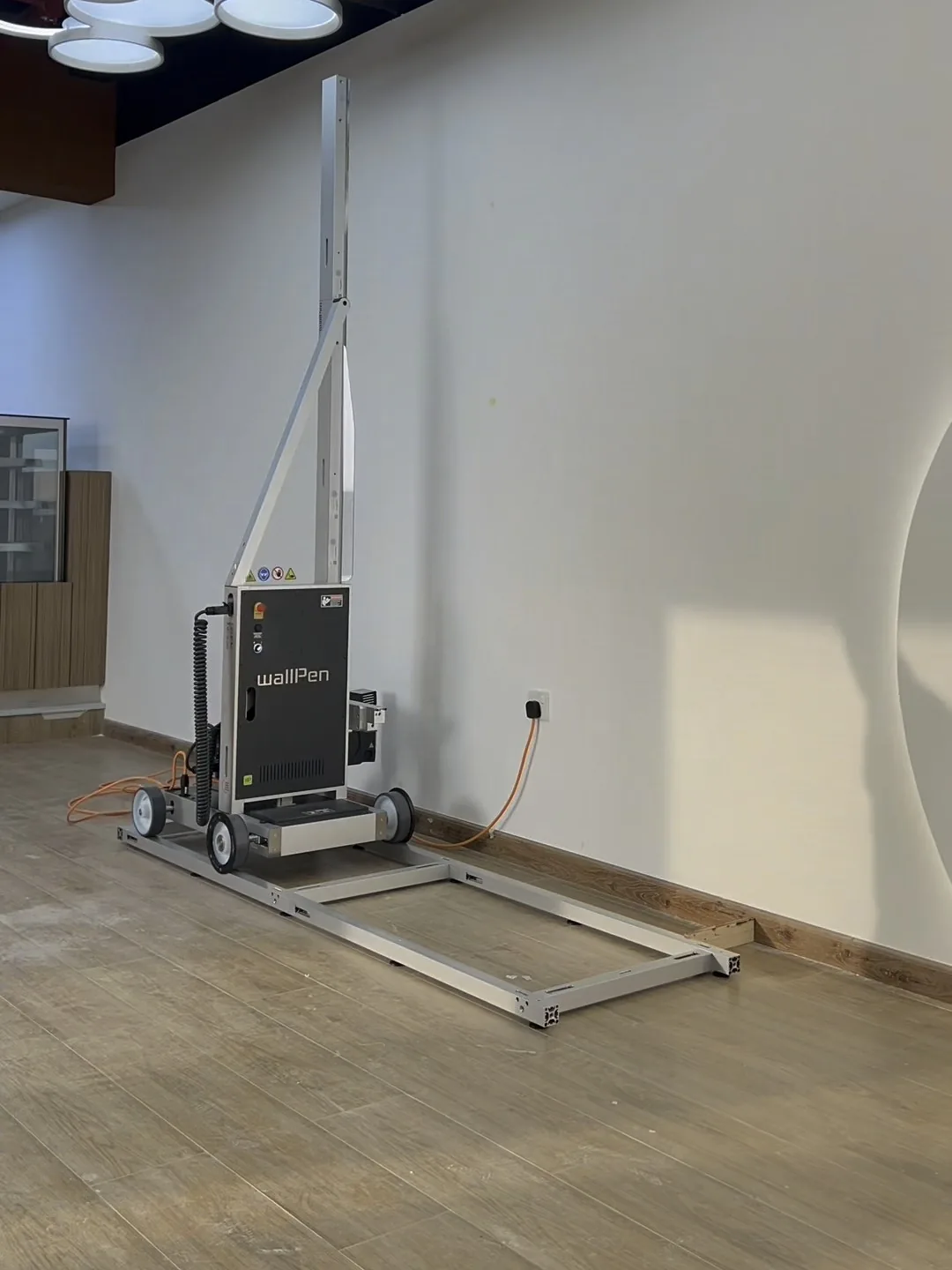
- Install the machine and train your operators. Our engineers install the machine and give the people who will run it their wall printing training. wallPen's software licence requires every operator to be trained and certified, so decide who your operators are before installation day.
- Hold the artwork-preparation day. A focused day on checking images, setting the final size and resolution, and exporting print files, so routine jobs do not wait for a designer.
- Print your first demonstration wall. Prepare one wall at your premises, print the first theme and learn how the machine behaves on a surface you control.
- Film everything. Record the process, the finished-wall reveal and close-ups of the detail. These clips are your first marketing material.
- Build the partner list. Write down the designers, architects, fit-out contractors, signage firms and event companies you want to work with, and start visiting them.
- Quote with a clear structure. Send early quotations with a rate per square metre, a minimum project charge and separate lines for extras, so customers can see what they are paying for.
- Turn the first paying walls into references. Photograph each finished job and ask the client for permission to show it in your portfolio and on social media.
The one-to-three-month figure is a launch estimate, not a promise of profitability within that period. How quickly you get there depends on how fast the right people are in place and how consistently you market the service.
Two roles, each with a clear owner
A wall printing business needs a trained operator and someone who handles enquiries, outreach, quotations and follow-ups. At the start one person can do both, and in a small company the owner often does, but each role needs a named owner. When nobody owns the follow-up, the enquiries a good video brings in go cold. When nobody owns the machine, print days slip and files arrive unchecked.
The operator's job is more than pressing print. They survey the wall, check the artwork at final size, set the machine up in a room that may still be in use, and look after the client while it prints. Sun Studio's account of printing inside other people's premises is worth reading before you decide who that person will be.
Why keep a demonstration wall, and what should you print on it?
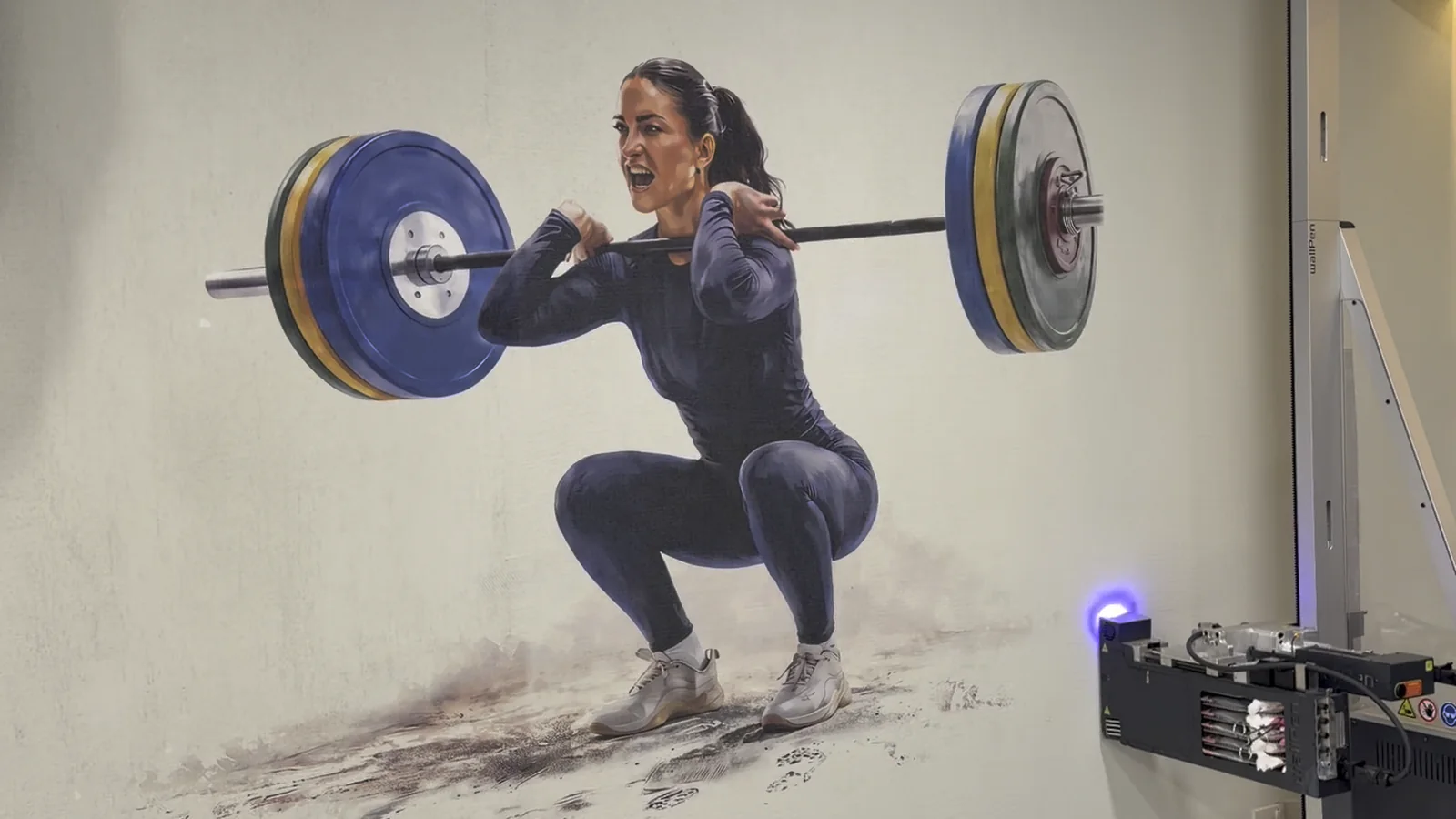
A demonstration wall gives you a steady supply of fresh work to show without waiting for clients: one wall at your premises that you repaint and print again with a different theme each time. A wallPen print is removed by painting over it, usually in two to three coats, so the same wall can carry a new design every few weeks.
Rotate the themes so that each one speaks to a different audience:
- Music and musicians, for cafés, venues and teenagers' rooms.
- Sport and players, for gyms, academies and fan rooms.
- Well-known faces, only with the person's written permission, for entertainment venues.
- Arabic calligraphy, for majlis walls, villas, hotels and offices.
- Fine art and abstract artwork, for homes, lobbies and restaurants.
- Commercial branding, using a mock brand of your own, for offices, showrooms and shops.
Print only artwork you have permission to reproduce. A person's likeness, football club crests, brand logos and modern artwork are usually protected, and a demonstration wall counts as published once its video goes online, even though nobody paid for it. Your own designs, images whose licence covers a wall print and a marketing video, calligraphy you have the written right to reproduce, and public-domain art are the usual starting points. If a theme needs a real face or a club badge, get written permission from the person or the club first, or design an original piece that does not copy or imitate them. We cannot advise on the law in your country, so if you are unsure who holds the rights, ask before you print.
One wall, four pieces of marketing
Each demonstration gives you a process video, a finished-wall reveal, close-up photographs of the detail and a new piece for your portfolio. Watching an image appear on a bare wall holds people's attention, and these clips travel well on Instagram and TikTok. Attention alone does not pay, though. Put your contact details, a few examples of finished work and a clear next step on every post, and answer each message promptly.
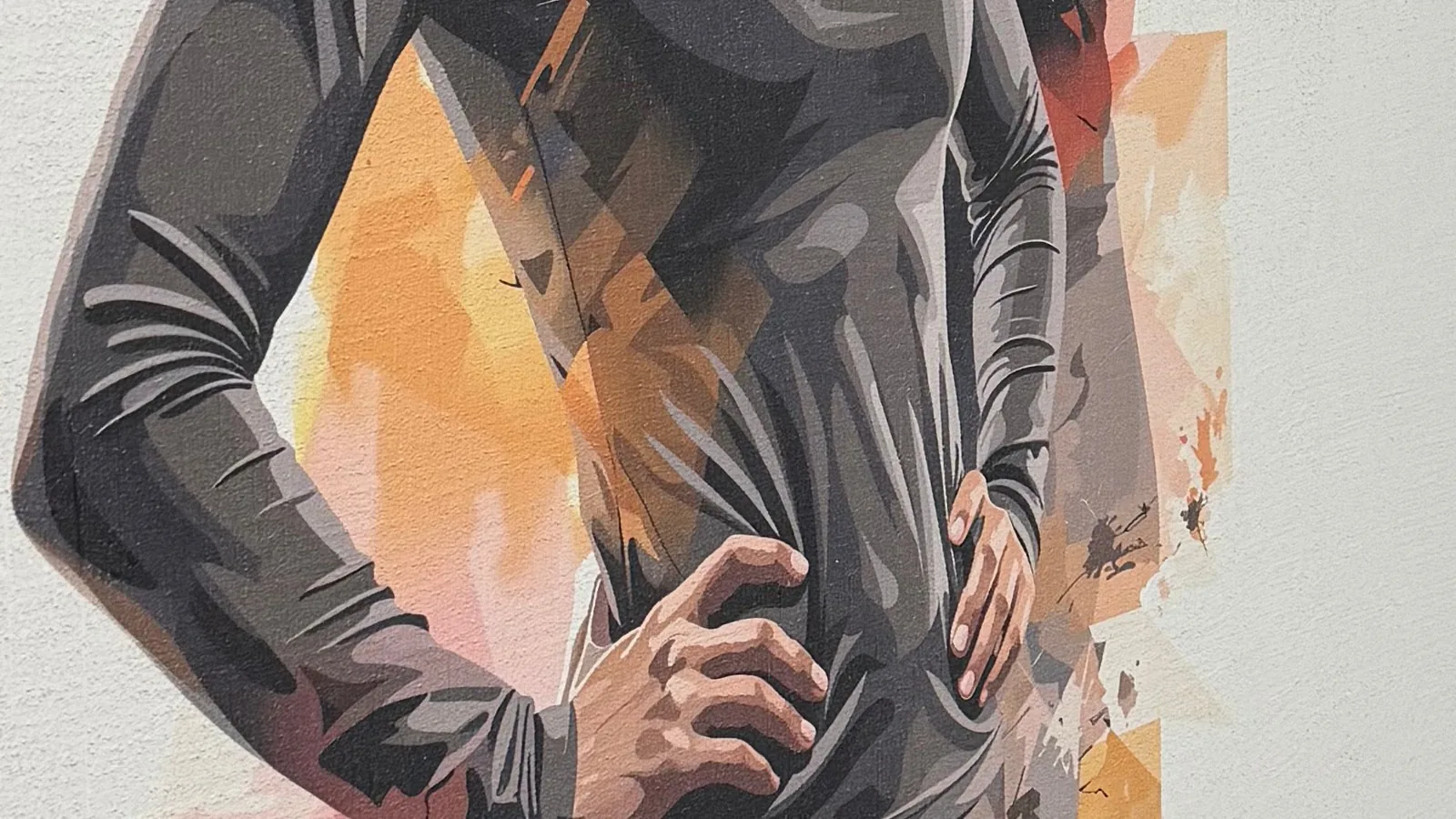
A small catalogue of ready-to-customise designs helps as well. Customers who can point at a design and ask for it in their own colours decide faster, and you avoid starting every enquiry from a blank page. To see how process and reveal shots look in practice, browse finished wall prints and machine-at-work shots in the Sun Studio Dubai gallery and choose Direct to wall; the filter mixes Sun Studio jobs with wallPen reference installations.
Where do the first wall printing clients come from?
Alongside social media, a new wall printing business often wins its first clients through referral partners: interior designers, architects, fit-out contractors, signage companies and event companies who already sell the rooms, shopfronts and stands your walls will sit in. One good partner can introduce you to several projects, and a project that comes through a partner often arrives with a brief, a budget and a deadline already agreed.
Approach partners with something to see. Invite them to your demonstration wall, leave a short printed portfolio, and offer to print on one of their live projects so they can watch the process with their own client. Every completed installation then becomes a reference and a marketing asset, with the client's permission.
Wall printing business ideas: segments to approach
- Homes and villas: children's rooms, staircases, feature walls and majlis walls.
- Offices and reception areas: brand walls, values walls and meeting-room graphics.
- Restaurants and cafés: murals, menu walls and refits between seasons.
- Hotels: corridors, lobbies and guest rooms during refurbishment.
- Retail: shopfronts inside malls, fitting rooms and seasonal campaigns.
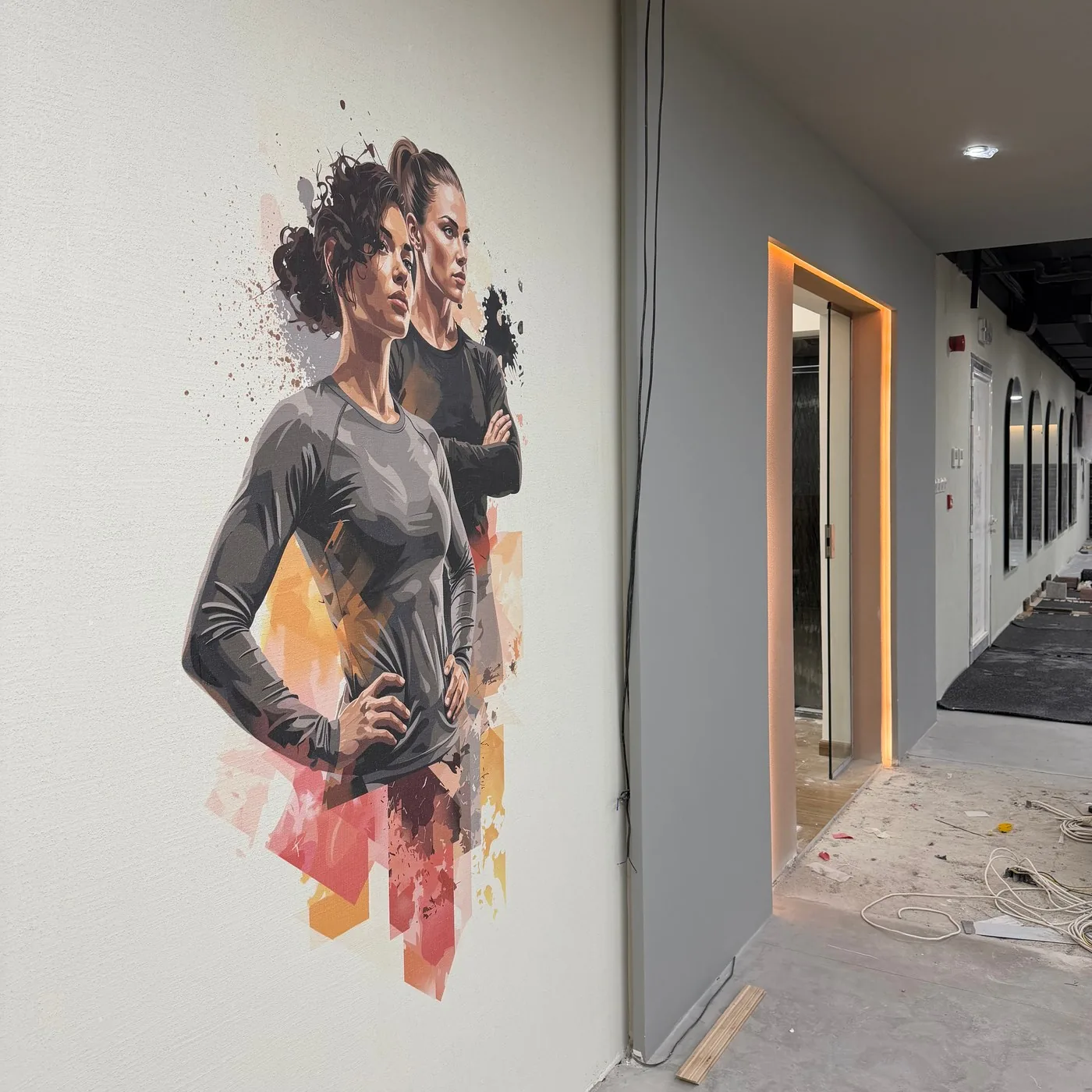
- Schools, nurseries and gyms: wayfinding, motivational walls and branded walls on the training floor.
- Museums and heritage sites: timelines, maps and bilingual interpretation printed straight onto the wall.
- Events and exhibitions: stand walls and temporary venue branding.
A strong reference shows your work inside a live project. Sun Studio's job for Body Abs Gym is an example: a seven-wall fit-out for a ten-branch gym brand in Abu Dhabi, printed while the crews were still finishing the branch, so the artwork was in place before it opened. One reference of that kind tells a gym or retail chain more than a month of posts.
How much should you charge for wall printing?
There is no fixed service price you must follow: charge a rate per square metre, set a minimum project charge that covers travel, set-up and operator time, and quote artwork creation, surface preparation, difficult access and additional visits as separate lines where they apply. The rate should reflect the project, its value to the customer and the standard of service you deliver, so a straightforward residential design and a detailed branded installation for a hotel do not need to carry the same rate.
Your freedom on price comes from the result. When the service delivers something other methods cannot achieve in practice, such as a photographic image across a suitable brick wall in a restaurant that must reopen tomorrow, customers have fewer comparable alternatives. They may negotiate, but your price can reflect the value of solving their problem rather than a standard printing rate. The stronger your references, the firmer that position, so how much to charge for wall printing is a question you will answer again as your portfolio grows.
| Line on the quote | What it covers | When to charge it |
|---|---|---|
| Rate per square metre | The printed area: machine time, ink and the operator on site while it prints | Every job; vary it with artwork detail, quality level and the value to the client |
| Minimum project charge | Travel, set-up, alignment and operator time that even a small wall needs | If you choose to use one: when the printed area is too small for the square-metre rate to cover the visit |
| Artwork creation or development | Brainstorming, design options and the final print-ready file | When the client arrives with an idea rather than a usable file; agree the fee and revisions first |
| Surface preparation | Filling, sanding, priming or repainting the wall, and any test patch | When the wall is not clean, sound and ready on print day |
| Difficult access | Stairwells, mezzanines, upper floors without a lift, restricted access, after-hours or weekend work | When the machine is hard to bring in or set up, or the work must happen outside normal hours |
| Additional visits | A second survey, a test print, or a return trip the client causes | When the job needs more visits than you quoted for |
| UV clear coat (optional) | A protective coat over outdoor prints | Outdoor walls that need a longer life; wallPen states about two years without it, often over five with it |
For a public reference point, Sun Studio's price guide gives a published Dubai starting rate of AED 850 per square metre. Use it as a reference, not a recommendation. Sun Studio handles small jobs differently from the structure above: it has no minimum order and builds mobilisation into a square-metre rate that falls as the area grows. A minimum project charge is a choice for your own business, not a market rule. For figures on margin and how many square metres a machine needs to sell, see wallPen's regional pricing model, worked through in our wall printing returns guide.
Charge for artwork as its own line
Many customers arrive with an idea, not a file. Developing it is real work: brainstorming with the client, producing options and preparing the final design at print size. Price it as a separate line, and agree the artwork fee and the number of included revisions in writing before you start. Sun Studio works the same way: standard file preparation is part of its print orders, and original design is scoped and priced before any work begins. Its page on where standard file preparation ends and paid design begins shows how to draw that line for customers.
Judge the machine on the profit each job keeps
When you plan the purchase, look at the profit each project retains after labour, travel, preparation, consumables and marketing. That tells you far more than setting the machine's price against total sales. A month of large but heavily discounted jobs can look busy and leave little behind. Sun Studio has set out the payback arithmetic, worked from the operator's side, as a company that owns and runs the machine.
How do you prepare artwork for a wall printer without hiring a designer?
You do not need a professional designer to prepare an existing, suitable image for printing. For routine jobs the workflow has three steps, and we teach it in one focused day of training: check the image, set the final dimensions and resolution, and export the print file as a TIFF. After a few jobs it becomes a repeatable routine.
- Check the image. Is it sharp at the size the client wants, are the colours right, and does the client own the image or hold the rights to use it?
- Set the final size and resolution. Work at the real wall dimensions, so the effective resolution you see is the one that will print.
- Export a TIFF. It is the format we standardise on because it carries CMYK and the transparency (alpha) channel the app uses for white ink. The wallPen app also opens PNG and JPG files.
Checking an image at wall size
In the version we checked, the wallPen app recommends at least 100 PPI (pixels per inch) at final size and calls 300 PPI ideal. It works out the effective PPI from your image and the chosen print size, and warns you when the image is too small. The arithmetic is simple: a wall 4 metres high is about 157 inches, so at 100 PPI the image needs about 15,750 pixels of height, and at 300 PPI about 47,250. Most phone photographs and many stock images fall well short of that, which is why an upscaler belongs in the toolkit.
Two limits are worth teaching early. Changing the file format does not improve the image: a small JPG saved as a TIFF is still a small image. And enlarging a picture a long way loses quality, even with an upscaler, so sometimes the honest answer is that the customer's file will not hold up across the whole wall.
When a designer is still needed
Bring in a designer for original design, complex editing, or rebuilding poor artwork that cannot simply be enlarged. Arabic calligraphy needs particular care in the Gulf. Sun Studio asks its own clients to send calligraphy as outlined vector artwork rather than as live text in a font, so the letter shapes and ligatures cannot be re-rendered. If the client has only a photograph or typed text, a designer or calligrapher has to produce that file, and a new operator should ask for the same.
A basic creative toolkit, with prices
For a basic creative workflow, these are the tools and the prices we saw when we checked in October 2026. Local taxes can apply, and plans change:
- ChatGPT Plus for developing ideas and draft visuals: about US$20 a month (AED 79.99 in the UAE App Store and US$19.99 in Bahrain's).
- An image upscaler to bring files up to wall size: free with Upscayl, which is open source, or from a few dollars to about US$12 a month for the online services we looked at.
- Adobe Illustrator, if you use it for vector work and layout: US$22.99 a month on an annual plan billed monthly, on Adobe's UAE site. A company that wants Illustrator on a business licence can buy it through PRO TECHnology, an authorised Adobe reseller, on a teams plan quoted separately.
We guide new operators through this workflow until they are comfortable with it, and the step-by-step artwork guides we provide stay with your team after training.
Before every print, confirm the final artwork, its size and its position on the wall with the customer in writing. It takes minutes and prevents the most expensive mistake in this business.
What does PRO TECHnology provide once you own a wallPen?
PRO TECHnology installs every wallPen it supplies, trains its operators and supports it afterwards through a team of six engineers in its Digital Printing division. We are wallPen's exclusive distributor in the Middle East, we have been in business in Dubai since 1998, and we have worked in digital printing since 2011, with the same core engineers throughout. Each wallPen we supply comes with:
- A 12-month warranty, subject to its terms and excluding wear parts.
- A branded 8-inch Android tablet that runs the machine over Wi-Fi on clients' sites.
- The wallPen software and its updates, free for life on every machine PRO TECHnology supplies. That is our own commitment to the businesses we equip.
- Installation, practical training and ongoing technical guidance from the same engineers.
- Step-by-step artwork preparation guides, alongside the English manual of more than 200 pages that wallPen supplies with the machine.
- Spare parts and consumables available in the GCC. Plan ink stock around the shelf life wallPen states, at least 9 to 12 months, so nothing expires unused.
Why that matters to a new business: we work on both sides of it. We sell and support the machines, and Sun Studio, our sister company in the PRO TECHnology Group, runs the same machine for paying clients week in, week out. When a wall raises a question you have not met before, you are talking to people who know the equipment and the practical problems of delivering projects.
For the detail on how installation, wallPen's certification and our local training fit together, see our machine guide. The story of the January 2026 appointment explains how the partnership began, and the machine's specification is on our wallPen E2 wall printing machine page.
In Saudi Arabia, wallPen enquiries are handled by PRONEXT, the group's company in Riyadh, together with our engineers in Dubai.
How do you win repeat work on clients' walls?
You win repeat work through reliable execution, visible quality, professional communication and strong references, not by quoting the lowest rate. In practice that comes down to four habits: show close-ups of real work, demonstrate the machine before you are hired, confirm the artwork before you print, and deliver exactly the result you agreed.
Why a reprint costs more than the wall
A mistake on a wall is public and slow to put right. Even when it is corrected, the experience shapes whether the customer comes back. Picture it from their side: someone prints the wrong thing on your reception wall, repaints it, and then produces a perfect result. You end up with a good wall, but you will still think twice before giving them the next job. The final image matters, and so does the confidence you build at every step before it: the site survey, the written artwork approval, a tidy set-up and an operator who explains what is happening.
A number of the enquiries we receive come from customers who had problems with a previous provider and want more confidence for their next project. That is an opening for any new operator who runs a careful process.
What the machine contributes
Reliability is mostly process, but the equipment matters. wallPen's laser sensors detect irregularities in the wall of up to 10 cm in real time, and the printhead adjusts as it prints, which helps on suitable textured surfaces with a contour depth of up to about 10 mm. The machine runs wallPen's own software on an integrated printing system. During a demonstration we can also show you how the printhead is physically protected.
If you are weighing a lower-cost machine, our machine guide sets out the fair points to test on any cheaper wall printer.
Starting a wall printing business in Bahrain, Saudi Arabia and the rest of the GCC
You can start a wall printing business anywhere in the GCC with support from Dubai. We supply and support wallPen across the UAE, Saudi Arabia, Qatar, Kuwait, Oman and Bahrain, spare parts and consumables are available in the GCC, and Saudi enquiries are handled by PRONEXT in Riyadh with our engineers in Dubai.
Check your licence before you buy
Before you order a machine, check that your commercial registration or trade licence covers wall printing as an activity, and have it amended if it does not. In Bahrain, commercial registrations are applied for and amended through the Sijilat portal; in the UAE, through the authority that issued your trade licence, whether your emirate's economic department or a free zone; elsewhere in the GCC, through the ministry or authority responsible. We do not advise on activity codes, so confirm yours with the authority directly.
Plan for local demand
Gulf projects have their own patterns. Bilingual and Arabic calligraphy walls suit the region, majlis interiors and hotel refurbishments follow their own fit-out cycles, and heritage sites need interpretation walls in Arabic and English. The software helps: in the version we checked, the wallPen app offers 14 display languages including Arabic, so an Arabic-speaking operator can work in their own language. Our notes on the wallPen app's languages and simulation mode go further.
Bahrain as an example
Bahrain shows how a smaller market can work. In a market of its size, designers, contractors and hotel managers tend to know one another, so references and partner introductions can travel quickly, in both directions. A careful first year with well-documented walls can establish a new operator faster than a larger market would; a badly handled job travels just as fast. Our advice for any of the smaller Gulf markets is the same: start with a demonstration wall, sign up two or three good partners, and protect every reference.
Frequently asked questions
How do I start a wall printing business in the Middle East?
Start with a trained operator, one person who owns enquiries and quotations, a demonstration wall and a list of referral partners such as interior designers and fit-out contractors, check that your trade licence or commercial registration covers the activity, and allow one to three months to launch, as an estimate rather than a promise of profit. PRO TECHnology, the exclusive distributor of wallPen in the Middle East, installs the machine, trains your operators and supports you from Dubai across the GCC.
How long does it take to launch a wall printing business?
Allow one to three months. That is our launch estimate, and it depends mainly on how quickly you put a trained operator and a sales owner in place and how consistently you market the service. It is not a promise of profit within that period; it is the time to go from an installed machine to a demonstration wall, a partner list and your first paying walls.
Who do I need to hire to run a wall printing business?
Two roles, which need not be two people: a trained operator who surveys walls, prepares files and runs the machine, and a sales owner who answers enquiries, does the outreach, sends quotations and chases follow-ups. At first the owner of a small company may cover both. What matters is that each role has one named person, so print days and follow-ups do not slip.
What goes into a wall printing business plan?
A wall printing business plan should cover the launch months, the two roles and who fills them, a demonstration wall and a marketing routine, a list of referral partners, a charging structure, and the profit each job keeps after labour, travel, preparation, consumables and marketing. Judge the business on those retained profits rather than on total sales set against the machine price.
How much should I charge for wall printing?
There is no fixed rate you must follow: set a rate per square metre that reflects the project, its value to the customer and your standard of service, and add separate lines for artwork, surface preparation, difficult access and extra visits. We also recommend a minimum project charge to cover travel, set-up and operator time, although that choice is yours. A simple residential design and a detailed branded hotel installation need not carry the same rate, and your rate can rise as your references grow.
What training does a new wall printing operator need?
A new wall printing operator needs training in three things: surveying the wall, running the machine on a client's site, and preparing artwork. Machine training comes with every wallPen PRO TECHnology supplies, and routine file preparation, from checking the image to exporting a TIFF at the right size and resolution, takes one focused day. We keep guiding new operators until they are comfortable.
Should I charge separately for artwork?
Yes, when you create or develop the artwork rather than simply prepare a file the customer supplies. A customer who arrives with only an idea is asking for design work: brainstorming, options and a final file at print size. Price it as its own line, and settle in writing how many rounds of changes the fee includes before any design starts. Routine file preparation can stay inside your printing rate.
How do I find my first wall printing clients?
Through referral partners as well as social media. Interior designers, architects, fit-out contractors, signage companies and event companies already work on the rooms you want to print, and one good partner can pass you several projects. Invite them to watch your demonstration wall print, share process videos online, and, with each client's permission, use every finished job as a reference for the next.
Why keep a demonstration wall?
To have something new to show every few weeks without waiting for a client. You repaint the same wall and print a different theme each time, and each round produces a process video, a finished-wall reveal, close-up photographs and a portfolio piece. Partners and customers can also watch the machine print there before they hire you.
Can I print footballers, celebrities or club logos on a demonstration wall?
Only with permission. Footballers, celebrities, club crests and logos all have rights holders who can object, and a video of the wall on social media makes the use public even though nobody paid for the print. Ask the person, or the club, for written permission before you print a real face or a badge; otherwise use your own designs, images licensed for this use, or public-domain art. When in doubt, ask the rights holder first.
Do I need a graphic designer to prepare files for a wall printer?
Not for routine jobs. Checking an existing, suitable image, setting its final size and resolution and exporting a TIFF is a workflow we teach in one focused day. You still need a designer for original design, complex editing, rebuilding poor artwork, or turning Arabic calligraphy into outlined vector artwork when the client has only a photograph or typed text.
How do I check that a customer's image is big enough for the wall?
Set the image to the final wall size in the wallPen app and read the effective resolution it calculates. In the version we checked, the app recommends at least 100 PPI and calls 300 PPI ideal, and it warns when the file is too small. For a wall 4 metres high, that means about 15,750 pixels of height at 100 PPI and about 47,250 at 300 PPI. Saving a small image in another format adds no detail.
Are software updates free on a wallPen from PRO TECHnology?
Yes: on every wallPen PRO TECHnology supplies, the software and its updates are free for life, as our own commitment to the businesses we equip. Ask for it to be set out in your quotation, so your team knows what is covered for the life of the machine.
What should I check before starting a wall printing business in Bahrain or Saudi Arabia?
Check first that your commercial registration or trade licence covers wall printing as an activity, and have it amended before you order a machine; in Bahrain, registrations are applied for and amended through the Sijilat portal, and elsewhere through the ministry or authority responsible. Then plan for local demand, such as Arabic calligraphy, majlis interiors and hotel refurbishments. PRO TECHnology supports the machine from Dubai, and in Saudi Arabia enquiries are also handled by PRONEXT, the group's company in Riyadh.
مشروع ماكينة الطباعة على الحائط في الخليج: كيف تبدأه وتديره مع wallPen
يحتاج مشروع الطباعة على الجدران إلى أكثر من الماكينة نفسها. فنجاح مشروع ماكينة الطباعة على الحائط يقوم على خمسة عناصر: طابعة الجدران العمودية wallPen التي تثق بها داخل مواقع العملاء، ومشغّل مدرَّب، وشخص مسؤول عن الاستفسارات وعروض الأسعار والمتابعة، وأعمال منفَّذة تعرضها، وشركاء يحيلون إليك المشاريع. ونقدّر فترة الإطلاق بشهر إلى ثلاثة أشهر بحسب سرعة تعيين الأشخاص المناسبين وانتظام التسويق، وهي تقدير وليست وعداً بتحقيق الربح خلالها.
يمكن لشخص واحد أن يجمع في البداية بين دورَي التشغيل والمبيعات، لكن لا بد أن يكون لكل دور مسؤول واضح. ونوصي بجدار عرض واحد في مقرّك تعيد دهانه وتطبع عليه موضوعاً جديداً في كل مرة: الخط العربي، والرياضة، والموسيقى، والأعمال الفنية، وهوية تجارية لعلامة وهمية من تصميمك، على ألّا تطبع إلا تصاميم تملك إذناً بنسخها، فصور الأشخاص وشعارات الأندية والعلامات التجارية والأعمال الفنية الحديثة محمية. وتمنحك كل طباعة على جدار العرض فيديو وصوراً تصلح للتسويق. أما العملاء الأوائل فيأتون، إلى جانب وسائل التواصل الاجتماعي، عبر مصممي الديكور الداخلي والمهندسين المعماريين ومقاولي التجهيزات الداخلية وشركات اللافتات وتنظيم الفعاليات.
لا توجد تسعيرة ثابتة ملزمة لأعمال الطباعة على الحائط. ننصح بالتسعير بالمتر المربع، ويمكنك أن تضع حدّاً أدنى لقيمة المشروع يغطي التنقل وإعداد الماكينة في الموقع ووقت المشغّل، وهذا قرار يعود إليك. ويُحتسب ابتكار التصميم أو تطويره، وتجهيز السطح، وصعوبة الوصول، والزيارات الإضافية، في بنود مستقلة، مع الاتفاق مسبقاً على رسوم التصميم وعدد التعديلات المشمولة.
ولا تحتاج إلى مصمم لتجهيز صورة مناسبة لدى العميل: نعلّم سير العمل في يوم تدريب مركّز، يبدأ بفحص الصورة، ثم ضبط الأبعاد والدقة، ثم التصدير بصيغة TIFF. ويوصي تطبيق wallPen في الإصدار الذي فحصناه بدقة لا تقل عن 100 بكسل لكل بوصة بالحجم النهائي، ويعدّ 300 بكسل لكل بوصة الدقة المثالية. ويبقى المصمم ضرورياً للتصميم الأصلي وللخط العربي الذي يجب تسليمه ملف فيكتور محوّلة حروفه إلى مسارات.
وبروتكنولوجي (PRO TECHnology) هي الموزّع الحصري لـ wallPen في الشرق الأوسط، وتعمل في الطباعة الرقمية منذ 2011، ويتولى فريق من ستة مهندسين في قسم الطباعة الرقمية التركيب والتدريب والدعم الفني. ونورد ماكينة الطباعة على الجدران ومعها: ضمان 12 شهراً وفق شروطه باستثناء القطع المعرّضة للتآكل، وجهاز لوحي بنظام أندرويد مقاس 8 بوصات، وبرنامج wallPen وتحديثاته مجاناً مدى الحياة التزاماً منّا. وتتوفر قطع الغيار والمستهلكات في الخليج، وندعم عملاءنا من دبي في الإمارات والسعودية وقطر والكويت وعُمان والبحرين، وتتولى برونكست (PRONEXT) في الرياض استفسارات العملاء في السعودية.
وإذا كنت في الإمارات ولا تتوقع إلا جدراناً قليلة في السنة، فقد يكون الأنسب أن تُسند العمل إلى صن ستوديو دبي، شركتنا الشقيقة التي تقدّم خدمة الطباعة على الجدران، بدلاً من شراء طابعة جدارية عمودية.
Sources
wallPen's FAQ, technology and partner pages were read on 5 October 2026, and the wallPen app 1.0.62 for macOS was inspected first-hand for its resolution guidance, file formats and languages; the App Store lists later versions. Software prices were checked in October 2026 on the pages listed, and the online upscaler prices come from the pricing pages of several services, which are not named here; prices change and local taxes can apply. The launch period, the two roles, the charging structure and the after-sale terms are PRO TECHnology's own advice and offer. wallPen is a trademark of wallPen GmbH. This guide is written by PRO TECHnology, which distributes wallPen in the Middle East, and it draws on the experience of Sun Studio Dubai, a sister company in the PRO TECHnology Group; neither is independent.
- wallPen: FAQ (scope of delivery, tablet, training, ink shelf life, removal, laser sensors)
- wallPen: technology page (laser sensor, proprietary software)
- wallPen: partner map, “Our partners worldwide”
- wallPen app on the App Store (versions and release notes)
- OpenAI Help Center: What is ChatGPT Plus?
- ChatGPT on the UAE App Store (in-app prices)
- ChatGPT on the Bahrain App Store (in-app prices)
- Adobe: Illustrator plans, UAE site
- Upscayl: free and open-source image upscaler
- Sijilat: Bahrain commercial registration portal
- Sun Studio Dubai: service page for walls printed on site
- Sun Studio Dubai: wall printing price guide
- Sun Studio Dubai: an operator’s note on wallPen price and payback
- Sun Studio Dubai: running wallPen in clients’ spaces
- Sun Studio Dubai: design help when there is no print-ready file
- Sun Studio Dubai: Body Abs Gym case study, Abu Dhabi
- Sun Studio Dubai: gallery (Direct to wall filter)
- PRO TECHnology: wallPen appointment, January 2026
Plan your first wall printing months with us
Book a demonstration to watch a wallPen print and talk through your launch plan, roles and charging structure with our Digital Printing team. If your walls are in the UAE and you would rather have them printed than run a machine, Sun Studio Dubai prints them as a service.