MedicAir Replacement Filters and Maintenance in the UAE and GCC
Published · PRO TECHnology Air Quality Solutions
A purifier is a consumable-driven machine, and a unit with an exhausted cartridge is a fan with a running cost. This page covers what each MedicAir model takes, how long it lasts, how to change it, the small amount of maintenance the machines need, and how to work out what a fleet actually costs to own.
Filters are the part of the decision that outlives the purchase order, and the part most tenders leave until it is too late to negotiate. Everything here comes from the documents supplied with the units and from the manufacturer's own pages, and where those two disagree we say so. PRO TECHnology is the exclusive MedicAir distributor and partner for the GCC, including the United Arab Emirates, and supplies cartridges for all three models from Dubai. The machines themselves are on the MedicAir brand page.
- One cartridgeper machine, all three models
- 5,000 hourspublished life, or 12 months
- No techniciana change takes minutes
- 42 Wthe Pro Mini's rated input power
Key takeaways
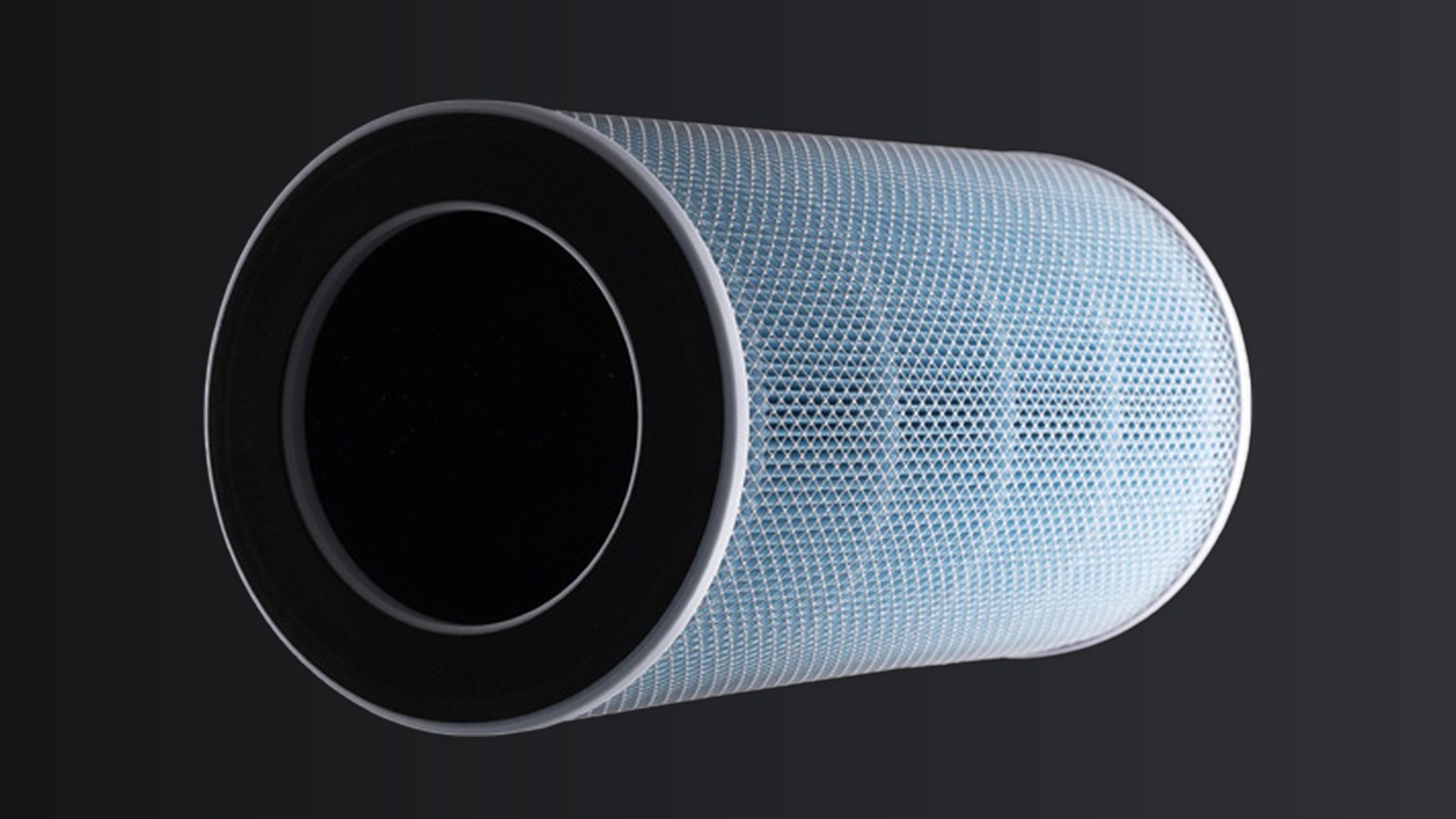
- Every model takes a single combined cartridge holding the pre-filter, the HEPA medium and the activated carbon layer, so a change takes minutes and needs no technician.
- MedicAir publishes a filter life of 5,000 hours and recommends replacement at least once every twelve months even where the unit has not signalled a change. Its own pages disagree on the Pro Mini: the product page says 5,000 hours, the replacement-filter pages say 4,000. Budget against the shorter figure and ask us to confirm in writing before it goes into a maintenance contract.
- The carbon stage saturates silently. There is no visible sign, and a returning odour is the practical signal, which is why a calendar matters alongside the unit's own indicator.
- In this region the pre-filter loads first. A vacuum on a schedule is the cheapest maintenance in the building and it protects the expensive medium behind it.
- Never brush, scour or wash the medium, and never run the UV-C emitter outside the appliance. Both instructions are in the manual for good reason.
- The Pro Mini draws 42 W, with standby at 2 W or less. MedicAir does not publish reliable input power for the Pro or the Pro Max, so we do not publish a running cost for those two models rather than estimate one.
- On a slab tariff such as DEWA's, an added machine is charged at your marginal rate, not at the first slab. That is usually the difference between a plausible-looking figure and a correct one.
- We do not publish cartridge prices, stock levels or delivery times on this page. Ask with the model and quantity and we will quote it.
Which cartridge each model takes
All three machines use the same idea: one replaceable cartridge holding every stage, loaded from the base of the unit. That is a genuine ownership advantage over designs with three separate consumables on three separate schedules.
| Model | Cartridge | What is in it | Size and weight | Published life |
|---|---|---|---|---|
| Pro Mini | PFACOABBDFC | Pre-filter and ATP-HEPA H14 antimicrobial peptide medium, nano hybrid activated carbon, TiO₂ reaction chamber | 29 × 20.5 × 20.5 cm, 1.2 kg | 5,000 hours on the product page, 4,000 on the replacement-filter pages |
| Pro | PAFCTEM2 | Pre-filter, H13 ATP-HEPA with 6.7 m² of media, high-efficiency honeycomb activated carbon, 24 W UV-C | 47 × 24 cm | 5,000 hours |
| Pro Max | Not published | Pre-filter, ATP-HEPA H14, high-efficiency activated carbon layer, UV-C reaction chamber | 69 × 35 × 16 cm, 2.9 kg | 5,000 hours |
MedicAir does not publish a part number for the Pro Max cartridge, so order it by model rather than by code and confirm the reference on the quotation. The Pro Mini's own parts list also covers the unit (PFACOABBD) and a country-specific power cord (MAPCEM2).
When to change it, and how to tell
What the manufacturer says
MedicAir publishes 5,000 hours and recommends replacing the cartridge at least once every twelve months even where the unit has not indicated that a change is required. At twelve hours a day, 5,000 hours is a little over a year; at twenty-four hours a day it is about seven months. So for a machine running continuously the hours figure governs, and for an office machine running office hours the calendar usually does.
What the unit tells you
The Pro Mini calculates remaining filter life from its own running conditions using an internal algorithm and illuminates a filter-change symbol when the cartridge needs replacing. That is better than a fixed timer, because it responds to how hard the machine has actually worked. It is not a measurement of the carbon stage.
What the unit does not tell you
The carbon layer saturates silently. Adsorption capacity is finite: once the carbon is loaded it stops removing odours and volatile organic compounds, and nothing in the machine reports it. A returning smell is the practical signal, and by then the stage has been passing gases for a while. In a space bought specifically for odour control (a smoking area, a kitchen-adjacent room, a salon, a clinic with disinfectant load), plan a shorter interval than the general figure and treat the carbon rather than the particle side as the thing setting the schedule.
Changing a cartridge, and the maintenance that matters
It takes a few minutes and no tools. The sequence below is the Pro Mini's, from its manual; the other models follow the same idea.
- Turn the unit off and disconnect it from the power supply.
- Wear gloves, and plan to dispose of the old cartridge in line with local recommendations.
- Lie the unit down gently, taking care not to handle it by the top vents.
- Twist the bottom anticlockwise to unlock the cartridge, and slide the old one out.
- Slide the new cartridge in with its solid base nearest the bottom of the unit, then twist clockwise to lock.
- Stand the unit back up, reconnect the power, and press and hold the power button for five seconds to recalibrate the unit to the new filter. Skipping this leaves the machine tracking the old cartridge's life.
The maintenance between changes
- Vacuum the pre-filter on a schedule. It is the cheapest maintenance available and it protects the medium behind it. In this region it is also the part that loads first.
- Keep the inlets more than 20 cm clear of walls, furniture and curtains. A unit pushed against a wall recirculates its own output, which no filter can fix.
- Never clean the HEPA or carbon medium with a brush, a scouring pad or water. Damaged media leaks, and a leaking filter is worse than a loaded one because it looks fine.
- Never operate the UV-C emitter outside the appliance. It is enclosed as part of the cartridge assembly and the manual is explicit about it.
- Wipe the case as a touched surface, and power the unit down before any cleaning or filter work.
- Assign it to a named role. A cartridge nobody owns does not get changed. Put it on a schedule at handover with a person attached, not a department.
What a unit actually costs to own
Four components: the machine, the cartridges, the electricity and the labour. Only the first is usually in a tender, and for a fleet the second is what decides affordability in year three. We do not publish equipment or cartridge prices here because they depend on model, quantity and shipment, ask and we will quote against your schedule. The other two you can work out yourself, and it is worth doing before the capital approval.
The electricity arithmetic
Annual consumption in kWh = rated input power in watts × hours run per day × 365 ÷ 1,000. The only MedicAir model with a reliably published input power is the Pro Mini at 42 W, with standby at 2 W or less. The MedicAir 2.0 brochure prints a watts column against the Pro's four fan speeds, but those figures duplicate its decibel column and are evidently a production error, so we do not publish them; and no input power is published for the Pro Max. We would rather leave two rows blank than fill them with an estimate you might budget against. Both are on our open list with the manufacturer.
Illustrative only, for one MedicAir Pro Mini. 42 W running 12 hours a day is 42 × 12 × 365 ÷ 1,000 = about 184 kWh a year.
In Dubai, DEWA's slabs run 23, 28, 32 and 38 fils per kWh by monthly consumption band, with a fuel surcharge of 6.0 fils per kWh for September 2026 and 5% VAT on top. A commercial site already consuming above the top band pays the marginal rate, so 184 kWh at 38 + 6 = 44 fils is about AED 81 a year, roughly AED 85 with VAT.
In Abu Dhabi, at ADDC's flat commercial rate of 20 fils per kWh, the same 184 kWh is about AED 37 a year.
A unit running continuously rather than 12 hours a day roughly doubles both figures. A unit in automatic mode uses less than its rated power much of the time, and by an amount nobody can tell you without measuring it, which is why we publish the calculation and the assumption rather than a single number.
Published electricity tariffs we were able to verify
| Utility | Category | Published rate |
|---|---|---|
| DEWA (Dubai) | Residential and commercial, one table | 23 / 28 / 32 / 38 fils per kWh across the monthly consumption bands, plus a 6.0 fils per kWh fuel surcharge for September 2026 and 5% VAT |
| ADDC / TAQA Distribution (Abu Dhabi) | Commercial | 20 fils per kWh, flat |
| EtihadWE (Northern Emirates) | Commercial | 23 / 28 / 32 / 38 fils per kWh across the bands, plus a 5 fils surcharge |
| EWA (Bahrain) | Non-domestic | 22 fils per kWh to 5,000 units, then 32 fils |
| Saudi Arabia | Commercial | 20 then 30 halalas per kWh — read from an archived copy of the regulator's page, so confirm before relying on it |
Sharjah's SEWA publishes a slab table but no commercial-specific rate we could verify, and we could not verify Qatar, Kuwait or Oman commercial rates to a primary source, so they are not listed. Check your own bill rather than a web page: the marginal rate is what matters and it is printed on it.
Ordering cartridges
PRO TECHnology supplies cartridges for all three models from Dubai, on the same route as the machines, for the UAE and across the GCC. Buyers in the Kingdom should read our Saudi Arabia supply page, because the conformity and shipping route differs.
- Order the first set with the machines. It costs nothing extra to plan and it removes the most common failure, which is a fleet arriving with no second cartridge budgeted.
- Tell us the running hours, not just the quantity. Twelve hours a day and twenty-four hours a day are different consumable plans for the same machine.
- Ask for the interval in writing before it goes into a maintenance contract, given the manufacturer's own 5,000-versus-4,000-hour inconsistency on the Pro Mini.
- Tell us if the space is odour-led. If the reason for the purchase is smell rather than dust, the carbon stage sets your schedule and the general figure will be optimistic.
- Ask about the accessories if you need them: the 2.0 brochure lists a wheel base (DAWA9129) and a wall mount (DAWM3910) for the Pro. Availability here is not something we have confirmed, so ask rather than assume.
MedicAir filters and maintenance: frequently asked questions
How often should MedicAir filters be replaced?
MedicAir publishes a filter life of 5,000 hours and recommends replacing the cartridge at least once every twelve months even if the unit has not signalled a change. At twelve hours a day, 5,000 hours is a little over a year; running continuously it is about seven months. Note that MedicAir's own pages disagree on the Pro Mini, with the product page stating 5,000 hours and the replacement-filter pages 4,000. Budget against the shorter figure and ask us to confirm the interval in writing before it goes into a maintenance contract.
What replacement cartridge does each MedicAir model take?
Each model takes one combined cartridge holding the pre-filter, the HEPA medium and the activated carbon layer. The Pro Mini takes PFACOABBDFC, 29 by 20.5 by 20.5 centimetres and 1.2 kilograms. The Pro takes PAFCTEM2, which also contains the 24 watt UV-C element, at 47 by 24 centimetres. The Pro Max cartridge measures 69 by 35 by 16 centimetres and weighs 2.9 kilograms; MedicAir does not publish a part number for it, so order by model and confirm the reference on the quotation.
Can I clean a MedicAir filter instead of replacing it?
No. The manual is explicit that the HEPA and carbon medium must not be cleaned with a grinding sponge, scouring pad or hard brush, and washing HEPA media damages it. A damaged medium leaks, and a leaking filter is worse than a loaded one because the machine looks like it is working. The pre-filter is the part you maintain: vacuum it on a schedule, which protects the medium behind it and is the cheapest maintenance available.
How do I know when the carbon stage is exhausted?
You do not, from the machine. The filter indicator tracks the unit's running conditions, not the carbon's adsorption capacity, and carbon saturates with no visible sign. The practical signal is a returning odour, by which point the stage has been passing gases for a while. In a space bought specifically for odour control, plan a shorter interval than the general figure and let the carbon rather than the particle side set the schedule.
How do I change a MedicAir filter?
Turn the unit off and unplug it, put gloves on, and lie it down gently without handling it by the top vents. Twist the bottom anticlockwise to unlock the cartridge and slide the old one out. Slide the new one in with its solid base nearest the bottom of the unit and twist clockwise to lock. Stand the unit up, reconnect the power, and press and hold the power button for five seconds to recalibrate it to the new filter, which is the step people skip. Dispose of the old cartridge in line with local recommendations, and never operate the UV-C emitter outside the appliance.
What does a MedicAir air purifier cost to run?
Annual consumption in kilowatt hours is the rated input power in watts multiplied by hours run per day, multiplied by 365 and divided by 1,000. The Pro Mini draws 42 watts, so twelve hours a day is about 184 kWh a year. In Dubai, at DEWA's top band of 38 fils plus the 6.0 fils fuel surcharge, that is roughly 81 dirhams a year before VAT; at Abu Dhabi's flat commercial rate of 20 fils it is about 37 dirhams. Those are illustrative. MedicAir does not publish reliable input power for the Pro or the Pro Max, so we do not publish running costs for them rather than estimate. Remember that on a slab tariff an added machine is charged at your marginal rate, not the first slab.
Do you supply MedicAir filters across the GCC?
Yes. PRO TECHnology is the exclusive MedicAir distributor and partner for the GCC, including the United Arab Emirates, and cartridges for all three models are supplied from Dubai on the same route as the machines. For Saudi Arabia the conformity and shipping route differs and is set out on our Saudi Arabia supply page. We do not publish cartridge prices, stock levels or delivery times, because they change with model, quantity and shipment.
Can I use a third-party filter in a MedicAir unit?
We would advise against it. The cartridge is not a generic HEPA panel: it carries the carbon layer and, on the Pro, the UV-C element, and the unit's filter-life algorithm is calibrated to the genuine part. A filter that fits is not the same as a filter that performs, and on a machine whose entire case rests on filter grade and sealing it is a poor economy. It is also likely to affect the warranty.
فلاتر MedicAir البديلة والصيانة
يستخدم كل طراز خرطوشة واحدة مدمجة تضم الفلتر الأولي ووسائط HEPA وطبقة الكربون النشط، ولذلك لا يستغرق استبدالها سوى دقائق ولا يحتاج إلى فني. وتبلغ المدة المُعلنة 5000 ساعة، مع توصية من الشركة المصنّعة بالاستبدال مرة كل اثني عشر شهرًا على الأقل حتى إن لم يُشر الجهاز إلى ذلك.
من المهم معرفة أن طبقة الكربون تشبع دون أي علامة ظاهرة، ومؤشر الفلتر في الجهاز يتابع ظروف التشغيل وليس قدرة الامتزاز. لذا فإن عودة الروائح هي المؤشر العملي. وفي المنطقة يتشبّع الفلتر الأولي أولاً بسبب الغبار، وتنظيفه بالمكنسة دوريًا هو أرخص صيانة ممكنة. ويُحظر تنظيف وسائط HEPA أو الكربون بالفرشاة أو الماء.
أما تكلفة التشغيل فتُحسب كالتالي: القدرة بالوات × ساعات التشغيل يوميًا × 365 ÷ 1000. وطراز Pro Mini هو الوحيد ذو القدرة الموثّقة عند 42 وات، أي نحو 184 كيلوواط ساعة سنويًا عند 12 ساعة يوميًا. ولا تنشر الشركة المصنّعة قدرة موثوقة لطرازي Pro وPro Max، ولذلك لا ننشر تكلفة تشغيلهما بدلاً من تقديرها.
تُورّد بروتكنولوجي الخراطيش لجميع الطرازات الثلاثة من دبي وعبر دول الخليج. أخبرونا بالطراز والكمية وساعات التشغيل لنقدم عرض سعر.
Sources and how we checked them
Cartridge references, dimensions and maintenance instructions come from the MedicAir documents supplied with the units and from the manufacturer's product pages, read on 27 September 2026; where the two disagree we print both. Electricity tariffs are attributed to the utility that publishes them and were read from the utility's own material except where noted. They are tariffs for electricity, not prices for our equipment.
- MedicAir Pro Mini user manual, IFU_EM_REV1.1, April 2022: cartridge reference PFACOABBDFC, the parts list, filter change procedure, maintenance warnings, 42 W input power and the 2 W standby figure
- MedicAir Pro Max specification sheet: filter stages and unit dimensions
- MedicAir product and replacement-filter pages, read 27 September 2026: cartridge dimensions, weights and the 5,000-hour and 4,000-hour figures that disagree
- DEWA published electricity tariff and fuel surcharge
- Abu Dhabi Distribution Company / TAQA Distribution published electricity tariffs
- EtihadWE published electricity tariffs for the Northern Emirates
- Electricity and Water Authority, Bahrain, published non-domestic tariff
- Dubai Health Authority Health Facility Guidelines: sand trap louvers on outdoor air intakes, cited here for the regional dust load
Ask about cartridges and service
Tell us the models you run, how many, and how many hours a day they run. We will come back with the cartridge reference for each, a realistic interval for the way the space is actually used, and a quotation, including the first year of consumables, so the running cost is visible before you commit rather than after. If the reason you bought the machines was odour rather than dust, say so, because that changes the schedule.