Spot UV, Raised and Embossed Effects on Perfume Bottles: How UV Printers Build Them
Published · PRO TECHnology Digital Printing
Carton finishes such as spot UV and embossing have printed equivalents on glass, built from clear and white ink rather than from coatings and dies. This is how each one is made, where it works and where it does not.
- Spot gloss
- Clear ink printed only where the shine belongs, cured as it lands
- Raised and embossed
- Ink stacked in layers; darker areas of a greyscale map get more ink
- Flat bottles
- Direct Color Systems flatbed: colour, white, clear and texture
- Round bottles
- LSINC PeriQ360 or PeriOne: a continuous wrap as the bottle turns
- Not printable
- Debossing and mirror-bright foil
Key takeaways
- On a glass perfume bottle, spot UV is clear ink printed over selected areas, not a coating, so it comes from the same file and the same press as the colour.
- Raised and embossed effects are built by stacking ink; on Direct Color Systems flatbeds the amount of texture follows the greyscale contrast of a texture map.
- Gloss and relief work best on flat faces and on frosted or matte glass; on a round bottle they need a test print first.
- Reverse printing puts mirrored artwork on the rear face of a clear bottle so it is read through the glass, and the fragrance colour changes what you see.
- Debossing and mirror-bright foil have no printed equivalent: they come from the mould, foiling or a coated bottle.
From the carton to the glass: which finishes have a printed version
Perfume packaging is usually specified in carton language. The box gets spot UV on the logo, a blind emboss on the name and a gold foil border, and the brief for the bottle borrows the same words. A UV printer can match some of those finishes on the glass itself and cannot match others, because everything it lays down is ink: cyan, magenta, yellow and black, plus white and clear. Direct Color Systems lists exactly that ink set on its flatbeds (DCS UV-44DTS brochure).
| Carton finish | Printed version on a glass bottle | How the press builds it | Where it falls short |
|---|---|---|---|
| Spot UV (gloss on selected areas) | Clear ink printed only where the shine belongs | A clear layer in the same file as the colour, cured as it lands | Shows best on a frosted or matte bottle; on shiny clear glass the contrast is slight |
| Matte and gloss contrast | A gloss mark on frosted glass, or a matte panel inside a gloss print | Clear ink over selected areas | The bottle surface supplies one half of the contrast |
| Embossing and raised lettering | Ink built up until the design can be felt | Layers stacked and cured one on top of another, driven by a greyscale map | Best on flat faces; height is limited and has to survive daily handling |
| Debossing | None | A printer adds material; it cannot press into glass | A deboss is moulded into the bottle, or suggested with shading that stays flat |
| Hot foil and metallic gold | Gold and silver tones simulated in ink | Colour layers, with white beneath on clear glass | No mirror shine; true metal needs foiling, metallisation or a coated bottle |
| Reverse printing (on clear substrates) | Mirrored artwork on the rear face of a clear flat bottle, read through the glass | Colour first, then white behind it where the image must be opaque | Needs clear glass and a flat rear face; the fragrance tints the view |
| Full-colour label artwork | Photographic colour straight onto the glass | Colour over a white base, from one file | Without white under it, colour on clear glass reads as a tint |
The table describes CMYK, white and clear ink sets such as those on Direct Color Systems flatbeds. Any one bottle may support fewer effects, depending on its glass, coating and shape.
How a UV printer builds gloss, relief and white on glass
UV ink stays liquid until ultraviolet light reaches it, and then it hardens in place. Because each pass is cured as it lands, the next layer can be printed straight on top of it. That is the whole trick behind every effect in this article: white under colour for opacity, clear over colour for shine, and many layers in one place for height.
Direct Color Systems calls its raised printing TEXTUR3D and prints it inline, in a single pass with the colour. The texture is driven by a greyscale copy of the artwork: the greater the contrast between black and white areas, the more texture the output has, and darker tones receive more ink (DCS TEXTUR3D tech tip). In practice that means relief is designed, not added afterwards. A logo that should stand proud is drawn as a dark area on the texture map, and a gentle pattern is drawn in lighter greys.
Round bottles are a different machine. On LSINC's cylindrical printers the bottle turns against the printhead so the artwork wraps without a seam, and the PeriQ360 holds up to four items at once. LSINC describes the PeriQ360 as printing directly onto transparent or translucent substrates without a white base layer or surface coating (LSINC PeriQ360). Whether a white layer is used on a given clear bottle is then a design choice: with white, colour reads solid; without it, the glass glows through the print.
The usual layer order on clear glass
- Clean the bottle, and apply an adhesion promoter where the glass or its coating calls for one. DCS notes that some materials need an adhesion promoter or a chemical wipe before printing.
- Print white where the colour must look solid, or where the design needs an opaque mark on its own.
- Print the colour image, including any simulated gold or silver tones.
- Print clear over the areas that should shine, or build clear and white in layers where the design should be felt.
- Cure each layer as it lands, then check the sample by hand and against the fragrance itself.
Which effect suits which bottle shape
The bottle decides the press, and the press decides which effects are practical. Flat bottles lie on a flatbed and are printed one face at a time, so a flat face can carry gloss, relief and a reverse print. Round bottles are printed while they turn, which suits a continuous wrap of colour and white more than built-up texture.
| Bottle | Press | Effects that suit it | Settle on the sample |
|---|---|---|---|
| Flat rectangular or square | Direct Color Systems flatbed, one face at a time | Edge-to-edge colour, spot gloss, raised logos, reverse print on a clear rear face | Coverage near the shoulders and registration between front and back |
| Round (cylindrical) | LSINC PeriQ360 or PeriOne, bottle rotated | Continuous 360-degree colour, white on clear or coloured glass | Any gloss or raised effect on the curve |
| Oval, shouldered or faceted | Flatbed for the flatter faces; cylindrical where the body is round enough | Colour and white on the printable band | Where the printable band starts and stops |
| Frosted, lacquered or coated | Either, depending on shape | Spot gloss gives its strongest contrast here | Adhesion to the coating, since the ink holds to the coating rather than the glass |
Reverse printing through a clear perfume bottle
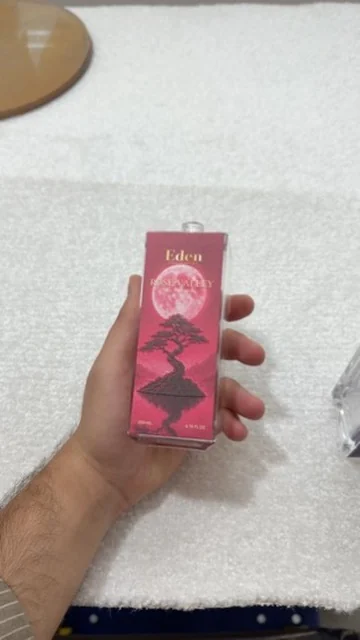
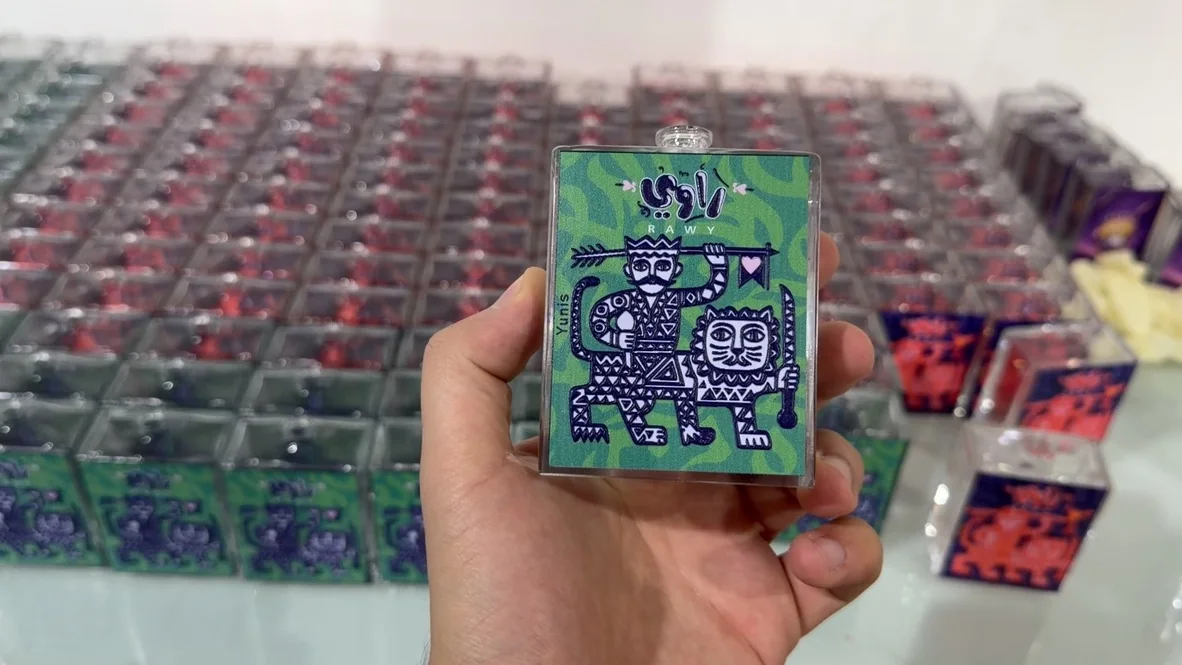
On flat glass panels, reverse printing means printing the mirror image of the artwork on the back of the glass so it is seen through the front. A sealed bottle cannot be printed on the inside, so on a perfume bottle the same idea moves to the rear outer face. The artwork is mirrored, printed on the back of a clear flat bottle, and read through the front wall, the fragrance and the back wall.
That gives depth that a front print cannot: the image sits behind the liquid, and a front print can be layered over it for a two-plane effect. It also brings three things to check. The fragrance colour tints everything behind it, so an amber juice warms the image and a clear juice does not. The fill level changes the look between full and part-used bottles. And the thickness of the glass bends what you see at the edges. All three are judged on a filled sample, not on screen.
- Mirror the reverse artwork, or tell the printer which layer is the reverse one.
- Decide whether the reverse print gets a white layer behind it. With white it reads solid from the front; without it, light passes through like stained glass.
- Keep anything that must stay sharp, such as small text, on the front face.
Preparing artwork for gloss and relief
Effects are only as precise as the file. A printer that builds gloss and relief from separate layers needs those layers supplied separately, named clearly and aligned to the colour artwork.
- Supply the colour artwork at the bottle's real print size, with vector logos and type where possible.
- Put each effect on its own layer or spot colour, named for what it does: White, Gloss, Relief.
- Draw relief in greyscale. Darker means more ink and more height on Direct Color Systems' TEXTUR3D workflow; white means none.
- Keep gloss and relief areas slightly inside the colour areas they sit on, so small misalignment does not show as a halo.
- Send real bottles, filled or empty as they will be sold, so the sample shows the effect under the conditions a customer sees.
Alcohol, handling and the sample
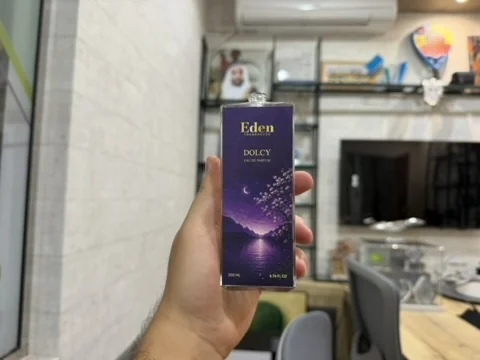
A perfume bottle is sprayed, wiped, carried and handled for months. Raised areas take the most wear because they stand proud, and every layer meets the alcohol in the fragrance at the spray head and around the shoulders. LSINC describes UV-cured graphics on glass bottles as durable (LSINC on glass bottle printing), but how durable a given print is depends on the glass, any coating, the pre-treatment, the ink and the cure. The reliable answer is a printed sample tested with the actual fragrance and by handling, before the run is approved.
Two habits help. Print before filling, so the ink is fully cured before it meets the fragrance. And keep relief and gloss away from the areas a thumb or a spray mist hits most, unless the sample shows they hold up there.
Where to have it printed in Dubai
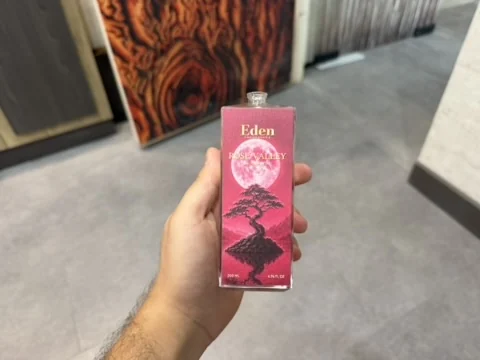
Sun Studio, the group's printing studio in Al Quoz, is where the machines PRO TECHnology supplies run in daily production on perfume work. It prints flat and square bottles on Direct Color Systems flatbeds and round bottles on the LSINC PeriQ360 and PeriOne, and it prints directly onto the glass rather than onto labels. For brands that want these effects without buying a machine, its service page for premium perfume bottle printing in Dubai explains what to send and how sampling works.
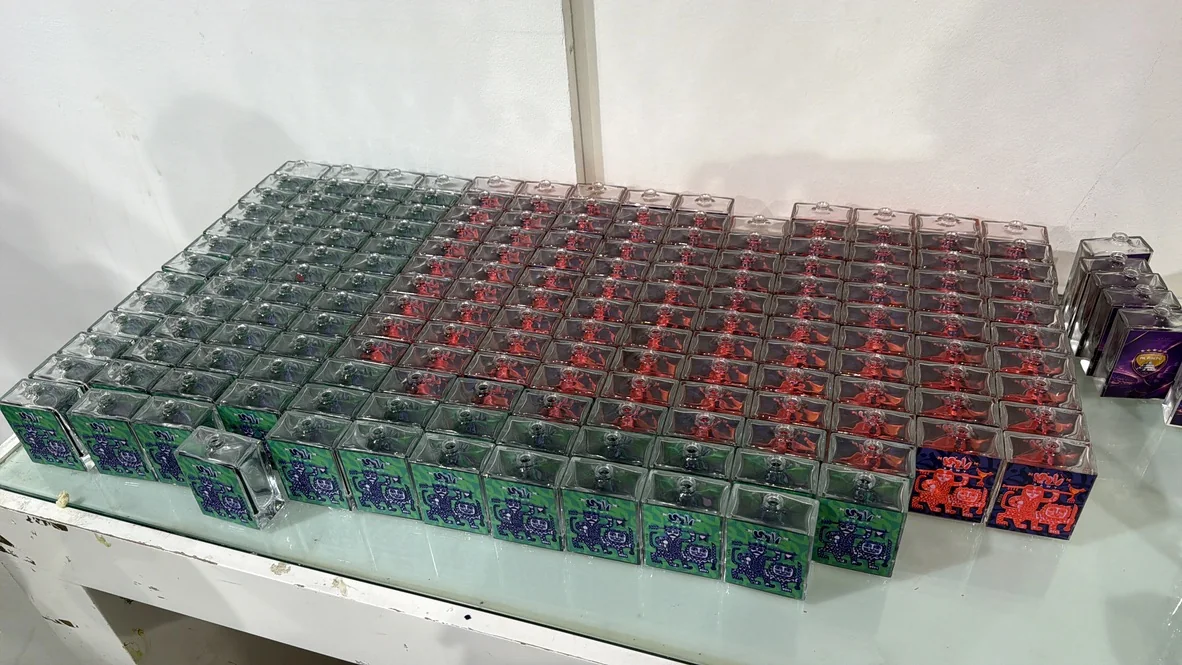
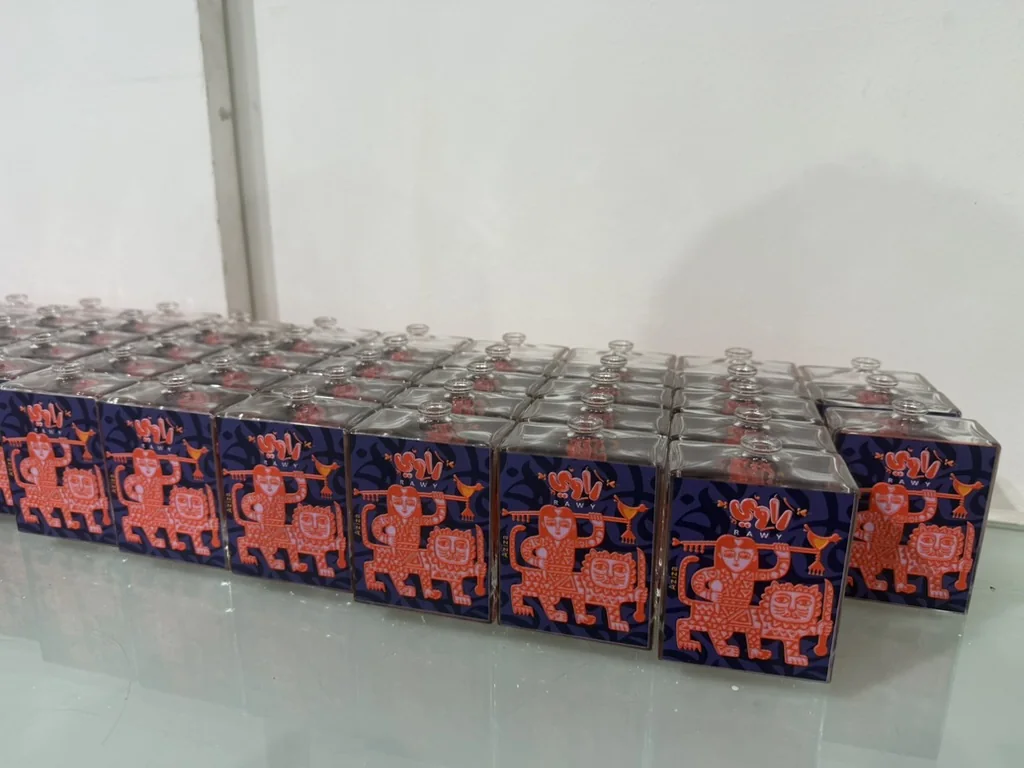
Sun Studio works with established fragrance houses and new labels alike. Its published projects include 1,450 flat bottles for Qatarat Al Ward and full-wrap body spray cans for Ajmal Perfumes. There is no minimum order, so a launch can start with a handful of sample bottles, and turnaround is typically one to two working days when the presses are not fully booked.
Bringing the effects in-house
For fillers and brands printing their own bottles every week, the same effects come from owning the press. PRO TECHnology supplies, installs and supports Direct Color Systems UV flatbeds for flat bottles and LSINC cylindrical printers for round ones from Dubai. Our page on perfume and cosmetic bottle printing machines compares the two for fragrance work, and the UV printing machine acceptance checklist sets out how to test a machine on your own bottles before you buy.
Sources
Manufacturer pages were read on 18 November 2026. Sun Studio's capabilities, projects and terms are as published on sunstudio.ae and confirmed by the group. Effects depend on the bottle, so every claim here assumes a test print on the actual bottle.
Frequently asked questions
Can you put spot UV on a glass perfume bottle?
Yes, in printed form. A UV printer with a clear ink channel prints clear ink only where the shine should be, in the same run as the colour. It shows most on a frosted or matte bottle; on shiny clear glass the gloss adds little contrast.
How is spot UV on a carton different from a UV-printed bottle?
On a carton, spot UV is a clear coating applied over printed board. On a bottle, the colour, white and clear are all UV-cured inkjet ink printed straight onto the glass, so the gloss is just another layer of the same print.
Can a round perfume bottle have raised or embossed printing?
Raised printing is built by stacking ink, which is most practical on flat faces printed on a flatbed. Round bottles are printed while they turn, which suits a continuous colour wrap. A raised effect on a curved body should be proved on a sample first.
Can a UV printer deboss glass or print real gold foil?
No. A printer only adds ink, so it cannot press a design into glass, and its ink set has no mirror-bright metal. Gold and silver tones are simulated in colour; a real metallic finish needs foiling, metallisation or a coated bottle.
What does a reverse print look like on a perfume bottle?
The artwork is printed mirrored on the rear face of a clear flat bottle and seen through the glass and the fragrance. It gains depth, but the juice colour tints it and the fill level changes it, so it is judged on a filled sample.
Is there a minimum order, and how fast is printing at Sun Studio?
Sun Studio has no minimum order, so a project can start with a few sample bottles. Turnaround is typically one to two working days when the presses are not fully booked.
Plan a finish, or the press behind it
Send us the bottle and the effect you have in mind. We will tell you which press it needs and arrange a sample at Sun Studio, or a trial on the machine if you are printing in-house.