Partnership
Industrial Bottle Printing: How PBIC Uses LSINC for Beverage Production
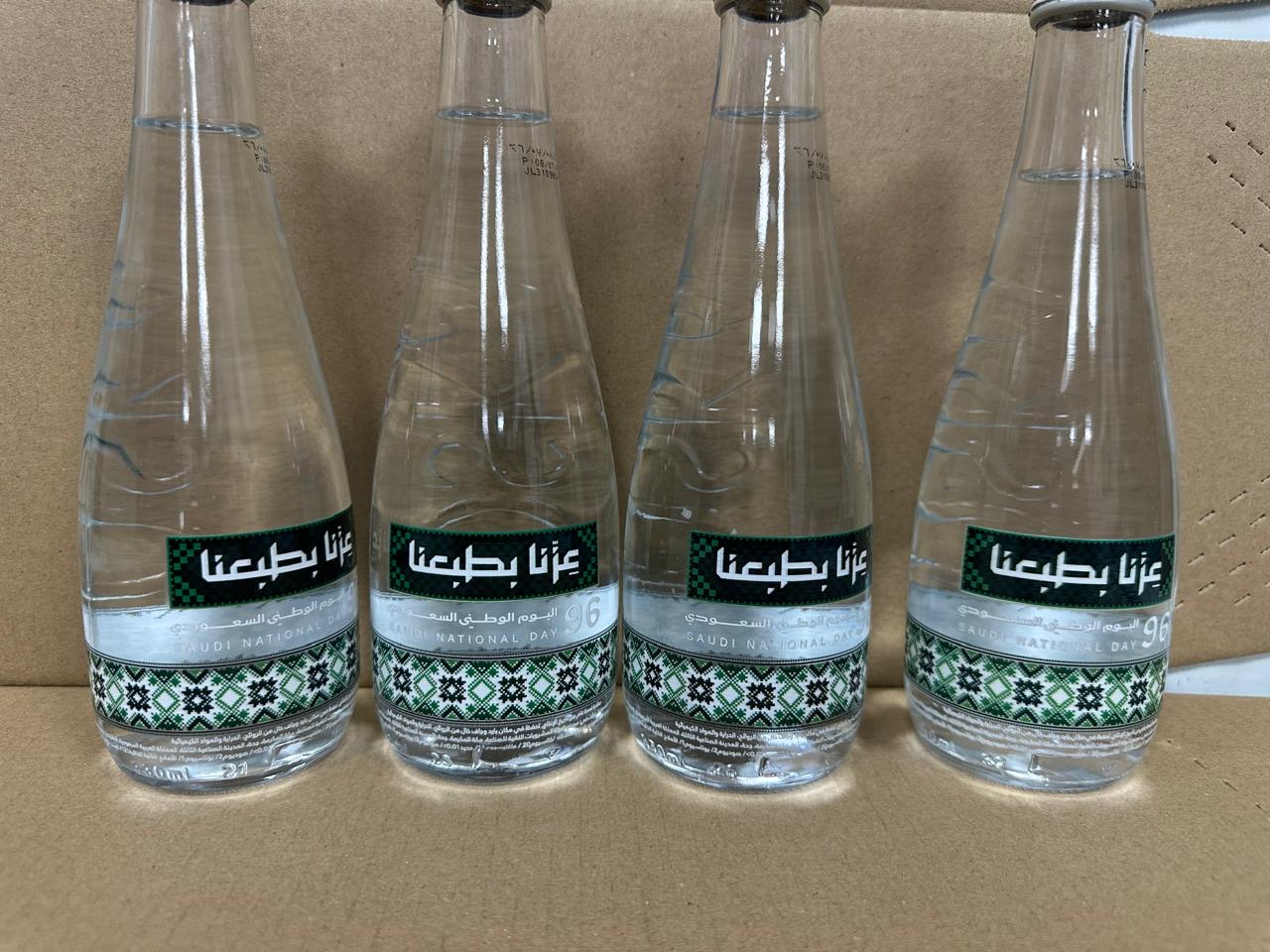
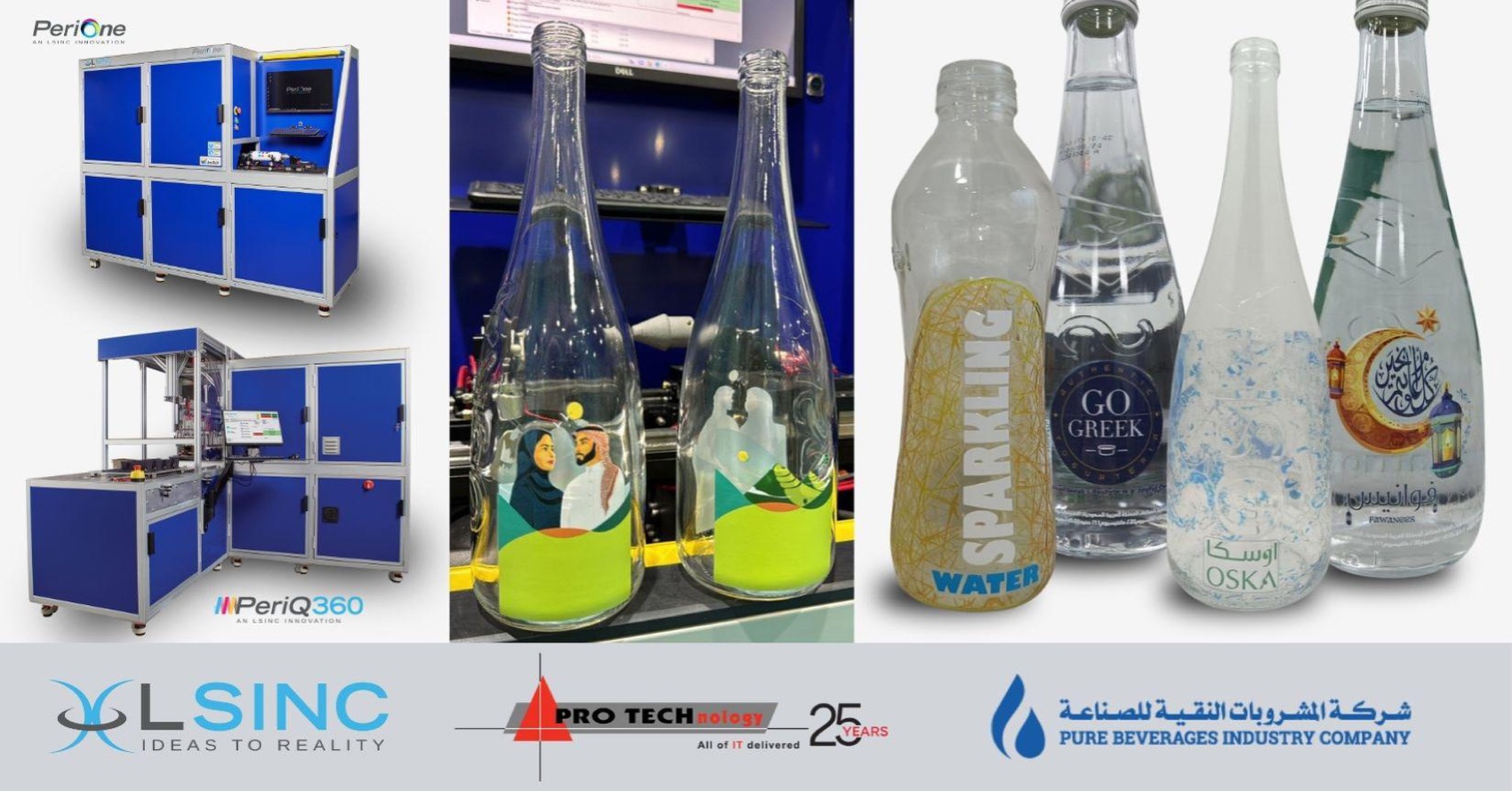
Pure Beverages Industry Company (PBIC) is a beverage producer in the Kingdom of Saudi Arabia, known for its Ival and OSKA bottled water. It decorates its containers directly rather than with labels, using two LSINC direct-to-object machines: a PeriOne integrated in Q2 2024 and a PeriQ360 added in April 2025. Both print 360° around the container with UV ink cured on the machine, so artwork — including seasonal and event editions — goes onto glass, PET and aluminium with no label, sleeve or adhesive. PRO TECHnology supplied the systems and supports them regionally, with service inside the Kingdom through PRONEXT. It is a working example of digital decoration running inside an existing bottling operation.
What does an industrial beverage company use to print directly on bottles?
A beverage producer that wants artwork on the container itself, rather than on a label or a sleeve, uses a dedicated cylindrical or direct-to-object UV printer. The filled or empty container is held on a spindle and turned while inkjet heads print onto its surface and UV light cures the ink, so the design wraps the full circumference. The machine sits alongside the existing line rather than replacing it, and it handles glass, PET and aluminium on the same platform. Because there is no plate or screen, a design change is a file change, which is what makes seasonal and event runs practical. Larger producers commonly keep labels or sleeves for their highest-volume settled SKUs and use direct printing for everything that changes.
PBIC is that arrangement in production. It runs a LSINC PeriOne and PeriQ360 industrial bottle printing machines, both 360° cylindrical UV printers, against a bottled-water range that includes still, sparkling and seasonal lines. For how direct printing compares with the alternatives before you get to machines, see our guide to glass bottle printing methods.
What changed at PBIC
- Direct printing on bottles replaced constraints of labels and sleeves
- Personalised and event-specific bottles became a standard offering
- Production capability rose while unit decoration cost fell
- The brand strengthened its position in the Kingdom’s competitive bottled-water sector
Why the Peri series fits beverage production
LSINC’s Peri platforms print 360° around cylindrical containers, PET, glass or aluminium, in a single automated pass, with UV inks cured instantly. PeriOne suits high-mix runs and pilots; PeriQ360 scales the same print quality to production throughput. For marketing teams it means limited editions, sponsorships and regional campaigns without label inventory.
Bringing this to your production line
PRO TECHnology demonstrates LSINC systems on customers’ own containers at Sun Studio in Al Quoz, Dubai, and supports installations across Saudi Arabia through PRONEXT, our KSA arm, with inks, profiles, training and service handled regionally.
At a glance
- Customer: PBIC (Ival water), Kingdom of Saudi Arabia
- Systems: LSINC PeriOne and PeriQ360 direct-to-object printers
- 360° UV printing on PET, glass and aluminium containers
- Printing: 360° direct-to-object UV, no label, sleeve or adhesive
- Regional demos and support: PRO TECHnology / PRONEXT
Why bottled water brands are moving off labels
A label is a stocked component. It carries a minimum order quantity, a lead time, warehouse space and a write-off every time artwork changes. Direct to object printing removes the component entirely: the decoration becomes a print file, and the bottle leaves the line already branded.
- No label inventory. Labels and shrink sleeves disappear from stock, along with the minimum order quantities that force over-ordering.
- No seam and no lifting edge. The print wraps 360 degrees around the container, so there is no label edge to peel in a chiller or after condensation.
- No artwork obsolescence. A design change is a file change, not a pallet of superseded labels.
- Short runs become sellable. Events, sponsorships, Ramadan, National Day and hotel or venue specific bottles are produced in the quantity actually needed.
Glass, PET and aluminium on the same platform
The Peri series prints 360 degrees around cylindrical containers in a single automated pass, with UV ink cured instantly. That covers glass bottles, PET bottles and aluminium cans on one platform, which is why a beverage producer can consolidate still water, sparkling water and seasonal lines onto the same decoration asset.
- Glass bottle printing for premium still and sparkling water, hospitality and gifting lines.
- PET bottle printing for volume production where labels previously dictated the run size.
- Aluminium cans and other cylindrical containers on the same system.
- Pre-treatment supplied where a coating or substrate needs it, so adhesion is validated rather than assumed.
Rated capacity and actual production output
LSINC publishes maximum rated speeds for the Peri Series: up to 282 pieces per hour on the PeriOne, up to 1,146 on the PeriQ360 and up to 174 on the Perivallo360m. Those are ceilings measured at a 4 inch (101.6 mm) artwork height, and LSINC states that speed is determined by image height, resolution and mode. They are not the throughput any particular site achieves.
Real output on a production floor is lower once artwork, ink coverage, curing, container geometry, loading, changeover, rejects and staffing are taken into account. The figures above are the manufacturer’s specification for the machines PBIC runs; they are not a measurement of PBIC’s own production, which depends on its own products, artwork and shift pattern. Any bottler planning capacity should confirm a net figure on its own containers during a demonstration rather than plan against the rated maximum.
PeriOne or PeriQ360: which one a bottler needs
PBIC runs both. PeriOne suits high mix work, pilots and short runs where artwork changes often. PeriQ360 carries production throughput at the same print quality. Rated output across the Peri range runs from 174 to 1,146 pieces per hour depending on model, artwork and container, so a line rate can be modelled during procurement rather than estimated after installation.
Support inside Saudi Arabia and the wider Gulf
PRO TECHnology is LSINC's Middle East partner, and its Saudi arm PRONEXT handles demonstrations, installation, operator training, inks and service inside the Kingdom. Trials run on your own containers and your own artwork at Sun Studio in Al Quoz, Dubai, before any commitment, which is how PBIC started.
Frequently asked questions
What printer prints directly on water bottles?
Can bottled-water brands print limited editions without labels?
Who supports LSINC printers in Saudi Arabia?
دراسة حالة: الطباعة المباشرة على زجاجات المياه لدى شركة المشروبات النقية (PBIC) السعودية
استبدلت شركة المشروبات النقية (PBIC)، المنتجة لمياه إيفال في المملكة العربية السعودية، الملصقات والأغلفة الحرارية بالطباعة الرقمية المباشرة على العبوات باستخدام طابعتي LSINC PeriOne وPeriQ360، بدعم إقليمي من بروتكنولوجي وذراعها السعودية برونكست. تتم الطباعة بزاوية 360 درجة حول العبوة في مرور واحد آلي وبحبر UV يجف فورًا، على الزجاج والبلاستيك PET والألمنيوم، دون ملصق ودون خط التقاء أو حافة قابلة للتقشر في الثلاجة أو مع التكثّف. النتائج: ارتفاع الطاقة الإنتاجية، وانخفاض تكلفة تزيين العبوة الواحدة، وإلغاء مخزون الملصقات وحدّها الأدنى للطلب، وإمكانية تنفيذ إصدارات محدودة وحملات المناسبات دون انتظار توريد ملصقات جديدة. كلمات يبحث بها منتجو ومصانع المياه والمشروبات في الخليج: الطباعة على زجاجات المياه، طباعة على العبوات الزجاجية، الطباعة على الزجاجات البلاستيكية PET، ماكينة طباعة على العبوات الأسطوانية، طابعة زجاجات، تخصيص زجاجات المياه، طباعة بدون ملصقات، طباعة مياه معبأة، تزيين العبوات، طباعة الشعار على زجاجة المياه، زجاجات مياه مخصصة للفنادق والمناسبات، عبوات اليوم الوطني السعودي ورمضان، وطباعة العلب المعدنية. تشمل التطبيقات المياه الطبيعية والفوارة والعصائر والمشروبات الغازية وزجاجات الضيافة والفنادق والهدايا المؤسسية. يمكن تنفيذ تجربة طباعة على عبواتكم وتصميمكم في صن ستوديو بمنطقة القوز في دبي قبل اتخاذ قرار الشراء، مع التركيب والتدريب والأحبار والصيانة داخل السعودية عبر برونكست ودول الخليج عبر بروتكنولوجي.
Talk to the team behind this story
Read the R&D and procurement guide to direct to bottle printing →
← Back to the newsroom