UV Printing on Aluminium and ACP: Adhesion, Outdoor Durability and When Primer Helps
Published · PRO TECHnology Digital Printing
"Aluminium" covers at least five different print surfaces: bare mill finish, anodised, painted, powder-coated and the coated face of an aluminium composite panel. Each bonds differently, fails differently and ages differently outdoors. This guide sorts them out, separates peeling from scratching, fading and delamination, and explains where a primer helps and where only the ink, the coating or a clear coat can.
Does a primer make UV printing on aluminium last outdoors? Only in part. A primer or pre-treatment can secure the bond between the ink and the surface, which matters most on bare and some anodised aluminium. It does nothing for fading, which depends on the ink's pigments and the sun, and little for scratching, which depends on the ink film and any clear coat. On ACP and powder-coated panels the ink meets a paint layer, not aluminium, so that coating decides adhesion. Outdoor life is proved by testing the actual panel, not by a primer.
- Bare and brushed aluminium
- Oxide layer plus rolling oils and handling residue: degrease, often primer
- Anodised
- Sealed and unsealed anodising behave differently: test the batch
- Painted and powder-coated
- The ink bonds to the coating, so the coating's quality and cure decide it
- ACP / ACM
- Printing on a coil-coated paint face, not on aluminium
- Primer helps with
- The bond. Not fading, and little for scratching
- Outdoor proof
- Ink lightfastness data, a compatible clear coat where needed, and a sample exposed on site
- Where it is printed
- Sun Studio, Al Quoz: DCS flatbeds and a 2.5 m IQDEMY belt flatbed, MODICO pre-treatment
- Contact
- +971 4 343 5501, sales@protech.ae
Key takeaways
- Name the surface before choosing a process: bare, anodised, painted, powder-coated and ACP faces bond and fail differently.
- On ACP and powder-coated aluminium the ink meets a paint layer, so that coating, not the alloy, decides adhesion.
- A primer can secure the bond; it does not stop fading or make the print scratch-resistant, and no UV-protection claim belongs to it.
- Passing a cross-cut test proves the bond formed. Outdoor life needs ink lightfastness data, a compatible clear coat where specified, and a sample exposed where the panel will live.
Which aluminium surface are you actually printing on?
Every aluminium surface carries something: a natural oxide film, rolling oils from the mill, an anodic layer, paint or powder. Plasmatreat, a surface-treatment manufacturer, notes that oxidation and contaminants lower how well metal wets, and that contamination is often invisible. So the first job is to name the surface, because that decides the preparation.
| Surface | What the ink meets | Typical preparation | Main risk |
|---|---|---|---|
| Bare mill finish or brushed | Oxide film plus oils and handling residue | Degrease, then an adhesion promoter where the test calls for it | Peeling where residue remained; colour shifts because the metal shows through the ink |
| Anodised | A porous oxide layer, sealed or unsealed | Clean; test each batch, because the seal changes the surface | Results vary between batches and suppliers |
| Painted or coil-coated sheet | The paint | Clean to the paint maker's guidance; test | Paint that resists adhesion by design, or that is poorly bonded itself |
| Powder-coated | The powder coat | Clean; test the coat as supplied | Under-cured or contaminated powder, or slip additives on the surface |
| ACP / ACM face | Coil-coated PVDF, FEVE or polyester paint | Keep the protective film on until printing; clean; test | Fluoropolymer faces resist bonding; the panel's coating sets the outcome |
Anodised aluminium has its own guide: UV printing on anodised aluminium covers sealed and unsealed coatings, finishes and testing in detail.
Bare and anodised aluminium: where a primer earns its place
On bare and brushed sheet the ink meets the oxide film and whatever the mill and the fabricator left behind. Degreasing comes first, and an adhesion promoter formulated for metal is common practice on bare stock, though not every panel needs one. A test on the actual sheet decides.
Anodising adds a controlled oxide layer full of fine pores. Fresh, unsealed pores absorb dyes readily, and sealing closes them, which is why anodizers explain fading of dyed anodise through the seal and why ISO 2143 exists as a dye-spot test for how much absorptive power a sealed coating has lost. For printing, the practical point is that sealed and unsealed batches can behave very differently with the same ink, so each new batch is worth a test piece.
Process inks are semi-transparent, so on bare and brushed metal the metal shows through and becomes part of the colour unless a white base goes down first. That is a design choice, not a durability one, but it changes how the edges of a print reflect light and how scratches read.
Why is printing on ACP not the same as printing on bare aluminium?
An aluminium composite panel is two thin aluminium skins bonded to a core. ALUCOBOND PLUS, for example, uses two 0.5 mm aluminium sheets over a mineral-filled core, with the coating applied by coil coating. When you print ACP you print that factory paint. The aluminium never touches the ink.
- The coating is the substrate. Polyester, PVDF and FEVE fluoropolymer faces are formulated to resist dirt and weather, which also makes some of them hard for ink to bond to. Ask for the panel brand, coating type and colour before quoting, and test that panel.
- Keep the protective film on until the panel reaches the press. Uncovered panels collect dust and scuffs that show through a graphic and contaminate the surface.
- Fabricate first, print second. Routing, folding and bending a printed panel strains the ink film at the fold, which is where it cracks.
- Primers exist for coated panels too, but they are system-specific. Nazdar’s UV inkjet adhesion promoter data sheet, for instance, lists enamelled ACP among the substrates for one of its promoters, for use with its own inks and after testing.
Cleaning instructions for the coated face come from the panel maker. The cleaning guide for ALPOLIC panels with a Lumiflon (FEVE) finish recommends a mild detergent or a 5 to 10 percent isopropyl alcohol solution, and testing anything stronger on a hidden spot first. A cleaner that the panel coating tolerates may still attack the printed ink, so the cleaning method belongs in the print test too.
Painted and powder-coated aluminium: the coating decides
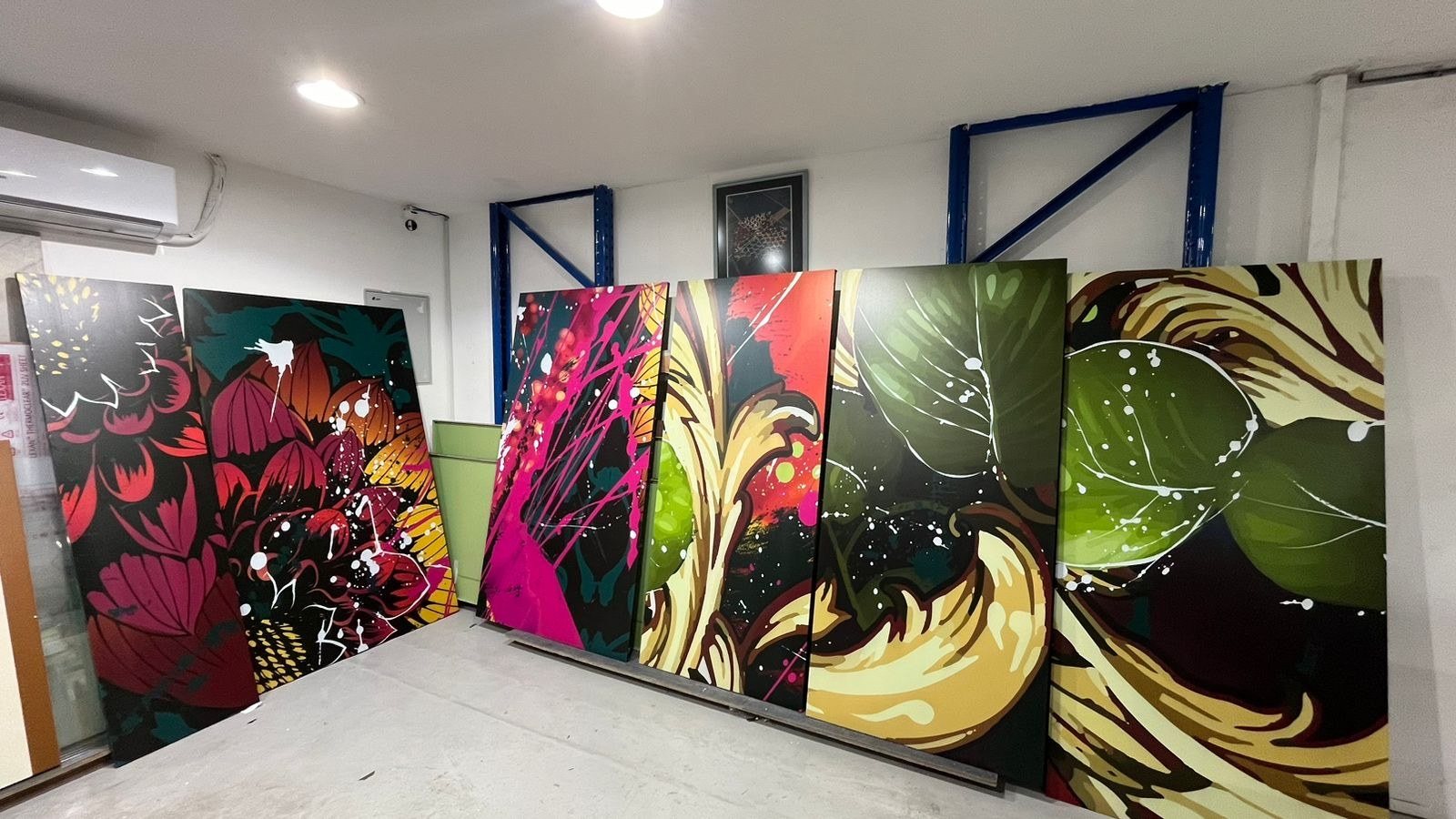
On painted and powder-coated aluminium, adhesion is a property of the coating. A well-cured coat is an excellent, uniform ground; an under-cured or contaminated coat fails whatever the metal underneath. Architectural coatings are specified by performance class: the Powder Coating Institute’s comparison sets Qualicoat Class 1, 2 and 3 against AAMA 2603, 2604 and 2605, each tied to a different length of Florida exposure for gloss and colour retention.
Two consequences follow. A higher-class coating will usually outlast the print on it, so the print's own durability becomes the limit. And a coating chosen to shed dirt and resist chemicals can resist ink too, so the more durable the coat, the more a test before the run matters.
Peeling, scratching, fading and delamination: what each failure tells you
| Failure | What you see | Usual cause | Does primer help? |
|---|---|---|---|
| Peeling | Ink lifts from the surface, which is clean underneath | Contamination, no pre-treatment, wrong primer, under-cure | Yes, when the bond is the weak point |
| Scratching | Ink stays bonded but wears or scores through | Soft or thin ink film, abrasion, cleaning with abrasive pads | No. Ink choice and a clear coat do |
| Fading | Colour weakens while the film stays on | Pigment lightfastness and sun exposure | No. Ink and clear-coat choice do |
| Delamination | A coating layer comes away with the ink on it | The paint or powder was weakly bonded to the metal, or the ACP face failed | No. The failure is below the print |
| Cracking | Fine cracks, often along folds or edges | Forming after printing, brittle ink, thermal movement | No. Fabricate first; check ink flexibility |
The distinction matters because each failure has a different fix. A cross-cut test to ISO 2409 or ASTM D3359 shows peeling and delamination. A solvent rub test such as ASTM D5402 gives a comparative check of chemical resistance. Fading is rated against blue wool references in ISO 12040, and Fujifilm notes that pigment lightfastness is the main factor in how long a print's colour lasts.
Does primer improve outdoor durability?
Only where the bond is what fails. Outdoors, heat, moisture and the daily expansion and contraction of a metal panel all work on the interface between ink and surface, so a weak bond shows up faster outside than in. Securing that bond with the right cleaning, pre-treatment and primer removes one cause of failure.
It does not remove the others. A primer sits under the ink, so it cannot protect the colour from light or the surface from abrasion. No primer should be described as UV-resistant or weatherproof on the strength of being a primer, and this guide makes no such claim for any product.
Ink makers qualify their outdoor statements carefully. Fujifilm's data sheet for Uvijet KH ink relates its xenon test to about 18 months outdoors in a temperate climate and excludes the hottest climates, and its Uvijet KO sheet gives about 12 months and recommends a clear overprint or laminate beyond that. Those are statements about those inks under those conditions, not figures for other inks or for the Gulf. Ask the maker of the ink actually used for its outdoor statement and the conditions behind it.
When is a protective clear coat needed?
A clear coat over the print is the usual answer when abrasion, cleaning or long sun exposure is expected. It adds a sacrificial top layer and can carry UV absorbers that slow fading, but it brings its own conditions.
- Printer clear inks. Roland DG describes its clear ink as adding gloss, matt or embossed effects and says it can improve weatherability, while telling users to test on the actual object first.
- Overcoats and laminates. Mimaki warns that hard UV inks have little weather resistance on their own, that laminating can crack them, and that an overcoat may help but has to be tested. It does not guarantee results.
- Compatibility. A clear coat must bond to the cured ink, flex with the panel and tolerate the cleaning method. A solvent-borne coat can attack some cured inks.
- Limits. A clear coat weathers too. It slows wear and fading; it does not make a print permanent.
Why passing an adhesion test does not prove outdoor life
A cross-cut test is done a day or so after printing. It shows the bond formed, not how it will age. Accelerated weathering such as ISO 4892-2 (xenon arc) or ASTM G154 (fluorescent UV) ranks materials under set conditions, and G154 itself does not simulate salt or pollution. Q-Lab, which builds the test chambers, states there is no universal conversion from test hours to outdoor years.
- Use the real panel: the same make, coating and colour, from the same batch where possible.
- Print the real build: white base, colour, any clear coat, with the cure settings recorded.
- Test adhesion: cross-cut after the rest time the ink maker specifies.
- Test the cleaning: the facility's actual cleaner and method, on a printed offcut.
- Expose a retained sample where the panels will live, facing the same way, and inspect it at agreed intervals against an unexposed twin kept indoors.
- Write it down: panel, coating, ink, primer or treatment, clear coat, cure and results, so a reprint matches.
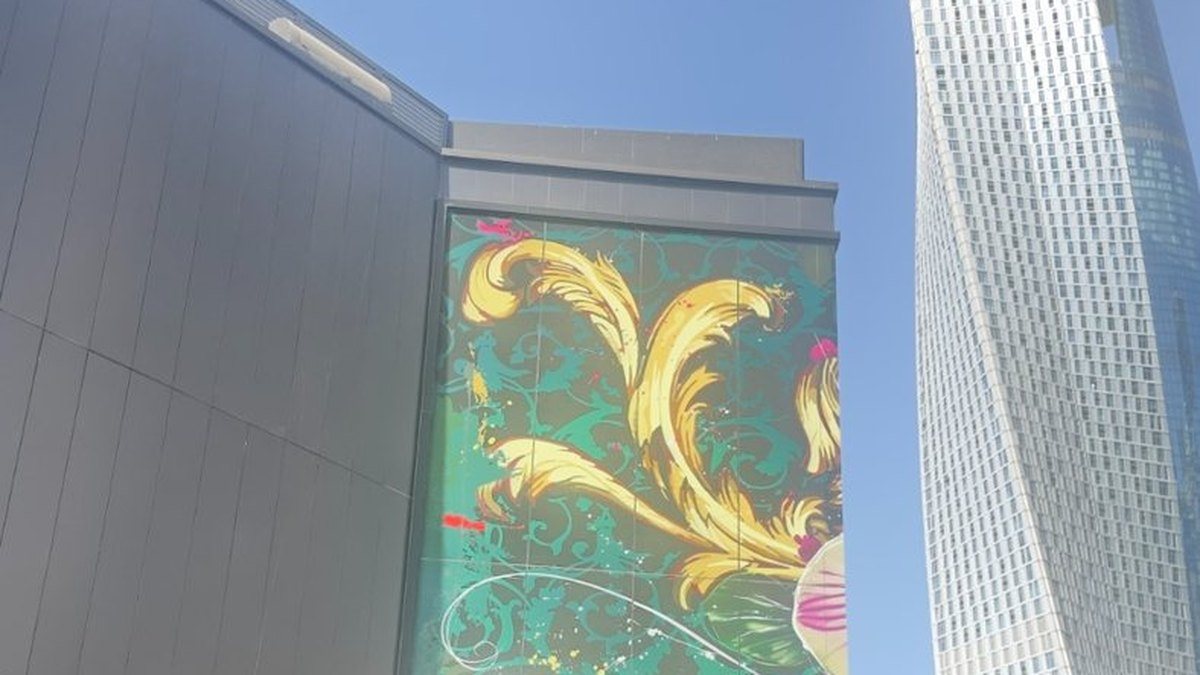
What changes for outdoor panels in the UAE
- Sun and heat: strong year-round sun and high panel temperatures, especially on dark colours, speed fading and stress the bond through daily thermal cycling.
- Dust and sand: airborne grit abrades surfaces, and dry wiping drags it across the print.
- Coastal air and humidity: sites near the sea see salt and condensation, which accelerated UV tests do not reproduce.
- Cleaning regimes: facades and signs are cleaned by contractors with their own chemicals and equipment. Find out what they use before the print is specified.
For a buyer, Sun Studio's guide to specifying outdoor aluminium and ACP printing in the UAE turns these points into what to send and what to test before ordering.
Printing and testing aluminium in Dubai
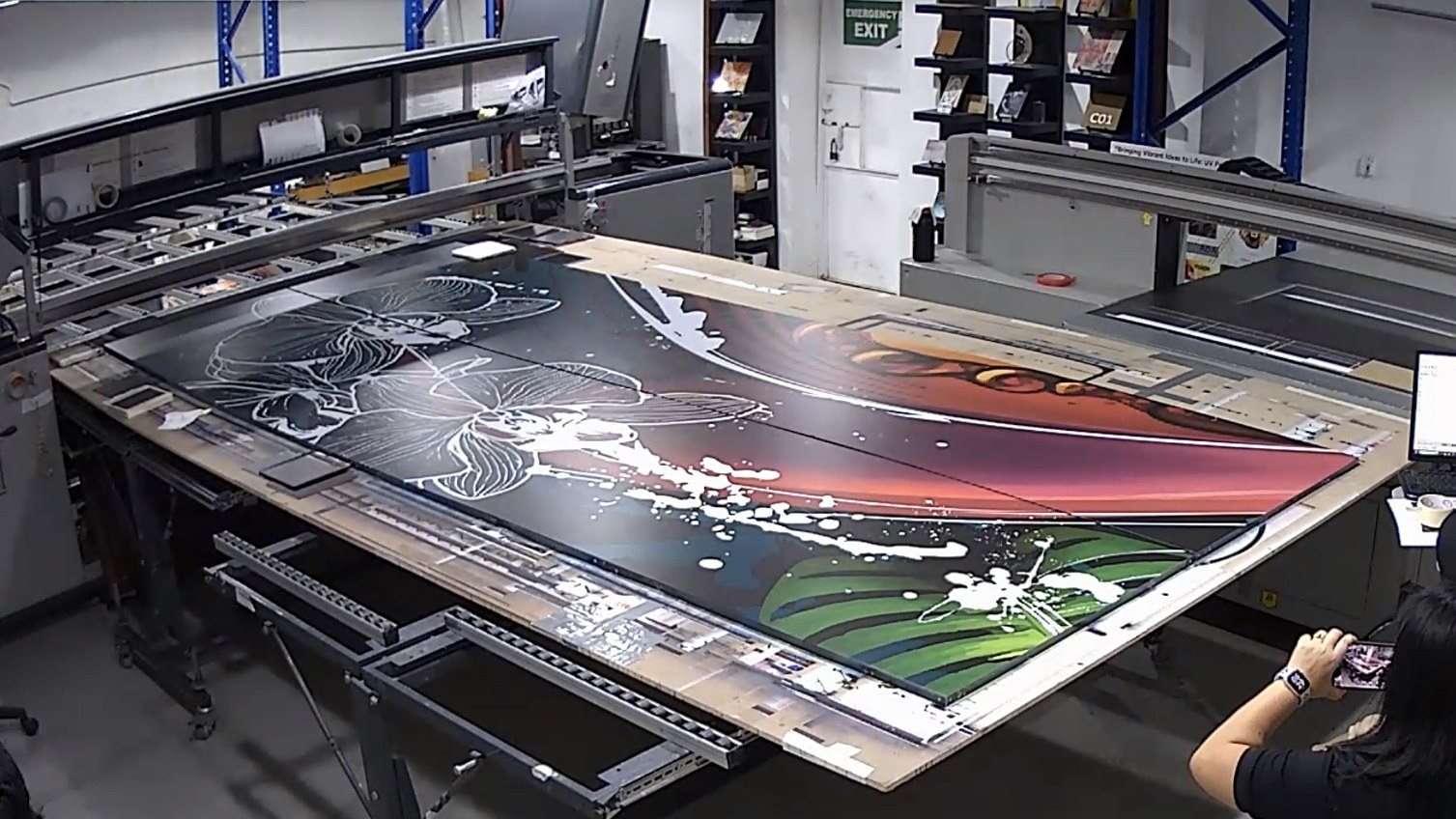
PRO TECHnology supplies Direct Color Systems UV flatbeds, IQDEMY belt-fed UV printers and MODICO surface pre-treatment in the Middle East. Sun Studio, the group's printing studio in Al Quoz, runs them in production: Direct Color Systems UV84 and UV44 flatbeds for panels, plates and badges, and an IQDEMY EVO 2500 belt flatbed 2.5 metres wide for full-size ACP sheets. Trials on your own panels can be printed and tested there before a run. See DCS UV flatbed printers and Sun Studio's ACP panel printing and metal and aluminium printing services.
Frequently asked questions
Does UV ink stick to aluminium?
It can bond well, but the result depends on the surface. Bare and brushed aluminium need degreasing and often an adhesion promoter; anodised sheet varies with its seal; painted, powder-coated and ACP surfaces bond through their coating. A cross-cut test on the actual sheet decides.
Is printing on ACP the same as printing on aluminium?
No. An ACP face is a coil-coated paint such as polyester, PVDF or FEVE over a thin aluminium skin, so the ink bonds to that paint. Fluoropolymer faces are made to resist dirt and weather and can resist ink too, so the panel make and coating should be tested.
Does a primer make a UV print weatherproof?
No. A primer improves the bond between ink and surface. Fading depends on the ink's pigments and the sun, and scratching on the ink film and any clear coat. No primer should be called UV-resistant or weatherproof because it is a primer.
How long does UV printing on aluminium last outdoors?
There is no honest single figure. Ink makers give conditional outdoor statements for their own inks, often for temperate climates. Ask for the statement for the ink used, protect the print with a compatible clear coat where needed, and expose a retained sample where the panel will be installed.
Do I need a clear coat on printed aluminium signage?
Where the panel faces strong sun, regular cleaning or abrasion, a compatible clear coat is the usual protection. It must bond to the cured ink and tolerate the cleaning method, and it should be tested on a printed sample. It slows wear and fading; it does not make the print permanent.
Can a printed ACP panel be bent or routed afterwards?
It is better not to. Folding or bending strains the ink film at the fold, where it cracks. Rout, cut and fold first, then print. If routing after printing cannot be avoided, the artwork needs tolerance at the cut lines.
Why did the paint come off with the print?
That is delamination below the print: the paint or powder coat was weakly bonded to the metal, or the panel face failed. A primer under the ink cannot fix it. The coating supplier's adhesion and cure need checking.
Where can aluminium and ACP printing be tested in the UAE?
Sun Studio in Al Quoz, Dubai, the PRO TECHnology group's printing studio, prints and tests customer panels on Direct Color Systems flatbeds and a 2.5 metre IQDEMY belt flatbed, with MODICO pre-treatment available.
الطباعة UV على الألمنيوم وألواح ACP: الالتصاق والمتانة في الخارج
كلمة ألمنيوم تشمل أسطحًا مختلفة: الألمنيوم الخام أو المصقول، والمؤكسد (الأنودايز)، والمطلي، والمطلي بالبودرة، والوجه المطلي لألواح الألمنيوم المركّب (ACP). وعلى ألواح ACP والألمنيوم المطلي بالبودرة يلتصق الحبر بطبقة الطلاء لا بالمعدن، لذلك تحدد جودة الطلاء نتيجة الالتصاق.
البرايمر يقوّي الرابطة بين الحبر والسطح فقط، ولا يمنع بهتان الألوان تحت الشمس ولا يجعل الطباعة مقاومة للخدش. ويُثبت عمر الطباعة في الخارج بالاختبار: بيانات ثبات اللون من صانع الحبر، وطبقة حماية شفافة متوافقة عند الحاجة، وعيّنة تُترك في موقع التركيب نفسه.
Sources
Standards are cited from their published abstracts and scopes. Outdoor and clear-coat statements are the ink and printer makers' own (Fujifilm, Roland DG, Mimaki), panel construction and cleaning come from the panel makers (3A Composites, Mitsubishi Chemical), and coating classes from the Powder Coating Institute's comparison. No lifespan is claimed for any print, primer or panel.
- ISO 2409: Cross-cut test (EVS-EN ISO 2409:2020 scope)
- ASTM D3359-23: Measuring adhesion by tape test
- ASTM D5402-19: Solvent rub test for organic coatings
- ISO 4892-2: Xenon-arc exposure (EVS-EN consolidated scope)
- ASTM G154-23: Fluorescent UV exposure
- Q-Lab: Test hours and outdoor years
- Plasmatreat: Surface energy and wetting of metals
- Products Finishing: Why does anodize fade?
- ISO 2143: Sealing quality of anodic coatings, dye-spot test
- Powder Coating Institute: Architectural specification comparison
- 3A Composites: ALUCOBOND PLUS construction
- Mitsubishi Chemical: Cleaning ALPOLIC panels with Lumiflon finish
- Nazdar: UV inkjet adhesion promoters data sheet
- Fujifilm: Uvijet KH ink data sheet
- Fujifilm: Uvijet KO ink data sheet
- Roland DG: Features of inks, clear ink
- Mimaki: Weather resistance of UV ink
- ISO 12040: Lightfastness of prints, blue wool scale (preview)
- Fujifilm: Light fastness of UV inks
Send a panel before you specify the print
Tell us the panel make, coating and colour, where it will be installed and how it will be cleaned. PRO TECHnology answers equipment, ink and pre-treatment questions, and Sun Studio in Al Quoz prints and tests the panel before a run.